
The Gardening Myths That Waste Your Time and Money
Gravel at the bottom of pots, coffee grounds everywhere, watering in full sun — separating well-meaning folklore from what the evidence actually shows.
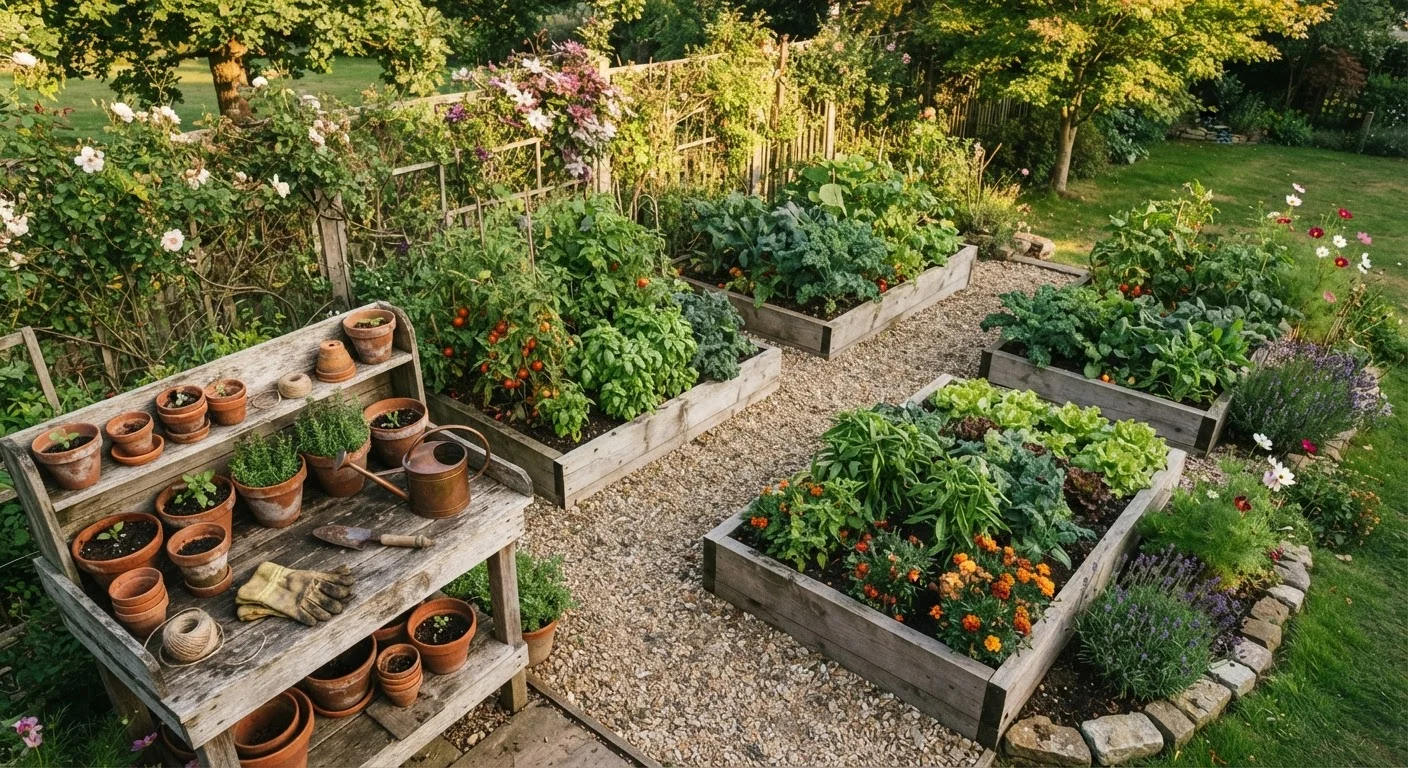
Photo: ReadersChronicle.com | Your Comprehensive Learning Destination editorial
—— In This Article
Key Takeaways
- Gravel at the bottom of pots does not improve drainage - it creates a perched water table that harms roots.
- Coffee grounds can raise soil acidity and inhibit some plants when used in large amounts; apply sparingly.
- Watering in full sun does not scorch leaves - but watering at midday wastes water to evaporation.
- More fertilizer does not mean faster growth; excess nutrients can burn roots and pollute nearby waterways.
- Organic matter and proper soil structure matter far more than any single amendment or trick.
Why Gardening Myths Persist
Most gardening myths start as reasonable-sounding logic passed down through generations of well-meaning gardeners. The trouble is that many have never been tested against the evidence - and some actively work against your plants. For budget-conscious gardeners, that matters: following bad advice means buying amendments you don't need, repeating tasks that accomplish nothing, and occasionally harming the plants you were trying to help.
This article walks through the most common misconceptions, explains what's actually happening in the soil and around your plants, and gives you a clearer picture of where your effort and money are best spent. For a solid foundation first, see our guide to soil, seeds, and sunlight before diving in.
Myth
Putting gravel or rocks at the bottom of a pot improves drainage and prevents root rot.
Fact
A gravel layer actually raises the point at which water saturates the soil above it, keeping roots wetter - the opposite of the intended effect.
This is one of the most widespread container gardening myths. Soil science shows that water does not drain freely between layers of different textures until the upper layer is fully saturated. Adding coarse material below fine potting mix creates what researchers call a perched water table - a zone of saturated soil that sits just above the gravel. Your roots end up sitting in that wet zone longer. The fix is simple: use a well-draining potting mix appropriate for your plants, make sure your pot has adequate drainage holes, and skip the gravel entirely. See when to use potting mix versus garden soil for more detail.
Myth
Coffee grounds are an excellent all-purpose fertilizer and soil amendment for most garden plants.
Fact
Coffee grounds are mildly acidic and nitrogen-rich, but applying them broadly and in quantity can inhibit plant growth and suppress beneficial soil organisms.
Coffee grounds do contain nitrogen, but they are not a balanced fertilizer. Research has found that, used in large quantities, they can inhibit the germination of some seeds and suppress the growth of certain beneficial fungi and bacteria. The acidity they add is real but modest, so they won't reliably acidify soil enough to benefit blueberries or azaleas without a proper soil test. Used in small amounts mixed into compost, they are a reasonable addition. Spread thickly on the soil surface or dug in generously, they can do more harm than good. When in doubt, compost first - our composting walkthrough explains how to process kitchen scraps effectively.
Myth
Watering plants during the day scorches leaves because water droplets act like tiny magnifying glasses.
Fact
Leaf scorch from midday watering has not been supported by controlled research; the real concern is water loss to evaporation, not burning.
A study published in the journal New Phytologist found that water droplets on leaves can, under very specific laboratory conditions, intensify light - but the conditions required don't match typical outdoor gardening. In practice, plants are watered in sunlight all the time without scorched leaves. The practical reason to avoid midday watering is efficiency: heat and direct sun cause water to evaporate before it reaches roots. Morning watering remains the best practice because it gives foliage time to dry before evening, reducing fungal disease risk - not because of any burning hazard.
Myth
Adding more fertilizer gives plants a stronger boost and speeds up growth.
Fact
Excess fertilizer - especially nitrogen - can burn roots, cause leggy growth with poor fruit and flower production, and leach into groundwater.
Plants absorb nutrients at rates determined by their growth stage, the season, and what the soil already contains. Applying more than the plant can use in a given period does not accelerate uptake - it accumulates as salts in the soil, which draw water out of roots through osmosis (a process sometimes called fertilizer burn). Excess nitrogen in particular pushes leafy growth at the expense of flowers and fruit. Before adding any fertilizer, a basic soil test - available inexpensively through many university extension services - tells you exactly what your soil already has, so you spend only on what you actually need.
Myth
You need to add lime to garden soil regularly to keep it healthy.
Fact
Lime raises soil pH and is beneficial only when a soil test shows your pH is too low; applying it without testing can make soil too alkaline for most vegetables.
Lime's purpose is to correct acidic soil - typically soil with a pH below 6.0 for most common vegetables. If your soil is already in the right pH range, adding lime raises it further, making it harder for plants to access nutrients like iron and manganese even when those nutrients are physically present. This leads to yellowing leaves and poor growth despite seemingly good care. The cost of unnecessary lime adds up, and correcting over-limed soil takes time. A soil test before amending is the most budget-conscious move a new gardener can make. Poor germination and seedling failure is often tied to pH and soil structure problems that a test would reveal.
Smarter Habits That Actually Help
Once you shed the myths, gardening gets simpler and cheaper. A few consistent habits - mulching to retain moisture, observing plants before reaching for a product, and watering based on root depth rather than a fixed schedule - do more for plant health than any special supplement. Our guide to tending a thriving garden without overcomplicating it breaks these routines down practically.
If you grow in containers, be especially skeptical of inherited advice. The drainage layer myth, in particular, is almost universal among container gardeners and causes real harm. Container gardening trade-offs are worth understanding before you fill your next pot. And when it comes to watering, depth beats frequency - see why roots need deep, infrequent watering for a full explanation of how root behavior should guide your approach.
Don't Apply Amendments Without a Soil Test
Many well-intentioned amendments - lime, sulfur, even heavy compost applications - can shift soil chemistry in ways that harm plants rather than help them. University cooperative extension programs in most US states offer soil testing services for a modest fee, often under $20. Knowing your starting point prevents wasted spending and protects plants from nutrient imbalances that are slow to correct.
Gardening myths share a family resemblance with home repair folklore - the kind that leads homeowners to skip necessary steps or apply the wrong fix. If that pattern sounds familiar, our piece on home repair myths that cost real money covers the same territory for your house. The bottom line in both cases: when a technique feels like common sense, it's worth checking whether the evidence backs it up before you commit the time and money.

Home Editorial Team
Home Editorial Team is the collective byline for our editorial team and contributor network. Articles published under this byline or an editorial pen name are researched, written, and reviewed according to our editorial standards for clarity, consistency, and independence before publication.
View author profile