
Raised Beds vs. In-Ground Planting: What Changes and What Doesn't
Raised beds offer real advantages in drainage and weed control, but in-ground gardens have their own strengths. A balanced comparison for beginners.
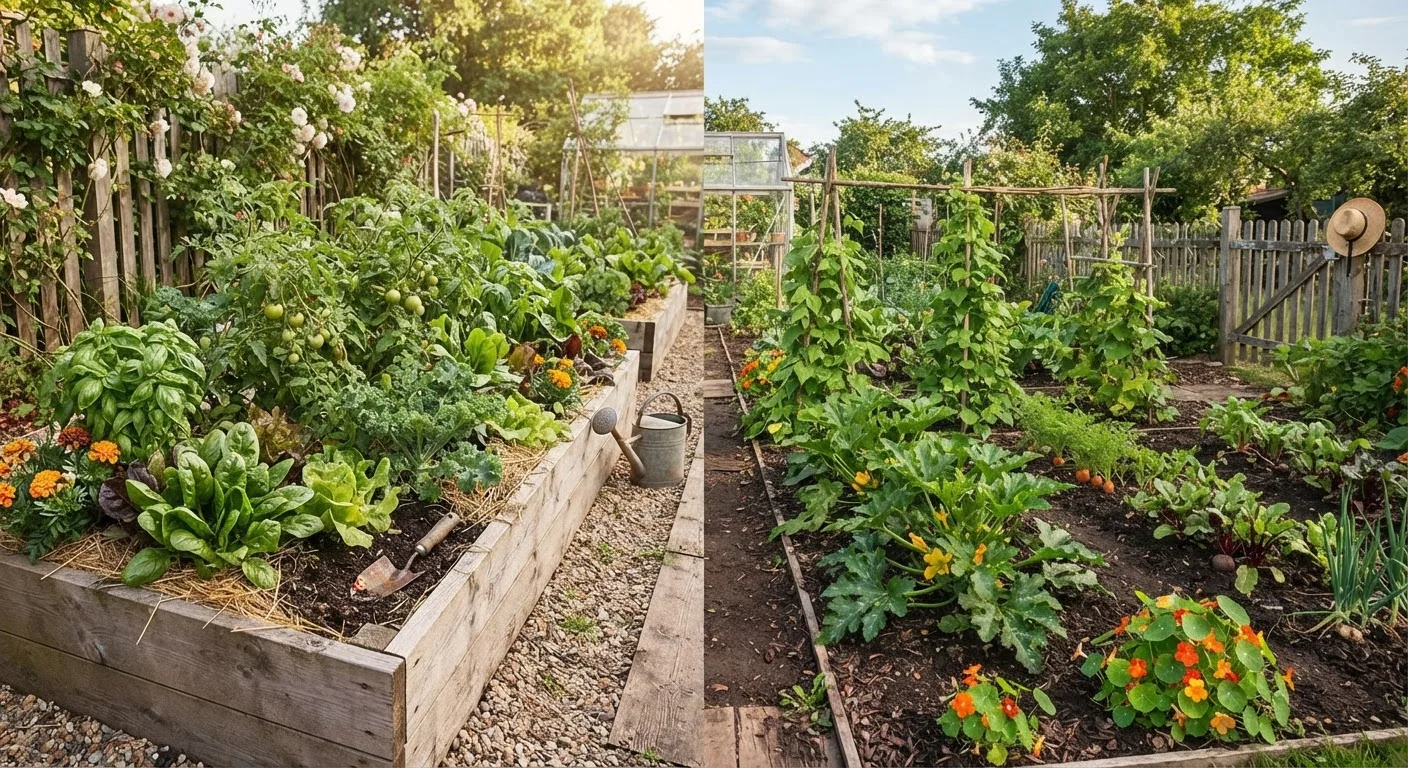
Photo: ReadersChronicle.com | Your Comprehensive Learning Destination editorial
—— In This Article
Key Takeaways
- Raised beds give you control over soil quality but require upfront material costs to build and fill.
- In-ground gardens rely on your native soil, which may need amending but costs less to get started.
- Drainage and weed suppression are typically easier to manage in raised beds.
- Both methods need the same fundamentals: sun, water, healthy soil, and consistent care.
- Your budget, existing soil quality, and physical comfort level are the key factors in choosing.
The Core Difference: Soil Control vs. Natural Ground
The most meaningful difference between raised beds and in-ground planting is where your plant roots live - and who controls what's in that space. With a raised bed, you fill the structure with a growing mix you choose. With in-ground planting, you work with whatever soil your yard already has.
That distinction shapes nearly every other comparison. If your native soil is heavy clay, sandy, or full of stones, a raised bed lets you sidestep the problem. If your soil is already reasonably fertile and well-draining, in-ground planting may give you everything you need without spending a dollar on lumber or bulk soil. Before choosing, it helps to understand what your soil is actually doing. Our guide to soil basics for new gardeners explains how to read your ground before you invest in either approach.
| Criterion | Raised Beds | In-Ground Planting |
|---|---|---|
| Upfront cost | Higher (materials + fill soil) | Lower (amend existing soil) |
| Soil quality control | Full control from day one | Depends on native soil |
| Drainage | Generally excellent | Varies by site |
| Weed pressure | Low at start, increases over time | Often higher, especially early on |
| Scalability | Costly to expand | Easy and inexpensive to expand |
| Moisture retention | Dries out faster | Retains moisture longer |
| Physical accessibility | Better for limited mobility | Requires bending and kneeling |
| Long-term soil improvement | Requires periodic replenishment | Builds naturally with compost |
Where Raised Beds Have a Clear Edge
Raised beds reliably outperform in-ground planting in a few specific areas:
- Drainage: Excess water moves through a well-filled raised bed faster than through most native soils, which reduces root rot risk in wet climates.
- Weed pressure: Starting with fresh growing mix and a physical barrier at the base means fewer weed seeds in the root zone from day one.
- Soil warmth: Raised beds warm up faster in spring, which can extend your growing season by a few weeks.
- Defined space: The walls create a clear boundary, which helps beginners manage spacing, watering, and maintenance without feeling overwhelmed by a wide open plot.
The trade-off is cost. Building a modest 4×8 foot raised bed and filling it with quality growing mix represents a real upfront expense. That mix matters - using the wrong product is a common beginner mistake, and our comparison of garden soil vs. potting mix explains what to look for.
6-8 inches
Minimum raised bed depth for most vegetables
Most cooperative extension services recommend at least 6 inches of growing medium for shallow-rooted crops; 10-12 inches for root vegetables like carrots.
4 feet
Ideal maximum width for a raised bed
A width of 4 feet allows most gardeners to reach the center from either side without stepping into the bed and compacting the soil.
2-3 inches
Compost layer to improve in-ground soil annually
University extension programs generally recommend applying 2-3 inches of compost each season to steadily improve native soil structure and fertility.
Where In-Ground Planting Holds Its Own
In-ground gardening is often underestimated, especially by beginners who assume it means fighting poor soil forever. In reality, native soil can be improved with compost and organic matter over one or two seasons - and once it is, in-ground beds are highly productive with very little ongoing cost.
In-ground planting also scales easily. Want to double your growing space? You dig, amend, and plant. There's no material cost beyond a bag of compost. For gardeners growing a large volume of vegetables or working a bigger yard, in-ground gardens are simply more practical at scale.
In-ground plots also retain moisture more consistently in hot, dry summers. Raised beds dry out faster - that's good for drainage, but it means more frequent watering during dry stretches, which adds up in both time and water cost.
The habits that keep both types of gardens productive are the same: mulching, regular observation, and consistent timing. Our article on tending a thriving garden without overcomplicating it outlines those fundamentals clearly.
What Stays the Same No Matter Which You Choose
Whichever approach you take, the basics of plant health don't change. Every garden - raised or in-ground - needs adequate sunlight (most vegetables need at least six hours of direct sun daily), consistent moisture, and soil that allows roots to breathe and draw nutrients. Neither raised beds nor in-ground planting eliminates the need for attention.
Seed starting decisions are also independent of your bed type. Whether you direct sow or start indoors depends on the plant, not the growing structure. Our comparison of direct sowing vs. starting indoors can help you plan that part of your season.
If space is genuinely limited and neither raised beds nor in-ground planting fits your situation, container gardening is a third path worth understanding - though it comes with its own constraints, which we cover in our honest look at container gardening.
The bottom line: both raised beds and in-ground gardens can produce thriving vegetables, herbs, and flowers. The method that works best is the one that fits your actual soil, budget, and physical situation - not the one that looks better on social media.
You Don't Have to Choose Just One
Many gardeners combine both methods - using a raised bed for high-value crops like tomatoes or salad greens where soil control matters most, and reserving in-ground space for sprawling plants like squash or corn that need more room. Starting with one small raised bed alongside an in-ground trial plot is a low-risk way to compare results in your own yard before committing to either approach at larger scale.

Home Editorial Team
Home Editorial Team is the collective byline for our editorial team and contributor network. Articles published under this byline or an editorial pen name are researched, written, and reviewed according to our editorial standards for clarity, consistency, and independence before publication.
View author profile