
Garden Soil vs. Potting Mix: Which One Goes Where
These two products look alike but behave very differently. Understand when to use each so your plants get the right foundation.
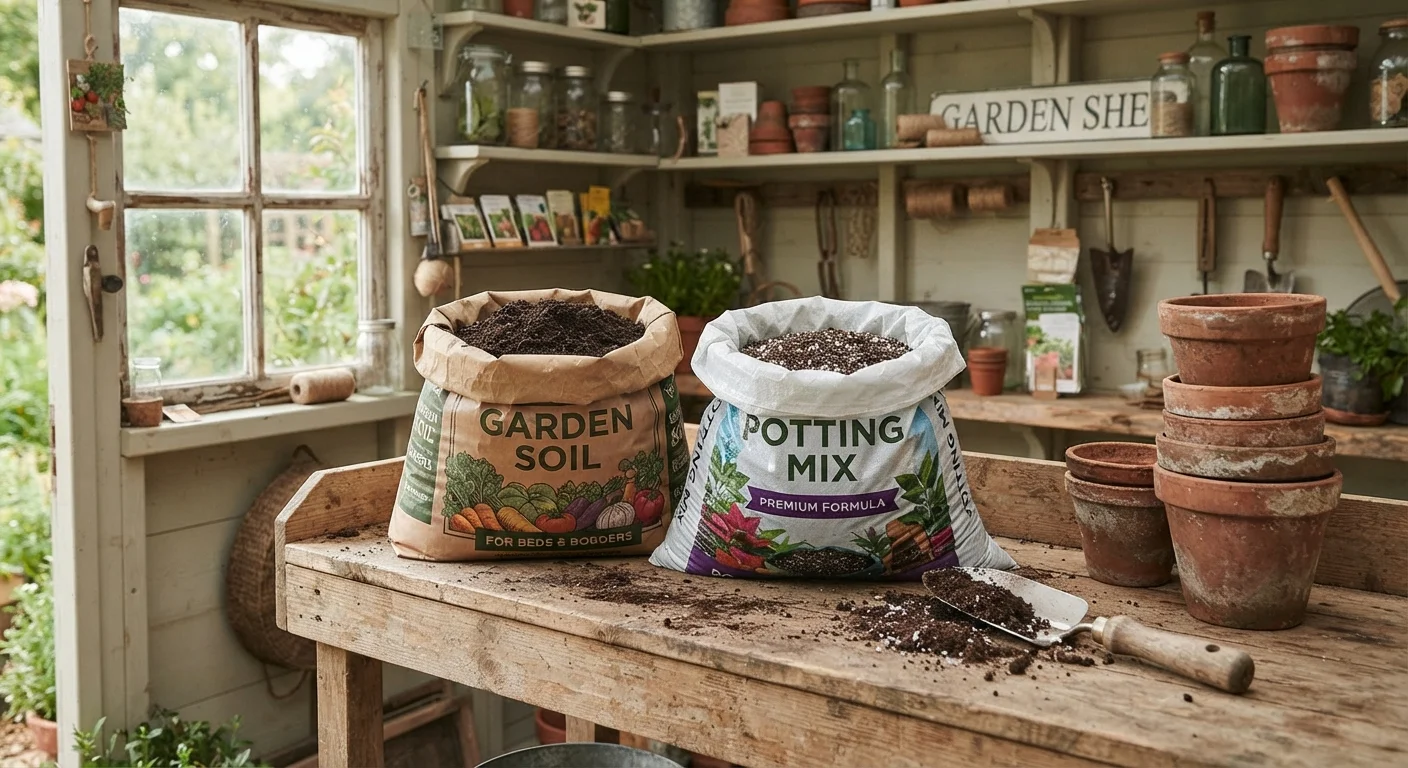
Photo: ReadersChronicle.com | Your Comprehensive Learning Destination editorial
—— In This Article
Key Takeaways
- Garden soil is formulated to blend with native ground soil - not to be used alone in containers.
- Potting mix is engineered for drainage and aeration inside pots, where roots can't reach deeper layers.
- Using the wrong product in the wrong place is one of the most common and costly beginner mistakes.
- Potting mix typically costs more per bag but saves plants from root rot in containers.
- For raised beds, a blend of garden soil and compost often outperforms either product used alone.
Why These Two Products Confuse So Many Gardeners
Stand in any garden center aisle and you'll find bags of garden soil and potting mix sitting side by side, often with similar packaging. They're both brown, both dirt-like, and both claim to help plants grow. So it's understandable that many beginners grab whichever bag is cheaper or easier to carry - and then wonder why their tomatoes drowned in a pot or their in-ground peppers never took off.
The core difference comes down to structure. Garden soil is meant to be worked into the ground, where it can spread, drain freely through surrounding earth, and connect with existing soil biology. Potting mix, by contrast, is an engineered growing medium - typically made from ingredients like peat moss, perlite, or coir - designed to hold just enough moisture while allowing excess water to drain out of a container. To learn more about how soil fits into a healthy garden system, see our guide to soil, seeds, and sunlight.
| Criterion | Garden Soil | Potting Mix |
|---|---|---|
| Primary use | In-ground beds and raised beds | Pots, planters, containers |
| Texture | Dense, mineral-rich | Lightweight, airy |
| Drainage | Relies on surrounding soil | Engineered to drain freely |
| Typical ingredients | Topsoil, compost, minerals | Peat/coir, perlite, bark |
| Cost per bag | Generally lower | Generally higher |
| Risk in containers | Compacts, causes root rot | Performs as intended |
| Risk in ground | Performs as intended | Drains too fast, costs more |
What Happens When You Use the Wrong One
Using garden soil in a container is probably the single most common beginner mistake. Because it's denser than potting mix, garden soil compacts over time in a confined space, reducing the air pockets roots need to breathe. Water can't move through properly, leading to waterlogged conditions and root rot - a condition where roots are damaged by prolonged excess moisture and oxygen deprivation. Plants may look fine for a few weeks, then decline suddenly.
The reverse mistake is less common but still costly: filling a large raised bed entirely with potting mix. Potting mix drains quickly and doesn't retain nutrients the same way that a good garden soil and compost blend does. You'd also spend significantly more money without a meaningful benefit. Our article on raised beds vs. in-ground planting explores how bed type should shape your soil choices.
A Word on 'Garden Soil' Label Variation
Product formulations vary widely by brand and region. Some bags labeled 'garden soil' contain added compost or fertilizer; others are closer to plain topsoil. Always read the ingredient list on the back of the bag, not just the front label. If you're unsure, your local cooperative extension service - a university-linked network of free gardening resources - can help you identify what your specific soil situation needs.
Practical Guidance: Which Goes Where
In-ground planting: If your native soil is heavy clay or very sandy, mix in bagged garden soil along with compost to improve its texture and drainage. Don't replace your native soil entirely - blend the amendment into the top 6 to 12 inches of the existing ground.
Raised beds: A common approach is to combine garden soil, compost, and sometimes a smaller portion of potting mix for the top layer. Filling a raised bed entirely with potting mix is expensive and often unnecessary. See how this fits into broader gardening decisions in our raised beds comparison article.
Containers and pots: Always use potting mix. The drainage and aeration it provides are non-negotiable in a confined space. For deeper insight into container gardening trade-offs, our article on container gardening covers what works and what doesn't.
Seedlings and transplants: Use potting mix, ideally a finer-textured variety if available. Coarse garden soil can inhibit delicate root development in young plants.
~40%
Of potting mix volume may be air pores
Well-formulated potting mixes are designed with significant pore space to support root oxygen exchange, according to general horticultural guidance from university extension programs.
6-12 in
Recommended amendment depth for in-ground beds
Most cooperative extension services recommend working soil amendments into the top 6 to 12 inches of native soil for effective root-zone improvement.

Home Editorial Team
Home Editorial Team is the collective byline for our editorial team and contributor network. Articles published under this byline or an editorial pen name are researched, written, and reviewed according to our editorial standards for clarity, consistency, and independence before publication.
View author profile