
Protein on a Budget: Plant Sources That Genuinely Deliver
Beans, lentils, tofu, and more—discover which affordable plant proteins offer solid nutrition and how to make them satisfying everyday staples.
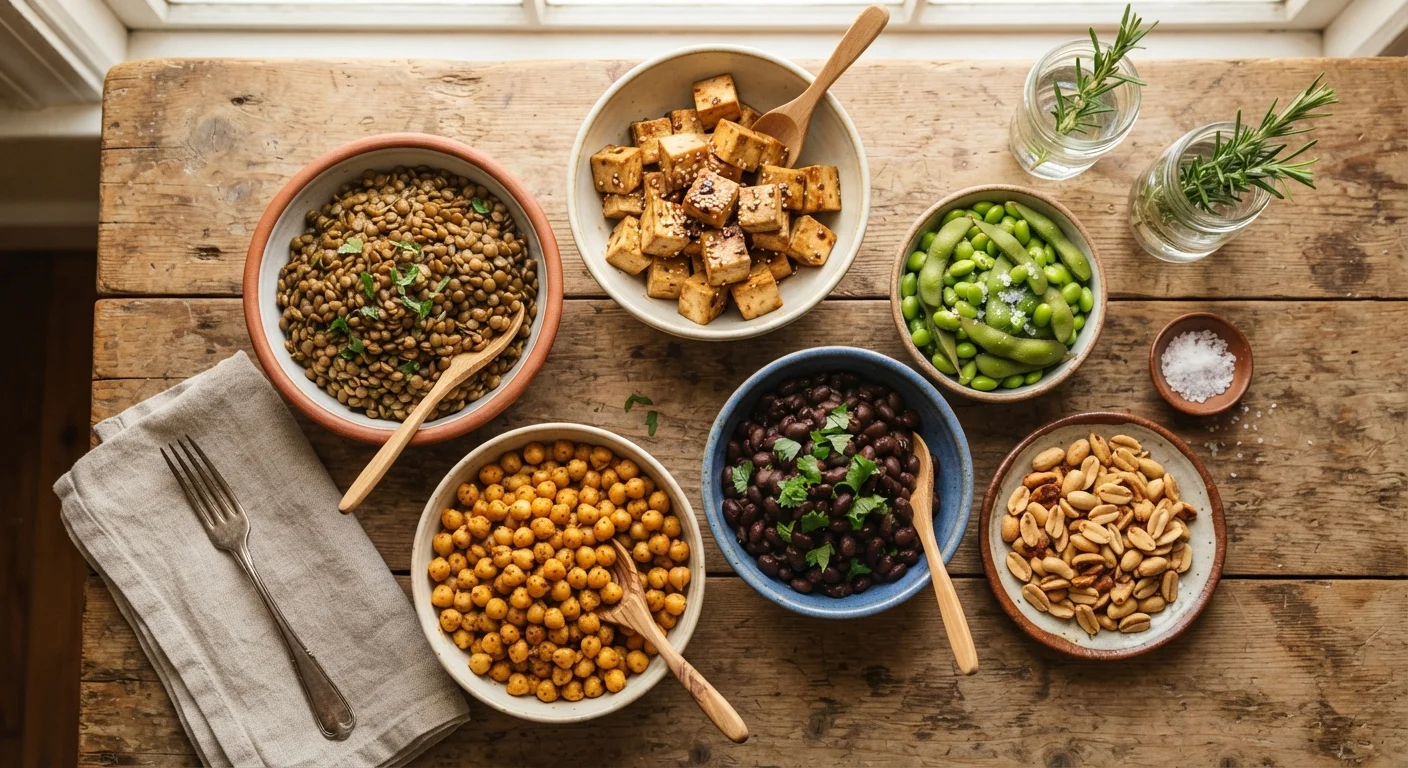
Photo: ReadersChronicle.com | Your Comprehensive Learning Destination editorial
—— In This Article
Key Takeaways
- Staple plant proteins such as lentils and dried beans cost a fraction of meat while delivering comparable protein per serving.
- Pairing complementary plant proteins throughout the day ensures you get all essential amino acids your body needs.
- Many affordable plant proteins also supply fiber, iron, and other nutrients that typical American diets lack.
- Canned and dried legumes, firm tofu, and whole soy foods are among the most cost-effective protein sources available.
- Simple cooking techniques can transform budget plant proteins into satisfying, flavorful everyday meals.
Why Plant Protein Deserves a Place on Your Plate
Protein is essential for muscle repair, immune function, and dozens of biochemical processes - yet many Americans assume meeting their needs requires expensive meat or specialty supplements. The evidence tells a different story. Several plant-based foods deliver substantial protein at a cost that is hard to beat, and they come bundled with fiber, vitamins, and minerals that support overall health.
If you are working within a tight grocery budget, understanding which plant proteins genuinely perform - and how to use them - can make a real difference. This guide covers the most nutritionally solid, wallet-friendly options and explains what makes each worth your attention. For a broader framework on eating well affordably, see our practical nutrition roadmap for budget-conscious shoppers.
A Note on Protein Needs
General dietary guidance from health authorities suggests that most adults need roughly 0.8 grams of protein per kilogram of body weight per day as a baseline, though needs vary by age, activity level, and health status. People who are pregnant, older adults, or those with specific medical conditions may have different requirements. A registered dietitian can help you determine what is appropriate for your individual situation.
The Best Affordable Plant Protein Sources
Dried Lentils
Lentils are arguably the most efficient plant protein available to budget shoppers. A one-cup cooked serving provides roughly 18 grams of protein along with significant iron, folate, and potassium. Dried lentils typically cost well under $2 per pound and expand considerably during cooking, stretching each dollar further.
Unlike dried beans, lentils require no overnight soaking - they cook in 20 to 30 minutes on the stovetop. Red lentils break down into a creamy texture ideal for soups and dahls, while green and brown varieties hold their shape well in salads and grain bowls. Their mild, earthy flavor absorbs spices and aromatics readily, making them adaptable to virtually any cuisine.
Lentils cook in under 30 minutes with no soaking - an unbeatable combination of speed, cost, and nutrition.
Dried or Canned Beans
Black beans, pinto beans, kidney beans, navy beans, and chickpeas all deliver 14-17 grams of protein per cooked cup. Dried beans are the most economical form - often $1-2 per pound - while canned beans trade a modest cost premium for convenience. Both are nutritionally comparable once cooked or rinsed.
Beans are also among the richest plant sources of dietary fiber, which supports digestive health and helps maintain steady blood sugar. They work across an enormous range of dishes: tacos, stews, curries, burgers, hummus, and pasta. Keeping a rotating stock of different varieties means you are rarely without a high-protein ingredient. Our pantry guide covers how to stock legumes and other affordable staples effectively.
Beans deliver fiber alongside protein - two nutrients most Americans consistently fall short of in a single affordable food.
Firm Tofu
Tofu is a complete protein, meaning it contains all nine essential amino acids in meaningful amounts - a distinction shared by very few plant foods. A half-cup serving of firm tofu provides approximately 10 grams of protein. It is made from soybeans and is widely available at standard grocery stores, typically priced between $2 and $3.50 per block, which yields several servings.
Tofu's texture is highly versatile: pressed and cubed tofu crisps up well when pan-fried or baked; silken tofu blends smoothly into sauces, scrambles, and dressings. The key to satisfying tofu is removing excess moisture before cooking and using bold seasoning, as tofu readily absorbs marinades and spices.
Tofu is one of the rare plant foods that qualifies as a complete protein, covering all essential amino acids.
Edamame and Whole Soy Foods
Whole soybeans - including edamame (immature green soybeans) and tempeh - deliver complete protein in a form that is also rich in isoflavones, healthy fats, and several B vitamins. Frozen edamame is widely available and typically affordable; a one-cup serving contains around 17 grams of protein. Tempeh, made from fermented whole soybeans, is denser and higher in protein still - around 19-20 grams per half-cup - and the fermentation process may improve digestibility.
Both are straightforward to use: edamame can be steamed and eaten as a snack or stirred into grain bowls and stir-fries, while tempeh slices well for sandwiches, crumbles into sauces, or can be marinated and baked. Whole soy foods are also featured prominently in nutrition research for their role in heart health, though findings are still developing and individual responses vary.
Tempeh packs around 20 grams of protein per half-cup - more than many cuts of meat, at a fraction of the price.
Peanuts and Peanut Butter
Peanuts are legumes botanically, not true nuts, and their protein content reflects that: around 7 grams per two-tablespoon serving of peanut butter and roughly 25 grams per 100 grams of whole peanuts. Natural peanut butter - without added sugar or hydrogenated oils - is one of the most cost-effective protein additions available, often running $2-4 for a jar containing dozens of servings.
Beyond protein, peanuts supply niacin, magnesium, and heart-healthy monounsaturated fats. They are calorie-dense, however, so portion awareness is worth practicing as part of an overall balanced diet. Peanut butter works in savory sauces, overnight oats, smoothies, and on whole-grain toast, offering genuine flexibility without the need for elaborate preparation. For those interested in how affordable foods like peanuts fit the bigger nutritional picture, see our article on why cheap food isn't always the least nutritious.
Peanut butter offers meaningful protein and healthy fats at a per-serving cost that almost no other food can match.
Quinoa
Quinoa stands apart from most grains because it is also a complete protein - providing all essential amino acids - with around 8 grams of protein per cooked cup. It cooks in roughly 15 minutes and has a mild, slightly nutty flavor that pairs well with both savory and sweet preparations. Nutritionally, it also supplies iron, magnesium, and fiber.
Quinoa is generally pricier than rice or oats, but buying it in bulk or from store-brand lines brings the cost down considerably. It works well as a base for grain bowls, mixed into soups for added body, or used in place of rice as a side dish. Rinsing quinoa before cooking removes its natural saponin coating, which can otherwise contribute a slightly bitter taste.
Quinoa is one of very few grains that qualifies as a complete protein, making it a genuinely valuable budget staple.
Boost Flavor Without Adding Cost
Plant proteins absorb seasoning exceptionally well. A combination of garlic, cumin, smoked paprika, and a small amount of acid (lemon juice or vinegar) can transform plain beans or tofu into a satisfying, craveable dish. Building a small collection of dried spices is a low-cost investment that dramatically improves how budget proteins taste - and keeps you from reaching for more expensive convenience foods.
Putting It All Together
The plant proteins above are not just economical - they are genuinely nutritious, and they are flexible enough to anchor dozens of different meals. Rotating between them keeps eating interesting and ensures a broader nutrient profile. For ideas on turning these staples into multiple meals without repeating yourself, our guide on stretching nutritious ingredients across multiple meals offers practical batch-cooking strategies.
One thing worth knowing: most plant proteins are lower in one or more essential amino acids compared to animal sources. Eating a variety of plant proteins across the day - not necessarily at every single meal - allows your body to access the full spectrum it needs. You do not need to stress over perfect combinations at each sitting; overall daily variety is what matters, according to mainstream dietetic guidance.
Finally, plant proteins pair naturally with another nutrient most Americans fall short on. If you want to understand that connection better, our article on fiber and why most Americans under-eat it is a useful companion read. And if you are motivated to grow some of your own food to stretch your dollar even further, check out starting a vegetable garden on a tight budget.
This article is for general informational and educational purposes only and is not a substitute for personalized medical or dietary advice. Consult a registered dietitian or qualified healthcare professional before making significant changes to your diet, especially if you have an existing health condition.

Health Editorial Team
Health Editorial Team is the collective byline for our editorial team and contributor network. Articles published under this byline or an editorial pen name are researched, written, and reviewed according to our editorial standards for clarity, consistency, and independence before publication.
View author profile