
Low-Cost Tools That Actually Matter in a Beginner's Garden
You don't need a full shed to get started. These are the tools that genuinely earn their place, with notes on what each one does.
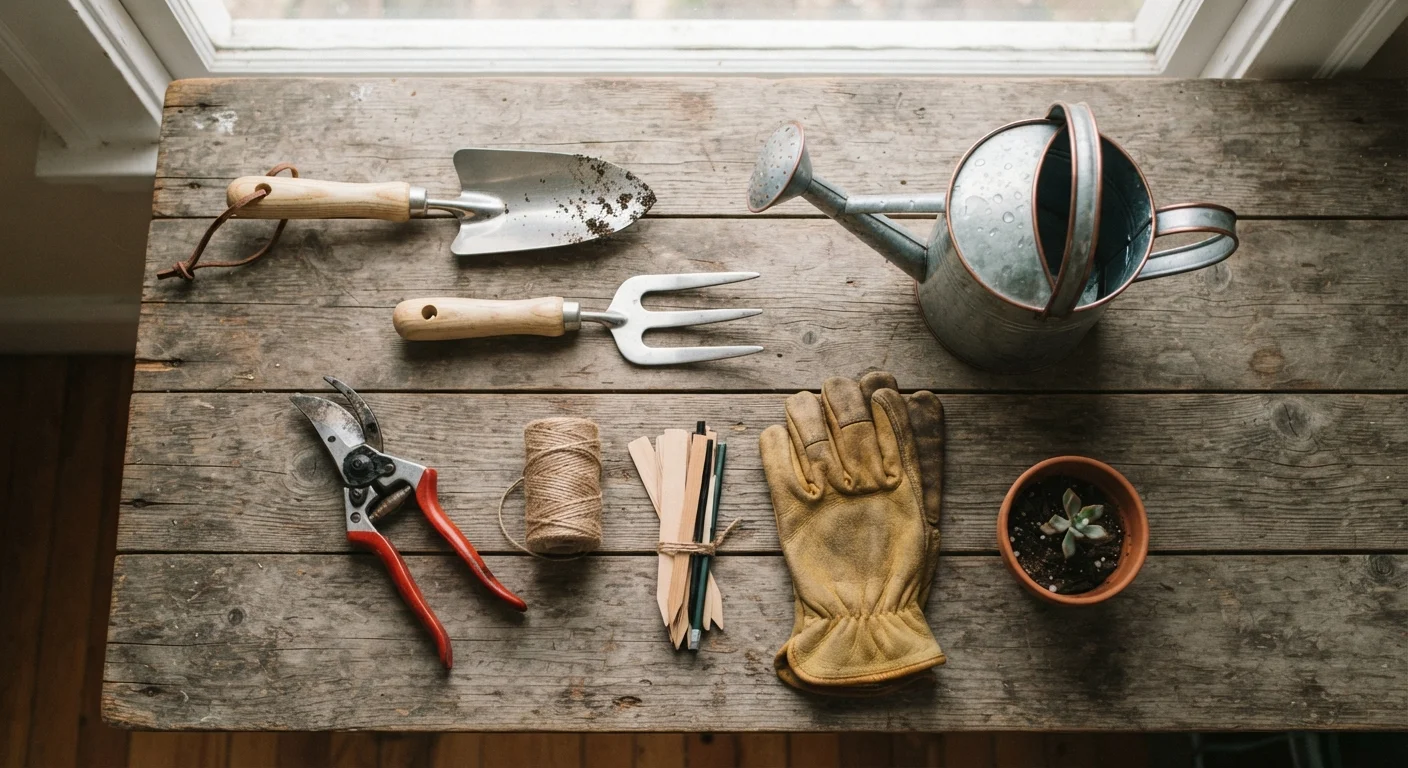
Photo: ReadersChronicle.com | Your Comprehensive Learning Destination editorial
—— In This Article
Key Takeaways
- You need fewer than ten tools to start and maintain a productive beginner garden.
- Cheap tools from hardware or dollar stores can work well if they have sturdy metal heads and solid handles.
- Each tool on this list serves a specific, recurring task - none are single-use novelties.
- Buying fewer, better-quality tools beats owning a cluttered shed full of items you rarely use.
- Matching your tools to your garden type - raised bed, container, or in-ground - saves money from the start.
Why Tool Selection Matters More Than Tool Count
Walk into any garden center and you'll find walls of specialized equipment priced to convince you that more tools equal better results. They don't. For a beginner, the goal is a short list of versatile, durable items that cover the tasks you'll actually repeat all season: moving soil, planting, watering, cutting, and pulling weeds.
Before you buy anything, read our guide to soil, seeds, and sunlight - understanding what your garden actually needs shapes which tools earn their keep. If you're working within a tight budget overall, our article on starting a vegetable garden on a tight budget gives broader strategies for stretching every dollar.
The tools below were chosen because each one handles a job that comes up again and again, and because all of them are widely available at low price points without sacrificing function.
Hand Trowel
A hand trowel is the single most-used tool in a small garden. You'll reach for it to dig planting holes, transfer seedlings, scoop potting mix, and carve out space for bulbs. Look for one with a metal blade that extends into the handle rather than a plastic socket - that joint is where cheap trowels break first.
Blades come in two common widths: a narrow, pointed version for digging in tight spots, and a wider, flatter version for scooping. If you buy only one, the narrow pointed style handles more tasks in typical soil.
The hand trowel is the one tool you'll use from the first day of spring to the last day of fall.
Hand Fork (Cultivator)
A hand fork - sometimes sold as a cultivator - has three or four tines and is used for loosening compacted soil, breaking up clumps, and mixing amendments like compost into the top few inches of a bed. It's also effective for scratching out shallow weeds without disturbing surrounding plants.
In a raised bed or container garden, a hand fork often replaces a full-size garden fork entirely, since you're working in a confined area where a long handle is more hindrance than help.
In a raised bed, a hand fork does the work of a full-size garden fork at a fraction of the cost.
Watering Can
A watering can gives you control over exactly where and how much water lands - something a hose nozzle makes harder near seedlings and delicate transplants. Choose one with a detachable rose head (the sprinkler attachment) so you can switch between a gentle shower for seeds and a direct stream for established plants.
Capacity matters for convenience: a one-gallon can is light enough to carry full but requires more trips; a two-gallon can covers more ground per fill. For balconies or small plots, one gallon is usually sufficient.
A detachable rose head lets one watering can handle seedlings and established plants equally well.
Pruning Shears (Hand Pruners)
Pruning shears are used for cutting stems, deadheading spent flowers, harvesting vegetables, and trimming back overgrown growth. A bypass pruner - where two blades pass each other like scissors - makes cleaner cuts than an anvil pruner and causes less damage to plant tissue.
Keep the blades clean and wipe them with a dry cloth after use to prevent rust and reduce the transfer of plant disease between cuts. A basic sharpening stone prolongs their life significantly and costs very little.
Bypass pruners make cleaner cuts than anvil types and do less damage to stems.
Garden Hoe (Short-Handled)
A hoe is the most efficient tool for disrupting weeds before they establish - dragging it just under the soil surface severs roots without pulling each weed individually. A short-handled stirrup hoe, also called a hula hoe, cuts on both the push and pull stroke, making it faster than a standard flat hoe.
For small beds, a long-handled hoe can be awkward. A short-handled version gives you more precision in tight planting areas and is easier to store.
Running a hoe along rows weekly prevents weeds from establishing - it's faster than pulling by hand.
Garden Kneeler or Knee Pad
This is the tool beginners most often skip and most commonly regret skipping. Kneeling directly on soil or gravel during planting and weeding puts repeated stress on your knees and can cut a session short. A simple foam kneeling pad costs only a few dollars and makes close ground-level work sustainable for longer periods.
If your garden includes raised beds at table height, you may not need this at all - another reason that your specific setup should guide what you actually buy.
A foam kneeling pad is inexpensive and prevents the knee pain that cuts most beginner sessions short.
Getting the Most Out of What You Buy
Cheap tools last longer when you clean and dry them after each use. Wiping soil off a trowel before storing it prevents rust and keeps the blade sharp. Hanging tools rather than piling them on a floor extends handle life considerably.
Check thrift stores and yard sales first
Garden tools are among the most commonly donated and resold items at thrift stores, estate sales, and community swaps. Metal trowels, pruners, and hoes often show up in good working condition for a dollar or two. Clean them with a stiff brush, sand off surface rust with coarse sandpaper, and they'll function as well as new. This is especially worth doing before buying a full set at retail price.
If your garden grows to include containers or a small patio setup, most of these same tools transfer directly - see our honest look at container gardening trade-offs for what else you might need in that context. And if you want to keep your garden productive without adding complexity, consistent simple habits matter far more than owning a full toolkit.
Start with the five or six tools below that match your specific setup. Add only when a real, recurring task demands it - not because something looks useful on a shelf.

Home Editorial Team
Home Editorial Team is the collective byline for our editorial team and contributor network. Articles published under this byline or an editorial pen name are researched, written, and reviewed according to our editorial standards for clarity, consistency, and independence before publication.
View author profile