
What 'As-Is' Really Means on a Used Car Sale
Buying a car sold as-is shifts nearly all risk to the buyer. Here's what that term means legally and practically before you agree to it.
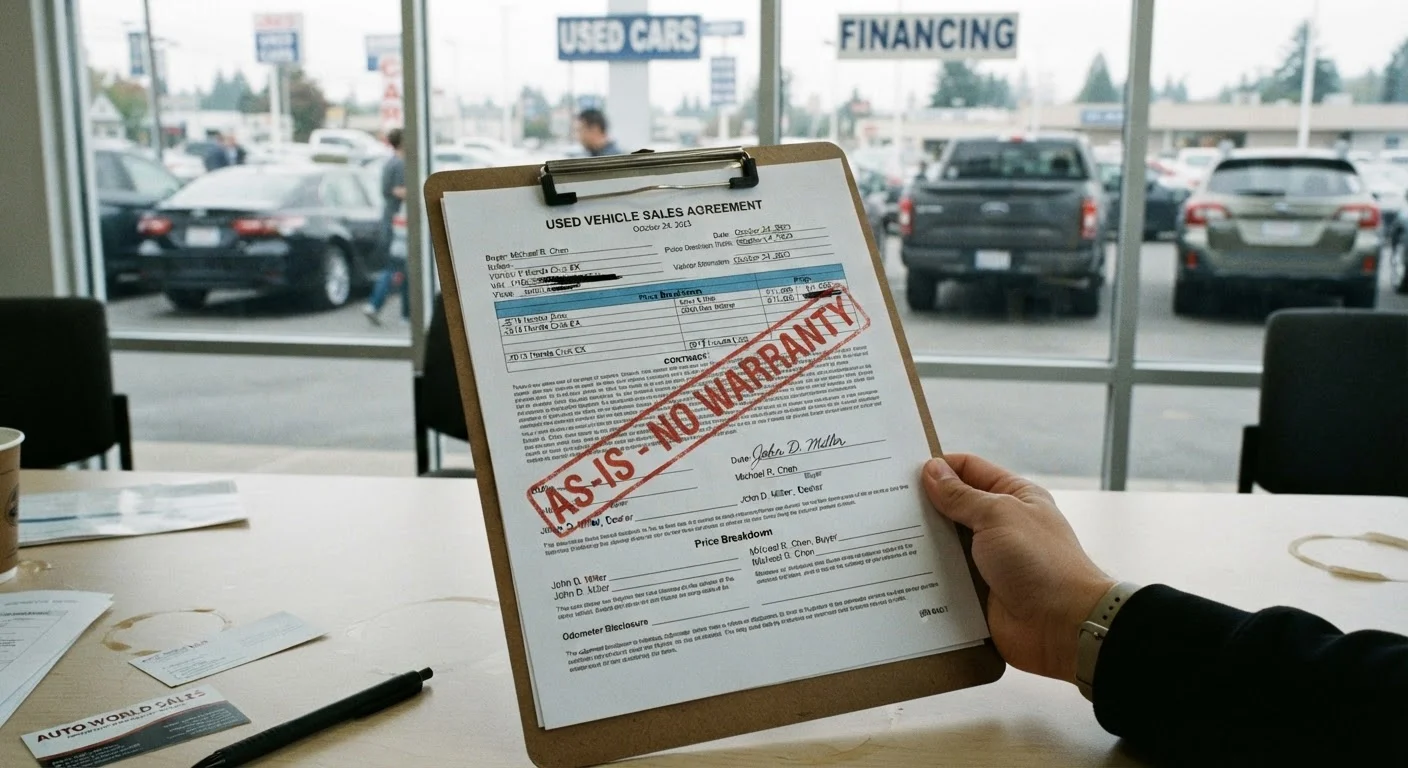
Photo: ReadersChronicle.com | Your Comprehensive Learning Destination editorial
—— In This Article
Key Takeaways
- An as-is sale means the buyer accepts the vehicle in its current condition with no seller obligation to repair defects.
- Both private sellers and dealerships can sell vehicles as-is, though dealer rules vary by state.
- The FTC's Used Car Rule requires dealers to display a Buyers Guide disclosing whether a car is sold as-is or with a warranty.
- Getting an independent pre-purchase inspection is one of the strongest protections a buyer has before agreeing to an as-is deal.
- Fraud is still illegal - if a seller knowingly conceals a serious defect, as-is language may not shield them from liability.
What the Term Actually Means
Three words on a car listing - sold as-is - carry a lot of legal weight. They signal that the seller is transferring the vehicle in whatever condition it happens to be in, and that once you hand over money and sign the paperwork, the car's problems are yours to deal with.
This isn't just a casual disclaimer. In most U.S. states, an as-is sale effectively eliminates implied warranties - the baseline legal expectation that a product is fit for its ordinary purpose. Without those protections, a transmission that fails two days after purchase is your expense, not the seller's.
As-is sales are common across the used car market. You'll find them in private transactions, at independent dealers, and at auctions. Even franchise dealerships sometimes sell trade-ins or older vehicles as-is. To understand where these deals typically show up, see our overview of how each sales channel works.
How As-Is Works Differently for Dealers vs. Private Sellers
The rules aren't identical depending on who's selling.
Dealerships are regulated by the Federal Trade Commission's Used Car Rule, which requires them to display a Buyers Guide in the window of every used vehicle. That document must clearly state whether the car is sold as-is or comes with a warranty, and what - if any - systems are covered. This gives buyers a paper trail and a moment to pause before committing.
Private sellers face fewer federal requirements. Most private sales are understood to be as-is by default, even if those words never appear in writing. That said, state laws vary: some require sellers to disclose known defects like flood damage or a salvage title regardless of how the sale is framed.
The practical difference matters. What shifts when you buy from a private seller versus a dealer goes beyond just price - it affects the paperwork, the protections available to you, and the recourse you have if something goes wrong.
~40%
Used cars sold without any warranty coverage
Industry estimates suggest a significant share of used vehicle transactions involve no warranty protection, leaving buyers fully exposed to repair costs.
$1,500-$4,000+
Typical cost of a surprise major repair
Common post-purchase surprises on as-is vehicles - such as transmission issues or failing electronics - can run into thousands of dollars, according to repair industry data.
$100-$200
Average pre-purchase inspection cost
An independent mechanic inspection typically costs a fraction of what a hidden defect might cost to repair after the sale closes.
What As-Is Does Not Cover: Fraud and Concealment
An as-is clause is not a blank check for dishonesty. If a seller knows about a serious defect and actively hides it - covering up rust, resetting a check-engine light, or failing to disclose a rebuilt or salvage title - that can constitute fraud or misrepresentation under state law.
Courts have found that as-is language doesn't protect sellers who deliberately deceive buyers about material facts. A material fact is anything a reasonable buyer would consider important to their decision: accident history, prior flooding, known engine or transmission problems, or title status.
State Lemon Laws Generally Don't Apply
Most state lemon laws are designed to protect buyers of new vehicles or certified pre-owned cars sold with warranties. If you buy a used car as-is, those protections typically don't apply. A handful of states have used car lemon law provisions, but coverage is narrow and varies significantly. Check your state's consumer protection office for specifics before assuming you have coverage.
This is why a verbal "runs great, no problems" from a seller doesn't disappear just because the contract says as-is. If that statement is false and the seller knew it, you may have legal standing - but proving it after the fact is hard and often costly. Prevention is far more practical than litigation.
How to Protect Yourself Before Agreeing to an As-Is Deal
The best protection is information gathered before you sign anything.
- Get an independent pre-purchase inspection. A qualified mechanic who has no stake in the sale is your clearest window into a vehicle's actual condition. This step can surface issues no test drive will reveal. See what that process involves: what a pre-purchase inspection covers and why it matters.
- Pull a vehicle history report. Look for title red flags - salvage, rebuilt, or flood-damage designations - as well as accident records and odometer discrepancies.
- Ask direct questions in writing. Request that the seller disclose any known defects via text or email. It creates a record.
- Use price as a risk buffer. If the car has unknown risk baked in, the price should reflect that. Don't pay retail for as-is.
For a broader checklist before you commit to any used vehicle, review what to verify before signing anything.
Make the Inspection a Condition of the Deal
Before agreeing to buy any as-is vehicle, ask to make the sale contingent on a satisfactory independent inspection. Most reasonable sellers will agree - it's a standard request. If a seller refuses to allow an inspection entirely, treat that as a significant red flag and walk away.
Frequently Asked Questions

Cars Editorial Team
Cars Editorial Team is the collective byline for our editorial team and contributor network. Articles published under this byline or an editorial pen name are researched, written, and reviewed according to our editorial standards for clarity, consistency, and independence before publication.
View author profile