
Private Seller vs. Dealership: What Changes Beyond the Price Tag
Buying from a dealer and buying from an individual aren't just different in cost. Here's what else shifts — paperwork, protections, and risk.
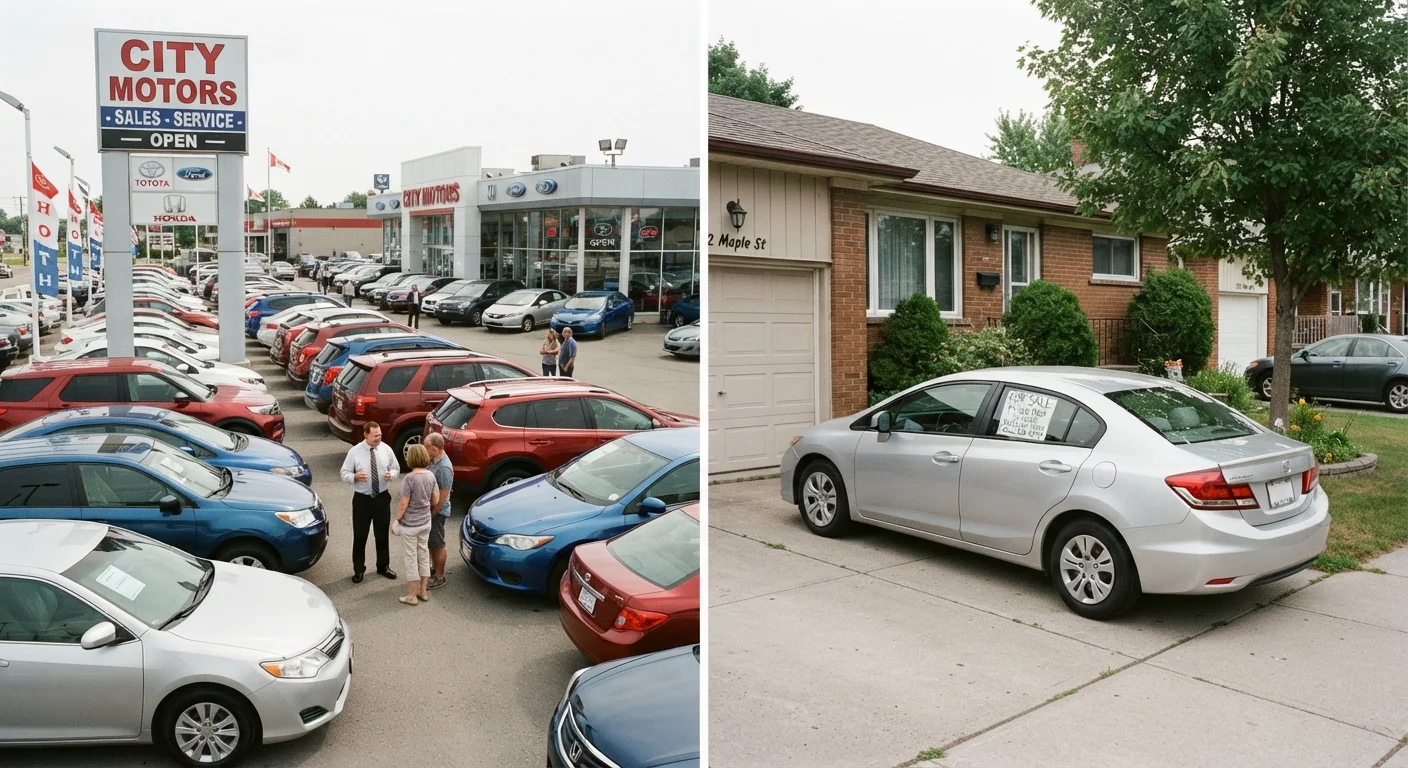
Photo: ReadersChronicle.com | Your Comprehensive Learning Destination editorial
—— In This Article
Key Takeaways
- Dealerships are regulated businesses; private sellers are not - that gap affects your legal recourse after the sale.
- Financing is available at dealerships; private sales almost always require you to arrange your own funding upfront.
- Private sellers typically sell as-is, meaning any defects discovered after purchase become your problem.
- Dealerships handle most title and registration paperwork; private sales require buyers to manage that process themselves.
- Neither option is universally better - the right choice depends on your risk tolerance, budget, and preparation.
The Protections That Come With - or Don't Come With - Each Option
Price is the obvious difference, but the legal landscape behind each transaction is where the real gap sits. When you buy from a licensed dealership, state and federal regulations follow the sale. The FTC's Used Car Rule, for example, requires dealers to post a Buyers Guide disclosing whether a vehicle comes with a warranty or is sold as-is. Dealers also operate under state licensing boards that can sanction bad actors.
Buy from a private individual and most of that framework disappears. Private sellers are not required to follow dealer disclosure rules in most states, and your ability to dispute problems after the fact is extremely limited. What "as-is" means legally deserves a close read before agreeing to any private sale, because that phrase shifts nearly all risk squarely onto you. If the engine fails a week after you drive away, you generally have no recourse against a private seller.
This doesn't mean dealers are risk-free. Pressure tactics and vague warranty language exist at dealerships too. But the regulatory floor is meaningfully higher.
| Criterion | Dealership Purchase | Private Seller Purchase |
|---|---|---|
| Legal protections | State & federal regulations apply | Minimal - buyer largely unprotected |
| Warranty options | CPO programs, limited warranties available | Almost always sold as-is |
| Financing | Available on-site through dealer | Must arrange independently beforehand |
| Documentation fees | Typically $100-$500+ added to price | None charged by seller |
| Title & registration | Dealer usually handles filing | Buyer and seller manage themselves |
| Price negotiability | Structured - room varies by dealer | Often flexible, especially with inspection findings |
| Vehicle history disclosure | FTC Buyers Guide required | Voluntary - no legal requirement in most states |
Financing, Fees, and Paperwork: How the Process Differs
One of the most practical differences is how money and documents change hands. At a dealership, you can often arrange financing on the spot. The dealer submits your application to multiple lenders and presents you with loan offers. That convenience has a cost - dealer-arranged loans sometimes carry higher interest rates than what you could negotiate independently. Comparing dealer financing to your own loan is worth doing before you sit down to sign anything.
Private sales are cash or pre-arranged financing only. You'll need to secure a personal auto loan from your own bank or credit union before meeting the seller. That takes more preparation, but it removes the middleman from the lending process entirely.
On the paperwork side, dealers handle title transfers, odometer disclosure forms, and often the initial registration filing as part of the sale. In a private transaction, the buyer and seller must complete those steps themselves - requirements vary by state, so check your DMV's process before signing anything. Missing a step can create title problems that take months to untangle.
$300-$500+
Typical dealer documentation fee range
Documentation fees vary widely by state - some states cap them, others do not, making it worth researching your state's rules before negotiating.
~40%
Used vehicles sold privately in the US
A significant share of used vehicle transactions occur between private parties, according to industry estimates, underscoring the need for buyer preparedness.
Dealers also commonly add documentation fees, which can range from under $100 to several hundred dollars depending on the state. Private sellers don't charge these, but that savings can be offset by the time and effort required to manage paperwork independently.
Due Diligence Looks Different in Each Setting
With a private seller, the burden of investigation falls almost entirely on you. That means pulling a vehicle history report, arranging a pre-purchase inspection with an independent mechanic, and asking pointed questions about the car's maintenance history. Sellers aren't obligated to volunteer problems, and many won't. Understanding how private sellers approach pricing can help you read the situation from the other side.
Dealerships certified pre-owned programs include inspections as part of the sales process, and some offer limited warranties. That doesn't eliminate the need for your own due diligence - understanding what the sticker price includes is still essential - but it provides a documented baseline that private sales rarely match.
Neither route guarantees a problem-free car. An independent inspection is worthwhile regardless of where you're buying. Most reputable mechanics will inspect a vehicle for a modest flat fee, and that cost is almost always worth it.
State Laws Vary Significantly
Title transfer procedures, required disclosures, and consumer protection rules differ from state to state. What's required of a private seller in California may not apply in Texas. Always check your state's DMV website before completing any vehicle transaction - private or dealer - to confirm the exact steps required.
This article provides general information about vehicle purchasing options and is not legal or financial advice. Regulations vary by state. Consult your state's DMV and, if needed, a licensed attorney or financial adviser for guidance specific to your situation.

Cars Editorial Team
Cars Editorial Team is the collective byline for our editorial team and contributor network. Articles published under this byline or an editorial pen name are researched, written, and reviewed according to our editorial standards for clarity, consistency, and independence before publication.
View author profile