
Vehicle History Reports: What They Reveal and What They Miss
A history report is a useful starting point, not a final verdict. Understand what data these reports capture — and the gaps you need to fill yourself.
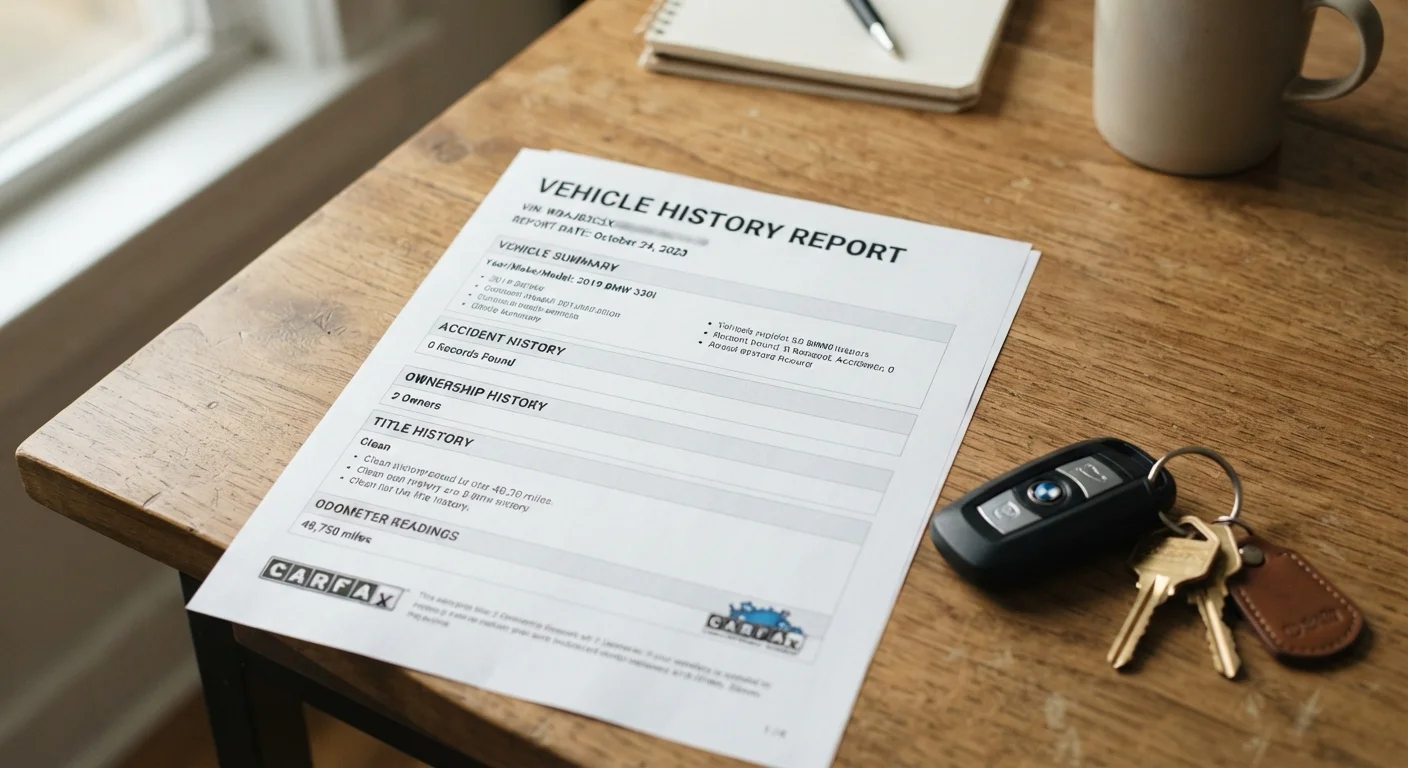
Photo: ReadersChronicle.com | Your Comprehensive Learning Destination editorial
—— In This Article
Key Takeaways
- A vehicle history report shows documented events - not everything that has actually happened to the car.
- Title brands like 'salvage' or 'flood' are serious red flags that should affect your offer or decision.
- Odometer rollback fraud still happens; mileage discrepancies in a report are worth investigating.
- A clean report does not equal a mechanically sound car - always pair it with an in-person inspection.
- Private sellers and smaller dealers may have vehicles with unreported incidents that never entered any database.
What a Vehicle History Report Actually Covers
Run a vehicle history report and you'll typically see a structured summary across several categories. Here's what most reports include:
- Title history: Whether the vehicle has a clean title or carries a brand such as salvage, rebuilt, flood-damaged, or lemon law buyback. These brands follow the vehicle across state lines.
- Ownership records: The number of previous owners and whether the vehicle was registered to an individual, a rental company, a fleet, or a dealer.
- Reported accidents: Collisions submitted through insurance claims or police reports, often flagged by severity.
- Odometer readings: Mileage snapshots recorded at inspections or title transfers, which can surface rollback fraud if numbers don't add up over time.
- Recalls: Open or completed federal safety recalls tied to that VIN.
- Lien and theft records: Whether the car is listed as stolen or has an outstanding loan against it.
This is a meaningful amount of information - and checking it before any used car purchase is a reasonable baseline step, much like reading a credit report before a major financial commitment.
1 in 5
Used cars with an undisclosed problem
Industry estimates suggest a meaningful share of used vehicles on the market have issues not reflected in their history reports, underscoring the need for independent inspections.
17 digits
Length of a Vehicle Identification Number (VIN)
Every VIN is standardized under federal regulations and uniquely identifies a specific vehicle - it's the key to pulling any history report.
~$20-$50
Typical cost of a single vehicle history report
Most major report providers charge in this range per report, though some dealers provide them at no charge; subscription options may be more economical for multiple lookups.
The Gaps You Need to Know About
Here's where buyers get into trouble: a clean history report can create false confidence. The data in these reports is only as complete as what gets formally reported and entered into a shared system.
What typically won't show up:
- Accidents settled privately without filing an insurance claim
- Flood damage if the car was never inspected or declared a loss
- Frame or structural damage repaired at a non-reporting body shop
- Engine or transmission problems - history reports are not mechanical inspections
- Regular maintenance performed at home or at small shops that don't report to databases
A car could have had three unreported fender-benders, a blown head gasket repair, and extensive rust remediation - and still show a spotless history report. That's not a flaw in any one service; it reflects a fundamental limit of data that depends on voluntary or legally required reporting.
Check Paint and Panels in Person
Hold a flashlight at a low angle along the car's body panels. Inconsistent texture, slight color variation, or uneven panel gaps can indicate prior body repairs that never made it into any database. This quick visual check costs nothing and can surface issues a clean report misses entirely.
For a more complete picture, combine the report with a thorough in-person pre-purchase inspection and a careful walk-around with attention to paint inconsistencies, panel gaps, and undercarriage condition.
How to Use a Report Without Overrelying on It
Think of a vehicle history report as a screening tool, not a seal of approval. Here's a practical way to use it:
- Run it early. Before you schedule a test drive or get emotionally invested, pull the report. A salvage title or a flood brand may be enough to walk away before spending more time.
- Cross-check the odometer. Compare the mileage readings in the report against what the seller is showing. Gaps or jumps in reported mileage warrant questions.
- Look for ownership patterns. Multiple owners in a short span, or fleet/rental use, may indicate higher wear than the mileage suggests.
- Check for open recalls. An unfixed safety recall is a negotiating point at minimum - and a safety concern regardless.
- Treat a clean report as permission to keep looking, not permission to stop.
A solid checklist approach helps here. The used car buyer's checklist lays out all the steps worth completing before signing anything. And when reviewing red flags at a car lot, remember that missing or inconsistent paperwork is itself a warning sign - regardless of what the report says.
One more thing worth noting: if you're selling a car, keeping good maintenance records gives buyers documentation that a history report simply can't provide - and that transparency tends to build trust.
Reports Vary by Provider
Different vehicle history services draw on different data sources and may not show identical results. Running reports from more than one provider on a vehicle you're serious about can occasionally surface information that a single report misses. No single report is guaranteed to be exhaustive.
Frequently Asked Questions

Cars Editorial Team
Cars Editorial Team is the collective byline for our editorial team and contributor network. Articles published under this byline or an editorial pen name are researched, written, and reviewed according to our editorial standards for clarity, consistency, and independence before publication.
View author profile