
Full Coverage vs. Liability-Only: Which Makes Sense for Your Situation
Full coverage costs more—but is it worth it for your car? Explore the trade-offs between full and liability-only policies based on vehicle age and finances.
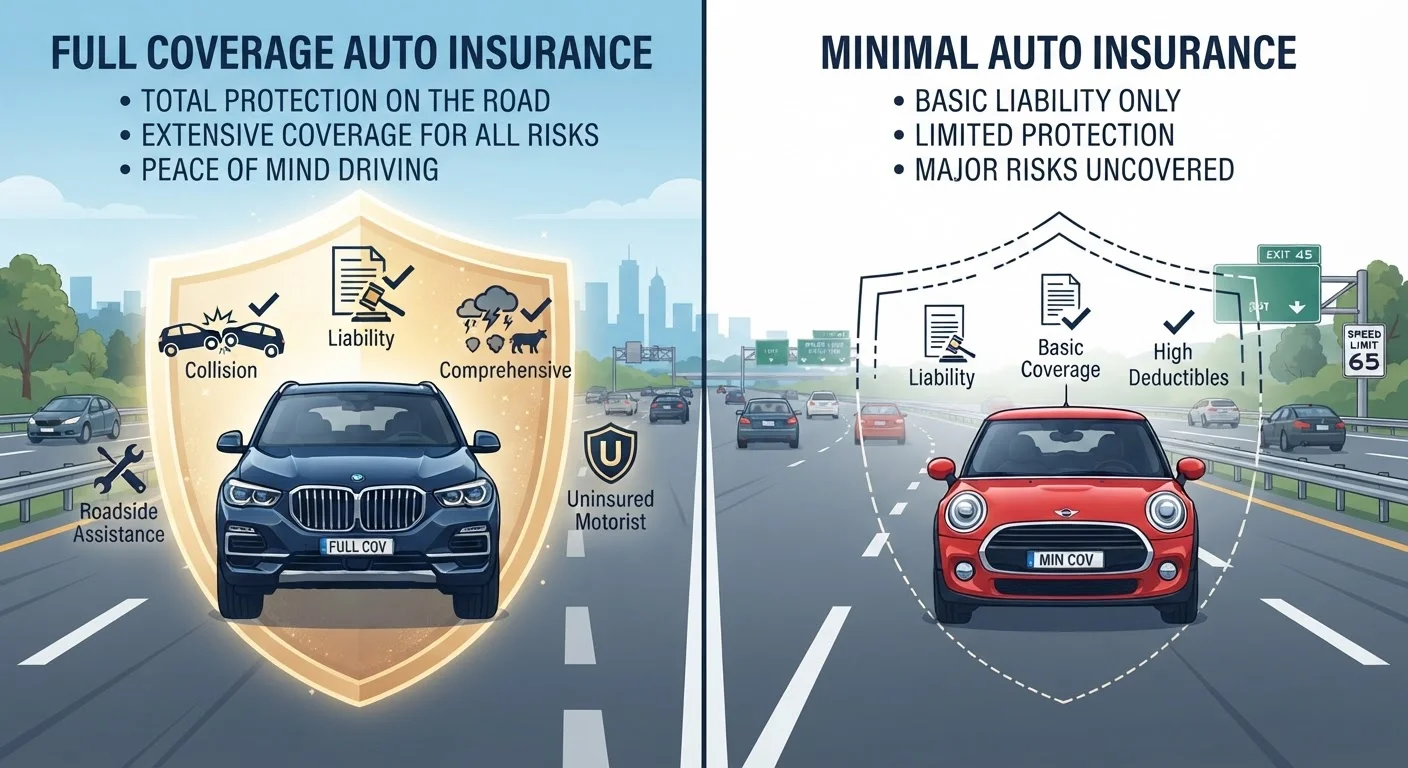
Photo: ReadersChronicle.com | Your Comprehensive Learning Destination editorial
—— In This Article
Key Takeaways
- Full coverage bundles liability with collision and comprehensive protection; liability-only covers only damage you cause to others.
- Lenders and lessors almost always require full coverage when you finance or lease a vehicle.
- A common rule of thumb: if annual premiums for collision and comprehensive exceed 10% of your car's value, dropping them may make sense.
- Your ability to absorb an out-of-pocket repair or replacement cost matters as much as your car's value.
- State minimums only require liability coverage, but meeting the minimum can leave significant financial gaps.
What Each Policy Actually Includes
The phrase "full coverage" isn't a single product - it's an informal term for a policy that combines liability, collision, and comprehensive coverages. Liability-only, by contrast, includes only the liability portion.
Here's what each layer does:
- Liability: Pays for injuries and property damage you cause to other people. Every state requires some minimum amount.
- Collision: Covers damage to your own vehicle from an accident, regardless of fault.
- Comprehensive: Covers non-collision damage to your vehicle - theft, weather, fire, animal strikes, and similar events.
For a deeper breakdown of how each coverage type works individually, see what each coverage actually protects.
| Criterion | Full Coverage | Liability-Only |
|---|---|---|
| Covers damage to others | Yes | Yes |
| Covers damage to your own car (collision) | Yes | No |
| Covers theft, weather, animals | Yes (comprehensive) | No |
| Typical premium cost | Higher | Lower |
| Required by lenders/lessors | Yes | No |
| Meets state minimum requirement | Yes | Yes (if liability limits met) |
| Best suited for | Newer, financed, or valuable vehicles | Older, paid-off, lower-value vehicles |
The Cost Trade-Off: When Numbers Guide the Decision
Full coverage costs more - sometimes significantly more - because it insures a wider set of risks. The relevant question isn't whether full coverage is "worth it" in the abstract, but whether it's worth it for your specific vehicle and finances.
~$1,000+
Typical annual cost added for collision and comprehensive
The Insurance Information Institute notes that collision and comprehensive together often add several hundred to over a thousand dollars annually, depending on location, vehicle, and driving history.
10%
Premium-to-value benchmark for dropping collision/comprehensive
Consumer finance educators commonly suggest reconsidering collision and comprehensive when their combined annual cost exceeds roughly 10% of the vehicle's current market value.
49 states
States with mandatory liability insurance requirements
Nearly all U.S. states require drivers to carry minimum liability coverage; New Hampshire is a notable exception, though it requires proof of financial responsibility.
A commonly cited benchmark: if your annual collision and comprehensive premiums combined exceed roughly 10% of your car's current market value, you may be paying more in premiums than you're likely to collect in claims over time. That's a rough guide, not a guarantee, but it gives you a starting point for the math.
Keep in mind that deductibles matter too. A higher deductible lowers your premium but increases what you pay out of pocket after a claim. How to balance premium cost against coverage walks through that framework in detail.
When Full Coverage Is Effectively Required
If you're still making payments on your vehicle - or you're leasing - the choice may already be made for you. Lenders and leasing companies nearly always require borrowers to carry collision and comprehensive coverage for the life of the loan or lease. Dropping to liability-only while a lien is on the title would put you in breach of your financing agreement.
Gap Insurance May Also Apply
If you finance a vehicle and it's totaled, your insurer typically pays the car's current market value - which may be less than what you still owe on the loan. Gap insurance covers that difference. It's a separate, optional add-on worth considering when you carry a loan on a depreciating asset. See when gap insurance applies for more detail.
Even if you own your car outright, full coverage may still be the smarter choice if your vehicle's value is high enough, or if replacing it out of pocket after a total loss would cause serious financial hardship. The decision ultimately hinges on two factors: how much the car is worth and how much financial cushion you have.
It's also worth understanding how state minimums factor in. Meeting your state's liability floor is legal, but it can leave real gaps - state minimum vs. recommended coverage limits explains where those gaps typically appear.
Making the Call for Your Situation
There's no universal right answer - but there are questions that sharpen the decision:
- Is the vehicle financed or leased? If yes, full coverage is required.
- What is the car's current market value? Check a reliable vehicle valuation source to get a realistic number, not what you paid or what you owe.
- What would you pay annually for collision and comprehensive? Compare that to the car's value using the 10% benchmark.
- Could you cover a major repair or replacement without financial strain? If not, the premium may be worth it even on an older car.
Misconceptions often cloud this decision - for example, some drivers assume comprehensive covers everything or that older cars automatically don't need coverage. Common auto insurance myths that cost drivers money addresses several of these directly.
If you finance a vehicle and are worried about a gap between what insurance pays and what you owe on the loan, gap insurance explained is worth reviewing before you decide.
This article provides general information about auto insurance coverage types and is not personalized insurance, financial, or legal advice. Coverage terms, costs, and requirements vary by insurer, state, and individual circumstances. Consult a licensed insurance agent or adviser to evaluate options for your specific situation.

Cars Editorial Team
Cars Editorial Team is the collective byline for our editorial team and contributor network. Articles published under this byline or an editorial pen name are researched, written, and reviewed according to our editorial standards for clarity, consistency, and independence before publication.
View author profile