
Pressure-Washing Your Home's Exterior: What It Helps and What It Can Damage
Pressure washing removes grime and prevents decay — but used incorrectly it can force water behind siding. Weigh the trade-offs before you start.
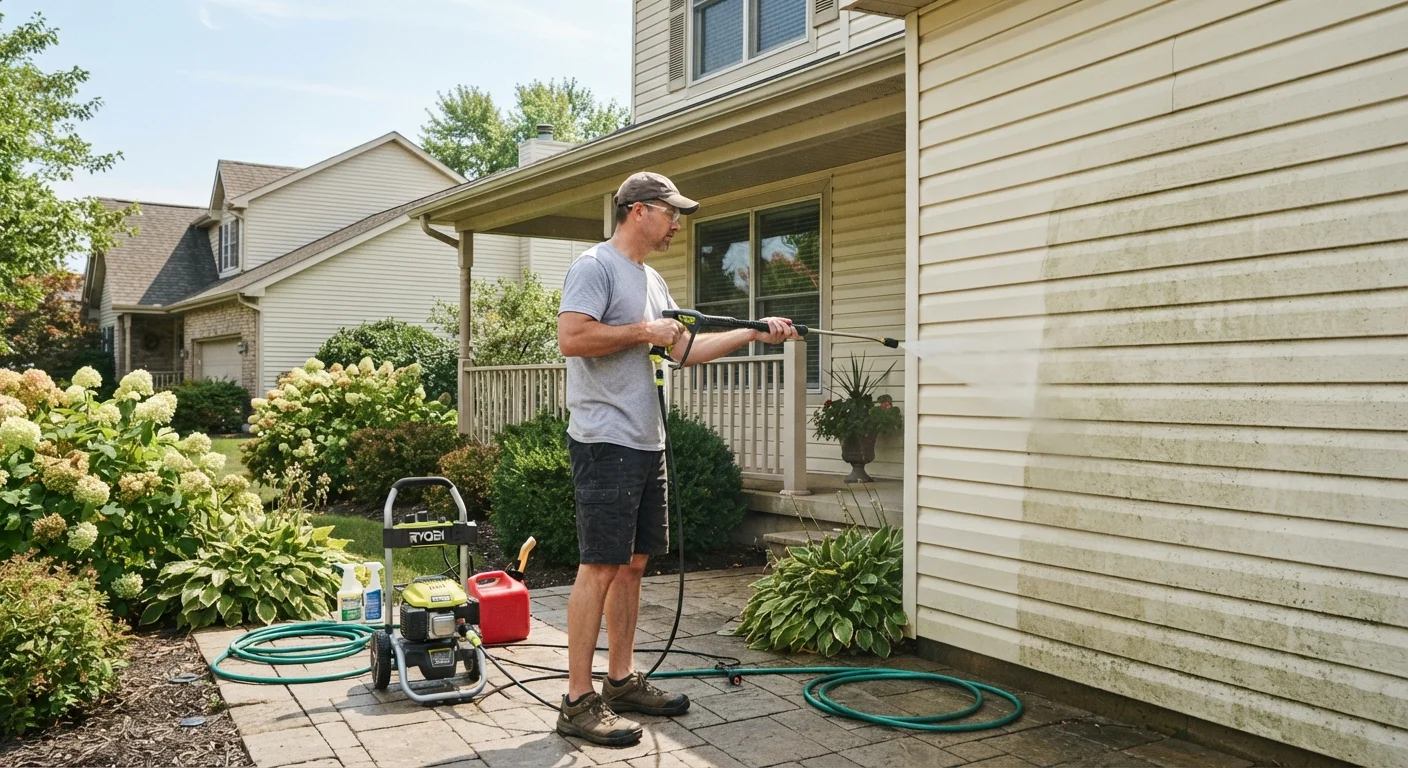
Photo: ReadersChronicle.com | Your Comprehensive Learning Destination editorial
—— In This Article
Key Takeaways
- Pressure washing removes mold, mildew, and built-up grime that accelerate surface decay.
- Wrong pressure settings or angles can drive water behind siding, causing hidden moisture damage.
- Certain surfaces - wood siding, old mortar, painted trim - require lower pressure or a different approach entirely.
- Renting a machine is affordable, but knowing the correct PSI for each surface is essential before you start.
- When in doubt about a surface's condition or access, hiring a professional is the safer choice.
Removes mold and mildew that cause surface decay
Biological growth traps moisture and acids against siding and wood. Regular removal slows the deterioration that leads to costly replacements.
Reveals hidden damage before it worsens
Stripping built-up grime exposes peeling paint, cracked caulk, or wood rot early - when repairs are still manageable in cost and scope.
Reduces slip hazards on walkways and driveways
Algae and moss on concrete become dangerously slippery when wet. Pressure washing removes these growth layers effectively.
Prepares surfaces for painting or staining
Paint and sealant bond poorly to dirty, chalky, or mildewed surfaces. A clean, dry exterior is the necessary first step before any coating application.
Cost-effective compared to full surface replacement
Renting a residential pressure washer typically costs under $100 per day, making it an affordable way to extend the life of siding, decking, and hardscaping.
Can force water behind siding and into walls
Spraying upward at an angle or directly into panel seams drives water into wall cavities, where it can cause mold growth and rot that is expensive to remediate.
Damages soft or deteriorated surfaces
Wood siding, old painted trim, and aging mortar joints can splinter, strip, or crumble under pressures appropriate for harder surfaces like concrete.
Strips protective granules from asphalt shingles
Directing a pressure washer at roof shingles removes the granule layer that blocks UV degradation, measurably shortening shingle lifespan.
Physical injury risk if handled carelessly
High-pressure water can cause serious skin lacerations. Working at height with a recoiling wand adds meaningful fall risk, especially on ladders.
Can dislodge window and door caulking
Direct streams aimed at frame edges strip sealant, creating new gaps where water can infiltrate and where air leakage raises heating and cooling costs.
What Pressure Washing Actually Does
Pressure washing uses a motorized pump to force water through a narrow nozzle at high velocity - typically between 1,500 and 3,000 PSI (pounds per square inch) for residential use. That concentrated stream dislodges dirt, algae, mildew, and oxidized coatings from exterior surfaces far more effectively than a garden hose.
For routine home maintenance, the primary value isn't cosmetic. Mold and mildew trap moisture against siding and wood, accelerating rot. Algae on concrete driveways and walkways creates slip hazards. A layer of grime on roof overhangs or soffits can mask early deterioration. Removing these buildup layers regularly gives you a cleaner view of what your exterior actually looks like - and whether anything needs repair. See our guide to home maintenance myths for more examples of how skipping routine upkeep compounds into bigger bills.
Removes mold and mildew that cause surface decay
Biological growth traps moisture and acids against siding and wood. Regular removal slows the deterioration that leads to costly replacements.
Reveals hidden damage before it worsens
Stripping built-up grime exposes peeling paint, cracked caulk, or wood rot early - when repairs are still manageable in cost and scope.
Reduces slip hazards on walkways and driveways
Algae and moss on concrete become dangerously slippery when wet. Pressure washing removes these growth layers effectively.
Prepares surfaces for painting or staining
Paint and sealant bond poorly to dirty, chalky, or mildewed surfaces. A clean, dry exterior is the necessary first step before any coating application.
Cost-effective compared to full surface replacement
Renting a residential pressure washer typically costs under $100 per day, making it an affordable way to extend the life of siding, decking, and hardscaping.
Where Pressure Washing Can Go Wrong
The most common and serious mistake is directing high-pressure water upward at an angle beneath siding panels or into seams. Water that enters wall cavities has nowhere to drain quickly - it soaks insulation, promotes mold growth inside the wall, and can eventually rot the structural sheathing behind the siding. This damage is expensive to fix and, because it's hidden, often goes undetected for months.
Specific surfaces demand extra caution:
- Wood siding and trim: Softwoods like cedar or pine can splinter or develop raised grain at pressures above roughly 500-600 PSI. Old paint can strip unevenly, exposing bare wood to the elements.
- Older brick and mortar: Mortar joints in homes built before the 1980s may already be soft or crumbling. High pressure erodes them further, letting water penetrate the masonry.
- Window seals and caulking: Direct high-pressure streams can dislodge caulk around windows and doors, creating new entry points for water. Always inspect and re-caulk after washing if needed.
- Roof shingles: Pressure washing asphalt shingles strips the granule coating that protects the mat underneath, shortening their service life noticeably.
Can force water behind siding and into walls
Spraying upward at an angle or directly into panel seams drives water into wall cavities, where it can cause mold growth and rot that is expensive to remediate.
Damages soft or deteriorated surfaces
Wood siding, old painted trim, and aging mortar joints can splinter, strip, or crumble under pressures appropriate for harder surfaces like concrete.
Strips protective granules from asphalt shingles
Directing a pressure washer at roof shingles removes the granule layer that blocks UV degradation, measurably shortening shingle lifespan.
Physical injury risk if handled carelessly
High-pressure water can cause serious skin lacerations. Working at height with a recoiling wand adds meaningful fall risk, especially on ladders.
Can dislodge window and door caulking
Direct streams aimed at frame edges strip sealant, creating new gaps where water can infiltrate and where air leakage raises heating and cooling costs.
Physical safety is also a real concern. A pressure washer at 2,500 PSI can lacerate skin. Working from a ladder while managing a wand adds fall risk. If you're accessing a second story or a steep roofline, the safer choice is a professional - see our DIY vs. hiring a pro guide for a practical framework on when to call in help.
Pressure and Nozzle Selection: A Practical Guide
Matching pressure and nozzle to the surface is the single most important skill. Nozzles are color-coded by spray angle - a narrower angle concentrates more force, a wider angle disperses it.
| Surface | Recommended PSI | Nozzle Color (Angle) |
|---|---|---|
| Concrete driveway | 2,500-3,000 | Yellow (15°) or Green (25°) |
| Vinyl siding | 1,200-1,500 | White (40°) |
| Wood decking | 500-800 | White (40°) or Black (65°) |
| Brick (sound mortar) | 1,500-2,000 | Green (25°) |
| Painted surfaces | Under 1,000 | White (40°) or Black (65°) |
Always keep the wand moving and maintain at least 12 inches of distance from the surface. Test an inconspicuous spot first - especially on wood or painted trim. For wood decks specifically, our wood deck upkeep guide covers the cleaning and prep steps that should follow pressure washing before you apply any sealant or stain.
Soft Washing: A Gentler Alternative
Soft washing uses very low pressure - typically under 500 PSI - combined with a cleaning solution (usually a diluted bleach or surfactant mix) to kill and remove mold, algae, and mildew without the mechanical force of standard pressure washing. It is widely recommended for wood siding, roofs, and older painted surfaces where high pressure poses damage risk. If you're unsure whether your surface can handle full pressure, soft washing is the more conservative starting point.
Before and After: What to Check
Pressure washing is most useful when it's part of a broader inspection routine, not a standalone task. Before you start, walk the perimeter and note any loose siding panels, cracked caulk, or damaged trim. Water forced into an existing gap causes far more damage than water on an intact surface.
After washing, give the exterior 24-48 hours to dry completely. Then re-examine the same areas. Look for paint bubbling or peeling (which signals moisture got in), efflorescence on brick (chalky white mineral deposits indicating water movement through masonry), or soft spots in wood. Gutters are worth checking too - pressure washing loosens debris that can settle in downspouts. Our gutter maintenance guide explains what to look for after any exterior cleaning project.
1,500-3,000
PSI range typical for residential pressure washers
Consumer-grade electric and gas pressure washers generally fall in this range; surface material determines where in the range you should operate.
12+ inches
Minimum safe wand distance from most surfaces
Industry guidance for pressure washing recommends maintaining at least 12 inches of clearance and adjusting farther back on delicate surfaces like wood or painted trim.

Home Editorial Team
Home Editorial Team is the collective byline for our editorial team and contributor network. Articles published under this byline or an editorial pen name are researched, written, and reviewed according to our editorial standards for clarity, consistency, and independence before publication.
View author profile