
Wood Deck Upkeep Mistakes That Shorten Its Lifespan
Staining too soon, skipping cleaning, or ignoring loose fasteners can cut a deck's life in half. Here's what to watch for each season.
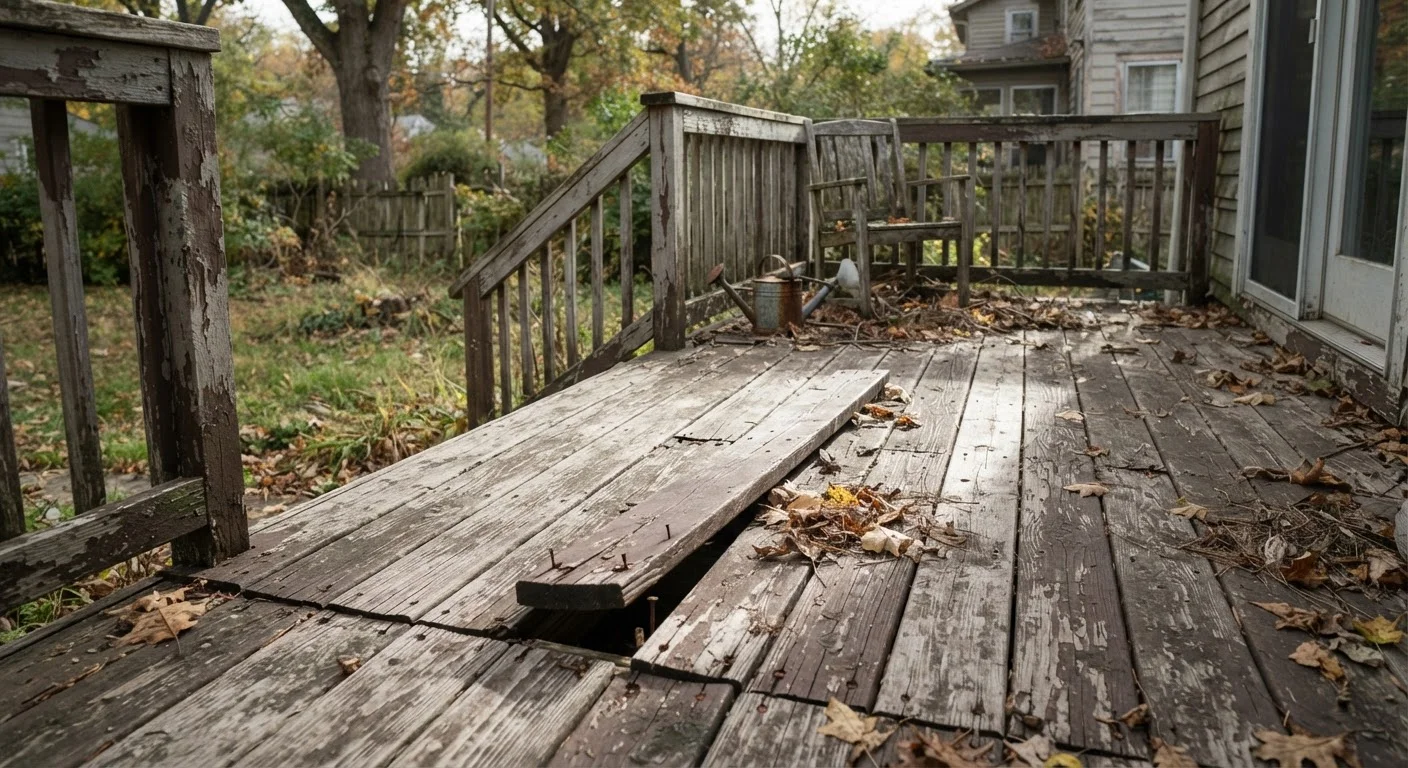
Photo: ReadersChronicle.com | Your Comprehensive Learning Destination editorial
—— In This Article
Key Takeaways
- Applying stain to damp or green lumber causes it to peel within one season.
- Skipping annual cleaning allows mold, mildew, and wood rot to take hold quickly.
- Loose fasteners and popped nails are safety hazards that worsen if left unaddressed.
- Blocking airflow beneath the deck traps moisture and accelerates structural decay.
- Seasonal inspections catch small problems before they require expensive board replacements.
Why Small Deck Mistakes Compound Over Time
A wood deck takes constant punishment - UV exposure, rain, freeze-thaw cycles, foot traffic, and humidity shifts work on it year-round. Most deck failures don't happen all at once. They result from a chain of small, overlooked maintenance gaps that quietly compound until a board snaps, a post rots through, or the finish stops protecting anything at all.
The good news is that the mistakes causing the most damage are also among the most preventable. Understanding why they happen makes it much easier to avoid them. As our piece on deferred maintenance explains, small repairs skipped today rarely stay small for long.
10-15 yrs
Typical lifespan of an unmaintained wood deck
Industry estimates suggest a properly maintained wood deck can last 25 years or more, while neglected decks often require major repairs or replacement in as little as a decade.
2-3 yrs
How often a wood deck typically needs refinishing
Most deck-care professionals recommend inspecting the finish annually and re-applying stain or sealant every two to three years depending on sun exposure and climate.
The Most Common Deck Upkeep Mistakes
The errors below account for the majority of premature deck deterioration. Each one is fixable - and most are preventable with a basic seasonal routine.
Staining new or wet wood too soon after installation or rainfall.
Why it happens: Homeowners are eager to protect their investment right away, and the stain or sealant goes on before the wood has fully dried or the natural oils in pressure-treated lumber have had time to off-gas.
Skipping the annual deck cleaning and letting debris accumulate between boards.
Why it happens: Cleaning feels like a low-priority chore, and debris buildup is gradual enough that it's easy to overlook season after season.
Ignoring loose nails, popped screws, and wobbly boards.
Why it happens: Wood expands and contracts with temperature and humidity changes, gradually working fasteners loose. The problem develops slowly and is easy to dismiss as minor.
Blocking or restricting airflow beneath the deck with solid skirting or stored items.
Why it happens: Skirting for aesthetics or using under-deck space for storage seems practical, but solid barriers trap humidity against structural wood.
Letting plants, mulch, or soil pile up directly against deck boards or posts.
Why it happens: Landscaping naturally migrates toward the house over time, and the connection between wet soil or mulch and wood is not always obvious as a decay risk.
Applying a new coat of stain or sealant over a failing or peeling old finish.
Why it happens: Stripping an old finish is tedious, so homeowners often apply a fresh coat hoping it will bond over the existing one.
Rotted Structural Members Are a Safety Risk
Rot in joists, posts, or beams - the structural skeleton beneath your deck surface - is not a cosmetic issue. A structurally compromised deck can fail under load without obvious warning signs. If you probe a structural member with a screwdriver and it sinks in easily, stop using the deck and consult a qualified contractor or structural inspector before making repairs.
Beyond structural concerns, it's worth noting that many of these mistakes aren't unique to decks. Similar patterns of gradual neglect show up with other home systems too - our overview of home maintenance myths covers several assumptions that lead homeowners astray across the board.
Building a Realistic Seasonal Inspection Routine
The most effective deck care doesn't require a major project every year - it requires consistent, brief attention at the right times.
- Spring: Clear debris, check fasteners, probe wood in low-airflow areas with a screwdriver for soft spots, and assess whether the finish still repels water.
- Summer: Look for sun-bleached or graying sections where UV has broken down the finish prematurely.
- Fall: Remove all leaves and organic debris before winter. Check that drainage between boards is clear.
- After major storms: Inspect for shifted boards, standing water, or debris jammed into joints.
Don't Power-Wash at High Pressure
A pressure washer set too high (generally above 1,200-1,500 PSI for softwoods) can raise wood grain, splinter boards, and drive water deep into the structure. Always test an inconspicuous area first, use a wide fan tip, and keep the nozzle moving. For more guidance, see our article on pressure washing your home's exterior.
A 20-minute walk-around each season catches problems when they're still inexpensive to address. That's far less disruptive than replacing boards or posts that have rotted through from years of unnoticed moisture exposure.
This article provides general home maintenance information and is not a substitute for professional inspection or repair. Local building codes, materials, and climate conditions vary - consult a qualified contractor for structural concerns or major repairs.

Home Editorial Team
Home Editorial Team is the collective byline for our editorial team and contributor network. Articles published under this byline or an editorial pen name are researched, written, and reviewed according to our editorial standards for clarity, consistency, and independence before publication.
View author profile