
What a Nutrition Facts Label Is Actually Telling You
Serving sizes, daily values, added sugars—decode every section of a nutrition label so you can make informed choices at the grocery store.
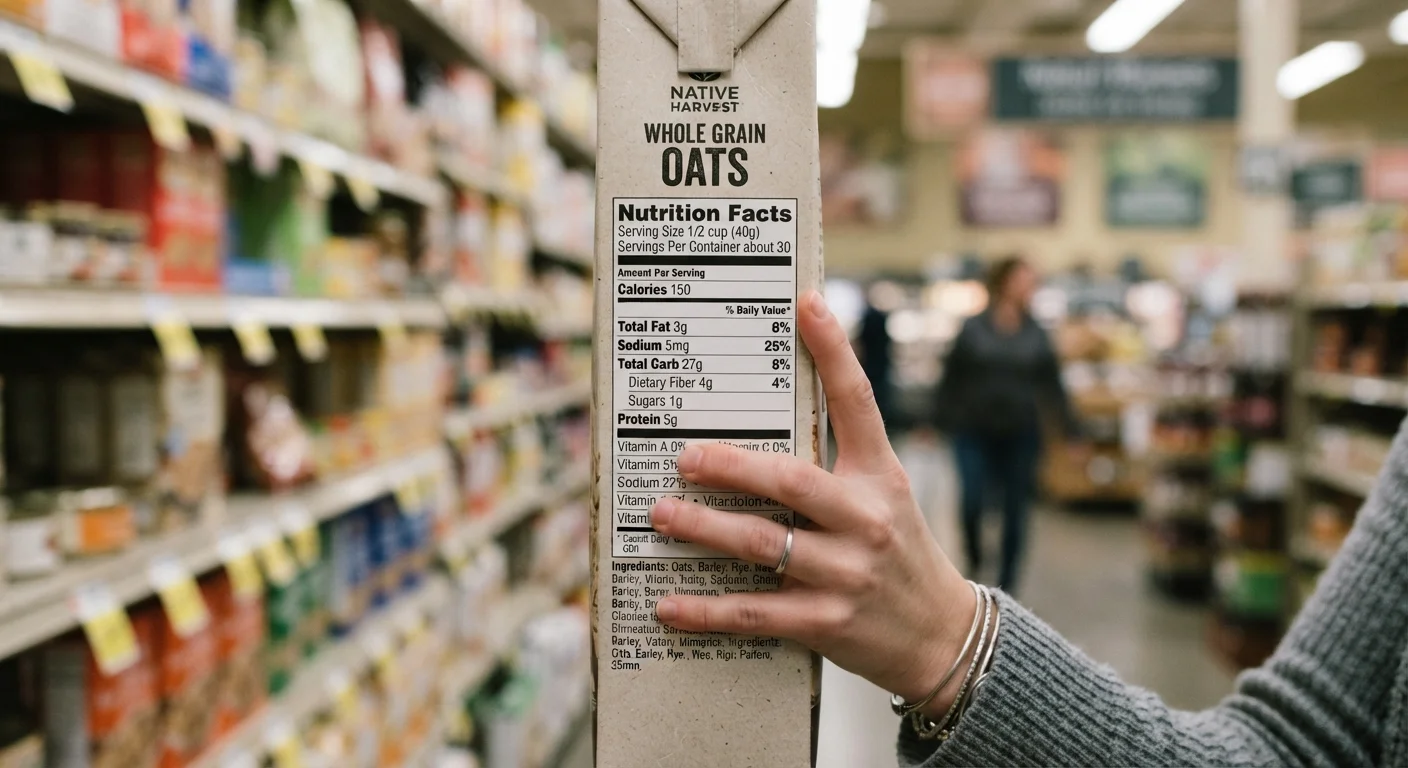
Photo: ReadersChronicle.com | Your Comprehensive Learning Destination editorial
—— In This Article
Start at the Top: Servings and Calories
The first thing to check on any Nutrition Facts label is the serving size and the number of servings per container. These two lines control every number that follows. A bag of chips labeled 150 calories is misleading if it contains three servings - that's 450 calories if you eat the whole bag.
Serving sizes are standardized by the FDA to reflect realistic eating amounts, not ideal or recommended portions. When you compare two products, make sure you're comparing equivalent serving sizes. For more context on how individual nutrients interact with your overall diet, see our guide to macronutrients and micronutrients.
| Regulatory Authority | U.S. Food and Drug Administration (FDA) (FDA Nutrition Labeling Requirements) |
| Label Overhaul | Most recent format required by 2020-2021 (FDA Final Rule, 2016) |
| %DV Benchmark - Low | 5% or less per serving (FDA guidance) |
| %DV Benchmark - High | 20% or more per serving (FDA guidance) |
| Calorie Base for %DV | 2,000 calories per day (FDA standard reference) |
| Added Sugars Daily Limit (%DV) | No more than 10% of daily calories (2020-2025 Dietary Guidelines for Americans) |
Nutrients to Limit and Nutrients to Prioritize
Below calories, the label lists specific nutrients in two broad groups. The FDA recommends most Americans limit saturated fat, sodium, and added sugars - nutrients linked to chronic health concerns when consumed in excess. Aim to keep these %DV figures low.
On the flip side, nutrients like dietary fiber, vitamin D, calcium, iron, and potassium are ones many Americans under-consume. A higher %DV for these is generally favorable. The % Daily Value (%DV) column is your fastest tool: 5% or less means the food is low in that nutrient; 20% or more means it's high. Use this as a quick scanner rather than doing math at the shelf.
Pay special attention to added sugars, which appear as a sub-line under total sugars. Unlike naturally occurring sugars in fruit or milk, added sugars contribute calories with little nutritional benefit. The 2020-2025 Dietary Guidelines for Americans recommend keeping added sugars below 10% of daily calories.
Labels Are Educational, Not Prescriptive
Nutrition Facts labels give you general information about a food's composition - they are not a personalized diet plan. Your individual nutritional needs depend on age, activity level, health conditions, and other factors. Consult a registered dietitian or healthcare provider for guidance tailored to your situation.
Decoding the Ingredient List and Front-of-Package Claims
The Nutrition Facts panel is only part of the story. The ingredient list, required to be ordered by weight from most to least, tells you what's actually in the food. If added sugar - under names like high-fructose corn syrup, dextrose, or cane juice - appears in the first three ingredients, the product is likely high in sugar regardless of what the front label implies.
Front-of-package language like "low fat," "multigrain," or "natural" is governed by separate and sometimes inconsistently enforced rules. Our article on interpreting health claims on packaged food explains what each claim legally does and doesn't guarantee. Similarly, terms like "whole grain" have specific criteria - explore our guide to what whole grain actually means to avoid being misled.
Serving Size
The standardized amount of food the label's nutrition information is based on. Serving sizes are set by the FDA to reflect typical consumption amounts, not a recommended portion.
% Daily Value (%DV)
A percentage showing how much a nutrient in one serving contributes to a daily diet based on 2,000 calories. Use 5% or less as low and 20% or more as high as a general benchmark.
Added Sugars
Sugars that are added during food processing, distinct from naturally occurring sugars found in fruit or dairy. The FDA requires these to be listed separately on the label.
Total Carbohydrate
The combined count of all carbohydrates in a serving, including dietary fiber, total sugars, and added sugars. Fiber and sugar are broken out beneath this line.
Saturated Fat
A type of fat found mostly in animal products and some tropical oils. Dietary guidelines generally recommend limiting saturated fat intake.
Sodium
A mineral used in food processing and preservation. High sodium intake is associated with elevated blood pressure in some individuals; the %DV helps gauge intake.
Using Labels Practically on a Budget
Reading labels doesn't have to slow you down at the store. Focus on three quick checks: (1) verify the serving size matches how much you'll actually eat, (2) scan %DV for sodium, saturated fat, and added sugars to keep them in check, and (3) look for fiber, vitamin D, and calcium %DVs you want to boost. Generic and store-brand items use the same label format - a higher-cost brand isn't inherently more nutritious.
For a fuller picture of how shopping behavior shapes what ends up in your cart, see our article on grocery shopping habits that quietly undermine your nutrition goals. Small reading habits at the shelf add up to meaningfully better choices over time - without requiring you to spend more.
This article is for general informational and educational purposes only and is not a substitute for professional medical or dietary advice. Consult a qualified healthcare provider or registered dietitian for guidance specific to your health needs.

Health Editorial Team
Health Editorial Team is the collective byline for our editorial team and contributor network. Articles published under this byline or an editorial pen name are researched, written, and reviewed according to our editorial standards for clarity, consistency, and independence before publication.
View author profile