
Grocery Shopping Habits That Quietly Undermine Your Nutrition Goals
From skipping breakfast before shopping to misreading health claims, these common habits can steer even well-intentioned shoppers off course.
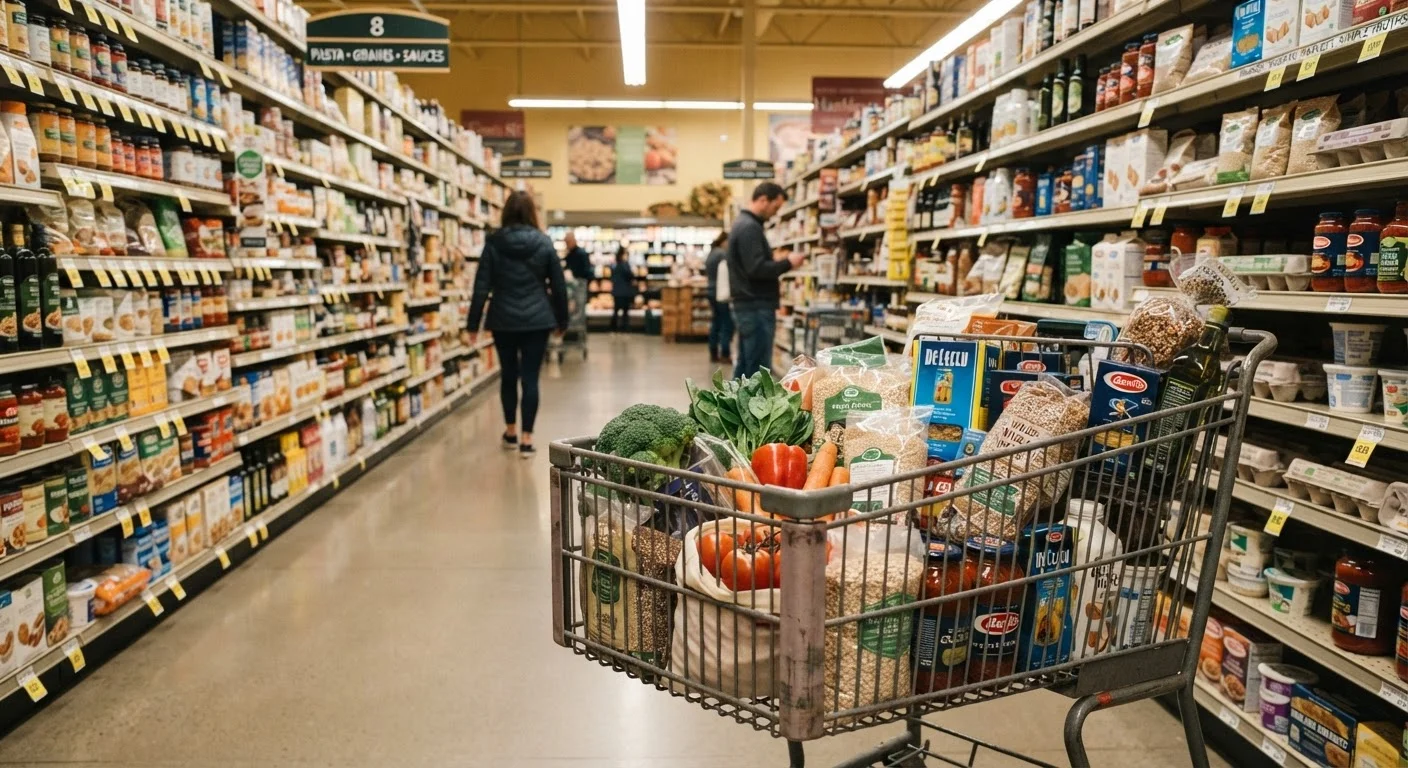
Photo: ReadersChronicle.com | Your Comprehensive Learning Destination editorial
—— In This Article
Key Takeaways
- Shopping hungry consistently leads to impulse purchases of calorie-dense, nutrient-poor items.
- Front-of-package health claims can be misleading; the Nutrition Facts label tells the fuller story.
- Shopping without a list causes skipped staples and over-reliance on processed convenience foods.
- Produce placement at store perimeters doesn't mean the center aisles lack nutritious options.
- Unit pricing and store-brand comparisons can help budget-conscious shoppers choose healthier staples affordably.
Why Your Cart Doesn't Match Your Intentions
Most people enter the grocery store with genuine nutrition goals. They leave with a cart that tells a different story. The gap between intention and outcome rarely comes from ignorance-it comes from small, habitual behaviors that operate below conscious awareness. Understanding what those habits are, and why they persist, is the first step toward changing them.
This article is for general informational purposes only and is not a substitute for personalized nutrition guidance. If you have specific dietary needs or health conditions, consult a registered dietitian or qualified healthcare professional.
Shopping on an empty stomach without eating beforehand.
Why it happens: Busy schedules make it easy to head to the store after work or between meals, when hunger is at its peak and decision-making is impaired.
Relying on front-of-package claims instead of reading the Nutrition Facts label.
Why it happens: Colorful packaging with words like 'wholesome,' 'light,' or 'superfood' is designed to create an immediate impression of nutritional value, and most shoppers are pressed for time.
Shopping without a list or a rough meal plan for the week.
Why it happens: Many people shop spontaneously, picking items that look appealing in the moment rather than what supports a balanced weekly diet.
Skipping the inner aisles entirely to 'eat clean.'
Why it happens: The popular advice to 'shop the perimeter' has led some people to avoid center aisles entirely, assuming everything inside is ultra-processed or nutritionally inferior.
Overbuying perishables without a plan to use them.
Why it happens: Abundant produce displays and sales promotions encourage bulk purchasing that outpaces a household's actual cooking habits.
Ignoring unit pricing when comparing packaged foods.
Why it happens: Shoppers often compare sticker prices between sizes or brands without calculating the per-ounce or per-serving cost, leading to false economy.
Reading Labels and Understanding Marketing
Even experienced shoppers can be misled by packaging. The food industry invests heavily in front-of-package design, and certain terms carry powerful associations that don't always reflect nutritional reality.
Health Claims Are Not Regulated Equally
Terms like 'natural,' 'multigrain,' and 'made with real fruit' have limited or no standardized regulatory definitions from the FDA. Only specific claims like 'low sodium' or 'high fiber' must meet defined thresholds. Always check the Nutrition Facts panel and ingredient list rather than relying on front-of-package marketing language to judge a food's nutritional value.
Building the habit of reading the Nutrition Facts panel-particularly added sugars, sodium, and fiber content-takes only a few extra seconds per item and pays significant dividends over time. The principles of a balanced plate are straightforward once you know what to look for on the label.
Don't Let 'Healthy' Labels Justify Larger Portions
Foods labeled as organic, gluten-free, or low-fat are sometimes consumed in larger quantities under the assumption that they are inherently healthy. Research suggests this 'health halo' effect can lead to unintentionally higher calorie or sugar intake. Evaluate each food based on its actual nutritional profile, not its marketing positioning.
If label-reading feels overwhelming at first, start with just one number: fiber. Most Americans fall well short of recommended fiber intake, and fiber-rich foods are some of the most affordable items in the store.
77%
Shoppers influenced by front-of-package claims
According to a survey published in the Journal of the Academy of Nutrition and Dietetics, the majority of consumers use front-of-pack labeling as a primary decision tool.
~$1,500
Estimated annual food waste per household
The USDA estimates that the average American household discards roughly $1,500 worth of food annually, much of it perishable produce bought without a meal plan.

Health Editorial Team
Health Editorial Team is the collective byline for our editorial team and contributor network. Articles published under this byline or an editorial pen name are researched, written, and reviewed according to our editorial standards for clarity, consistency, and independence before publication.
View author profile