
Brown Rice vs. White Rice: Sorting the Nutrition Facts from the Noise
Both are affordable staples, but their nutritional profiles differ. Here's a clear, evidence-based look at when each fits into a healthy diet.
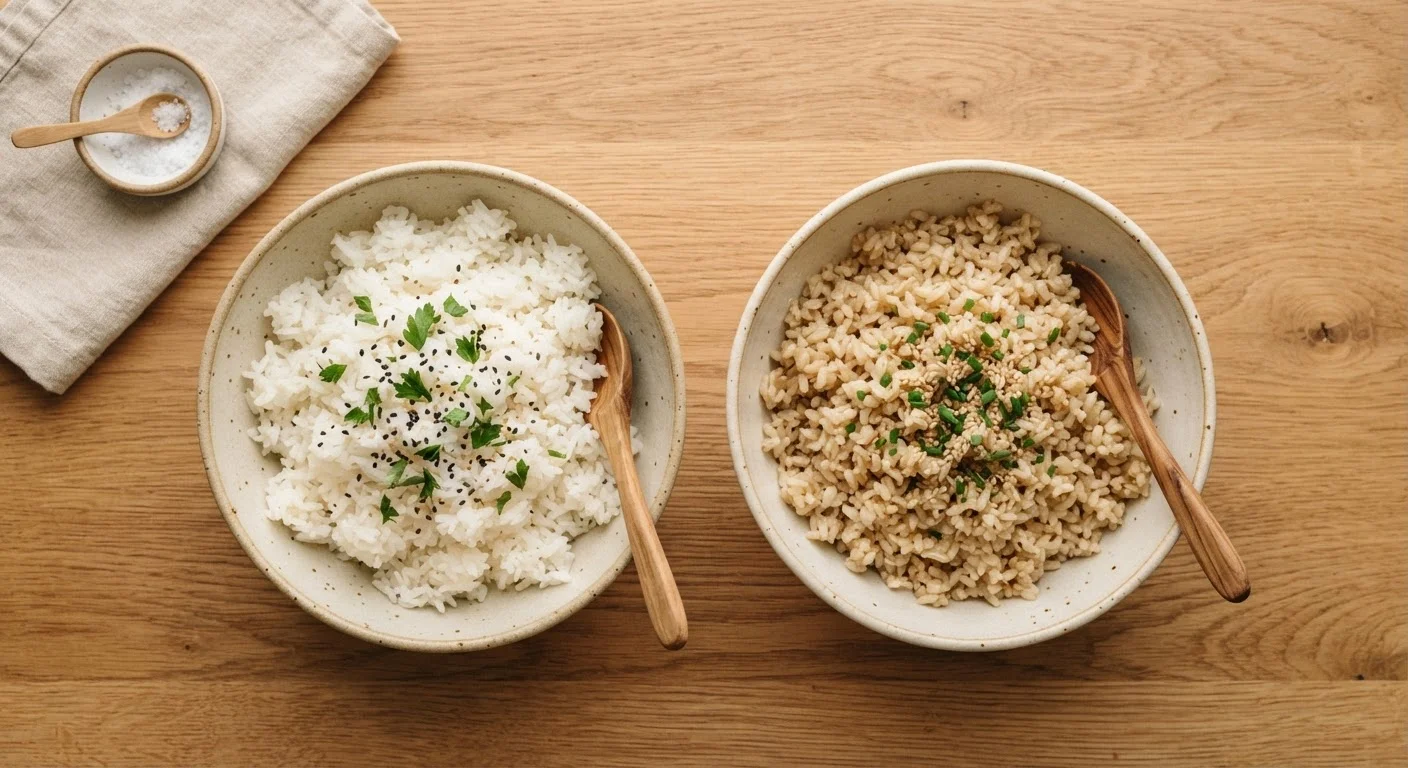
Photo: ReadersChronicle.com | Your Comprehensive Learning Destination editorial
—— In This Article
Key Takeaways
- Brown rice retains its bran and germ layers, giving it more fiber, magnesium, and B vitamins than white rice.
- White rice is milled and often enriched with iron and B vitamins, partially closing the nutritional gap.
- Both types are affordable, gluten-free, and can fit into a balanced diet depending on individual health goals.
- Brown rice has a lower glycemic index, which may support steadier blood sugar levels for some people.
- Neither rice is nutritionally superior in every situation - context, preparation, and total diet matter most.
What's Actually Different Between Brown and White Rice
Both brown and white rice come from the same grain - Oryza sativa. The difference lies entirely in processing. Brown rice is a whole grain: it retains its outer bran layer and the nutrient-dense germ. White rice has both stripped away, leaving mostly the starchy endosperm. This distinction is important for understanding why their nutritional profiles diverge.
For a deeper look at what the term "whole grain" actually means in food labeling, see what qualifies as a whole grain.
| Criterion | Brown Rice | White Rice |
|---|---|---|
| Grain type | Whole grain | Refined grain |
| Fiber (per cooked cup) | ~3.5 grams | <1 gram |
| Glycemic index (approx.) | 50-55 | 64-72 |
| Magnesium content | Higher (natural) | Lower |
| B vitamins | Naturally present | Typically enriched/added |
| Cook time | ~40-45 minutes | ~15-20 minutes |
| Digestibility | Moderate | High (gentler on gut) |
| Shelf life (dry) | 6-12 months | Up to 2 years or more |
One nuance worth noting: most commercial white rice sold in the US is enriched, meaning iron and certain B vitamins (thiamine, niacin, folic acid) are added back after milling. This partially - but not fully - restores what's lost.
Fiber, Glycemic Index, and Blood Sugar
The most clinically significant difference between the two is fiber content. A cooked cup of brown rice contains approximately 3.5 grams of dietary fiber; the same serving of white rice provides less than 1 gram. Fiber supports digestive health, contributes to satiety, and plays a role in heart health, according to the Dietary Guidelines for Americans.
3.5g
Fiber per cup of cooked brown rice
Compared to less than 1 gram in the same serving of cooked white rice, per USDA FoodData Central nutrient data.
~50-55
Glycemic index of brown rice
Harvard T.H. Chan School of Public Health places brown rice's GI notably lower than white rice's range of 64-72.
84mg
Magnesium per cup of cooked brown rice
According to USDA FoodData Central, brown rice provides significantly more magnesium than an equivalent serving of white rice (~19mg).
Brown rice also has a meaningfully lower GI - typically around 50-55 compared to white rice's 64-72, according to data from the Harvard T.H. Chan School of Public Health. A lower GI suggests slower glucose absorption, which may benefit blood sugar management. However, glycemic response varies significantly based on portion size, cooking method, and what else is eaten in the same meal. This is general nutritional information, not a substitute for personalized guidance - anyone managing diabetes or prediabetes should consult a registered dietitian or physician.
Micronutrients: Where Brown Rice Has the Edge
Beyond fiber, brown rice holds a clear advantage in several micronutrients. It is a notably better source of magnesium, phosphorus, and selenium. It also provides more naturally occurring B vitamins - particularly B6 - than its milled counterpart. White rice, even when enriched, does not match brown rice's magnesium or selenium content.
Arsenic in Rice: A Nuance Worth Knowing
Rice can absorb inorganic arsenic from soil and water more readily than many other grains. Brown rice tends to contain slightly more arsenic than white rice because arsenic concentrates in the bran layer. The FDA and other health authorities note that rice eaten as part of a varied diet is not considered a significant safety risk for most adults, but they recommend dietary variety rather than relying heavily on any single grain. Parents of young children should consult a pediatrician for specific guidance.
That said, rice in general is not a nutritional powerhouse on its own. Its value is amplified significantly by what it's paired with - legumes, vegetables, lean proteins, or healthy fats. A budget-conscious diet built around rice, beans, and a variety of vegetables can be highly nutritious. See our related article on why inexpensive foods aren't always less nutritious for broader context.
When White Rice Makes Practical Sense
Despite its lower fiber content, white rice is not a food to avoid categorically. It is a staple for billions of people globally and is associated with healthy dietary patterns in many cultures where chronic disease rates remain low - suggesting that total diet quality matters more than any single food choice.
Practically speaking, white rice has a longer shelf life, cooks faster, and is often more readily accepted by those with sensitive digestion or limited appetite (such as during illness). For households on tight budgets where calorie density and palatability matter, white rice remains a sound and affordable option. The key is to balance it with fiber-rich vegetables, legumes, and other whole foods across meals.
This article is for general informational and educational purposes only and does not constitute medical or dietary advice. Consult a qualified healthcare professional before making significant changes to your diet, especially if you have a health condition.

Health Editorial Team
Health Editorial Team is the collective byline for our editorial team and contributor network. Articles published under this byline or an editorial pen name are researched, written, and reviewed according to our editorial standards for clarity, consistency, and independence before publication.
View author profile