
What Happens to Your Credit When You Miss a Payment
A late payment can stay on your credit report for years. Here's exactly what occurs after a missed due date and how serious the impact can be.
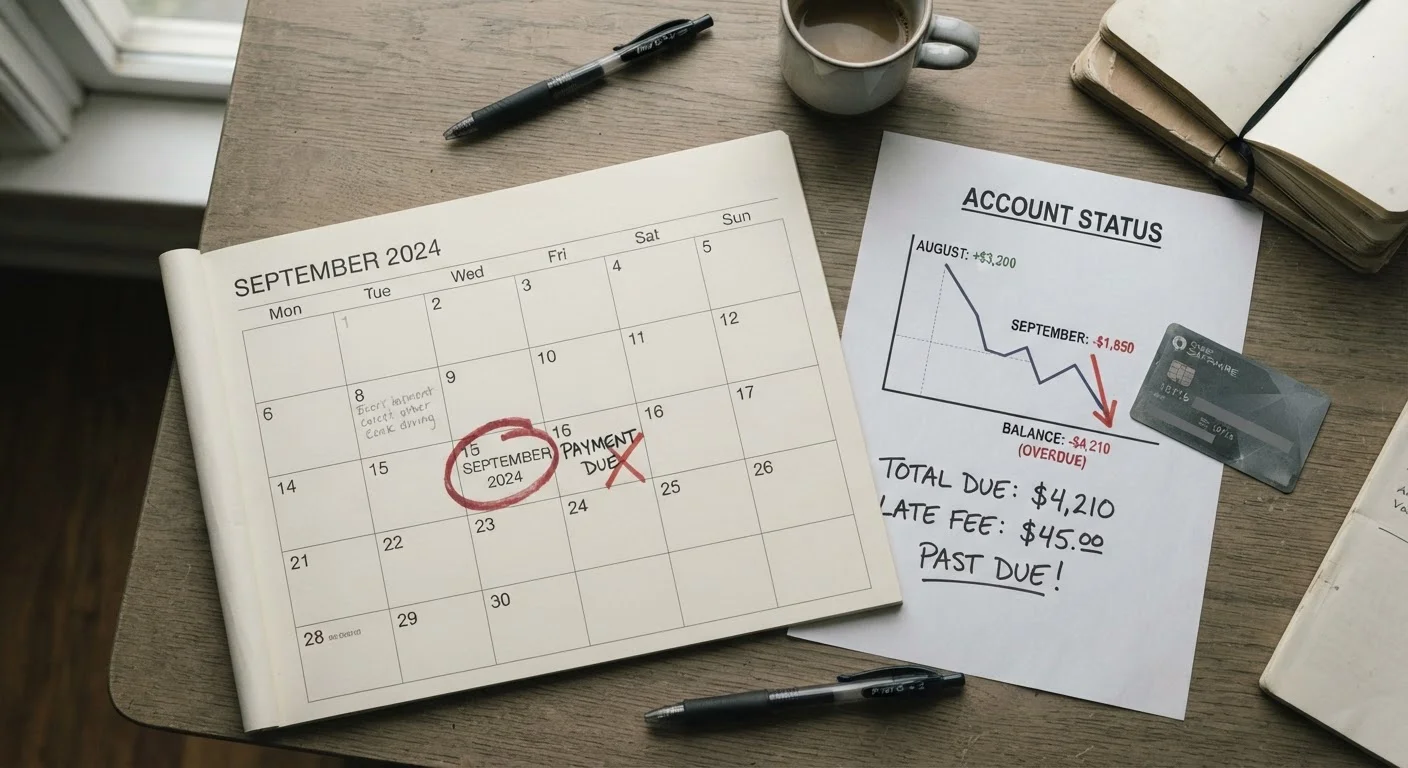
Photo: ReadersChronicle.com | Your Comprehensive Learning Destination editorial
—— In This Article
Key Takeaways
- A payment must be 30 days past due before it can be reported to the credit bureaus.
- Payment history is the single largest factor in most credit scoring models, making up roughly 35% of your score.
- A single late payment can remain on your credit report for up to seven years.
- The damage is typically worse for consumers who had high credit scores before the missed payment.
- Acting quickly - paying the overdue balance and contacting your lender - can limit long-term harm.
The 30-Day Rule: When a Late Payment Becomes a Credit Problem
Missing a due date doesn't automatically damage your credit report - but the window is narrow. Most lenders won't report a late payment to the credit bureaus until it is at least 30 days past due. That means if you realize you missed a payment within the first few weeks, paying it immediately (along with any late fee) can prevent any credit report damage at all.
Once that 30-day mark passes, the lender has grounds to report the delinquency. From that point, the late payment becomes an official part of your credit history. It's worth understanding that your credit score and your credit report are two different things - for a full breakdown, see how credit reports and credit scores differ.
Late Fees and Credit Damage Are Separate Issues
A lender can charge you a late fee the day after your payment is due - that's a contractual matter between you and the lender. Credit bureau reporting is a separate action that most lenders don't take until 30 days have passed. Paying quickly can avoid the credit damage even if you've already been charged the fee.
Why Payment History Hits So Hard
Payment history is the heaviest-weighted factor in most credit scoring models. It accounts for roughly 35% of a standard FICO score, making it the single most influential piece of your credit picture. The five factors behind every credit score explains the full breakdown, but payment history's outsized share means one slip carries real weight.
Lenders use this history to assess how reliably you repay debt. A missed payment signals risk - even if it was a one-time oversight. The higher your score before the missed payment, the steeper the drop tends to be, because the contrast is sharper.
35%
Share of FICO score from payment history
According to FICO, payment history is the single largest factor used to calculate a standard credit score.
7 years
How long a late payment stays on your credit report
Under the Fair Credit Reporting Act, most negative information, including late payments, can remain on a consumer's credit report for up to seven years.
30 days
Minimum days overdue before bureau reporting
Lenders are generally unable to report a payment as late to Equifax, Experian, or TransUnion until it is at least 30 days past the original due date.
What Happens as the Delinquency Ages
If a payment remains unpaid beyond 30 days, the situation compounds. Lenders report separate derogatory marks at the 60-day and 90-day milestones. Each one adds additional negative weight to your credit report. Accounts that go 120 to 180 days past due may be charged off - meaning the lender writes the debt off as a loss - or sold to a collection agency, which creates yet another damaging entry on your report.
Even without reaching collections, the original late payment stays on your report for up to seven years from the date of the first missed payment. Its scoring impact does fade gradually as time passes and you add positive history, but it doesn't disappear overnight.
Some everyday habits contribute to credit damage in subtler ways too - explore the habits that gradually damage a good credit score to see the full picture.
Steps to Take After a Missed Payment
The moment you realize you've missed a payment, act immediately. Here's what can help:
- Pay the overdue balance as soon as possible. If you're still within the 30-day window, this is the most important step - it may prevent any credit bureau report entirely.
- Contact your lender directly. Some lenders will waive a late fee or agree not to report a first-time late payment if you have a solid history and reach out proactively. This isn't guaranteed, but it costs nothing to ask.
- Set up autopay or calendar reminders going forward. Even the minimum payment keeps an account current - though paying only the minimum has its own long-term costs. See why paying only the minimum balance costs you more over time.
- Continue paying all other accounts on time. Rebuilding your payment history is the most reliable path to score recovery.
Set Up Autopay for at Least the Minimum
Enrolling in autopay for the minimum payment amount ensures your account stays current even during a hectic month. You can always pay more manually, but autopay acts as a safety net against accidental missed payments. Check with your lender or bank to set it up through your online account portal.
This article provides general financial information for educational purposes and is not personalized financial or credit advice. Consult a qualified financial professional for guidance specific to your situation.
Frequently Asked Questions

Finance Editorial Team
Finance Editorial Team is the collective byline for our editorial team and contributor network. Articles published under this byline or an editorial pen name are researched, written, and reviewed according to our editorial standards for clarity, consistency, and independence before publication.
View author profile