
The Five Factors Behind Every Credit Score
Payment history, credit utilization, length of history — understand the five components that shape your credit score and how much each one matters.
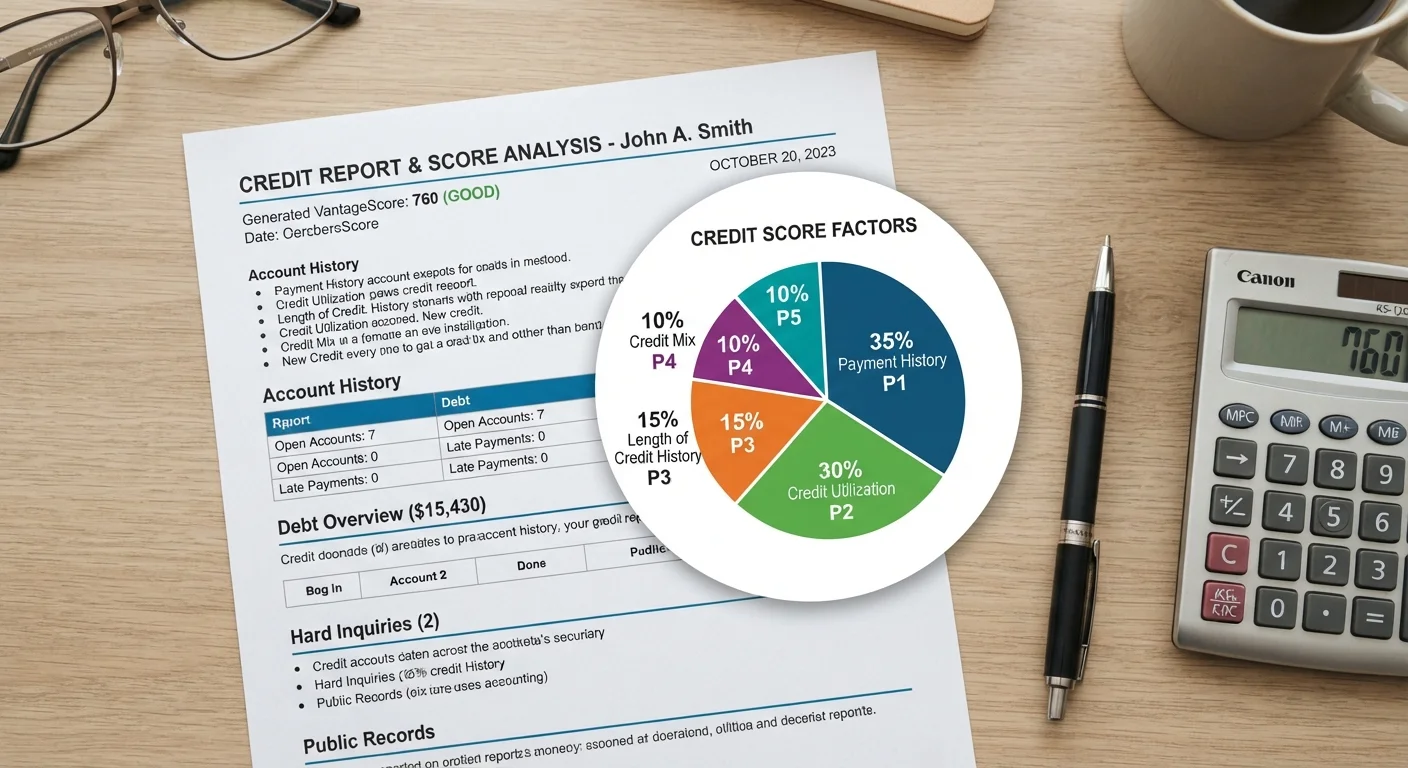
Photo: ReadersChronicle.com | Your Comprehensive Learning Destination editorial
—— In This Article
Why Five Factors?
Credit scores don't come from guesswork. The most widely used scoring models - including FICO - break your credit history into five categories, each weighted differently. Understanding what goes into the calculation is the first step toward improving it. This article walks through each factor plainly, so you know where your score actually comes from.
For a broader look at how scores translate into real-world lending decisions, see Credit Scores Decoded.
The Five Factors, Explained
1. Payment History (35%)
This is the single biggest factor. Lenders want to know whether you pay your bills on time. Late payments, accounts sent to collections, and public records like bankruptcies all leave a mark here. Even one missed payment can have a noticeable effect, particularly if your score was previously strong. The good news: consistent on-time payments over time gradually repair the damage.
2. Amounts Owed / Credit Utilization (30%)
This measures how much of your available revolving credit - primarily credit cards - you're currently using. If you have a $5,000 limit and carry a $2,500 balance, your utilization rate is 50%. Lower ratios generally help your score. Many financial educators suggest aiming to keep utilization below 30%, though lower is typically better. For a deeper look, see how utilization quietly shapes your score.
3. Length of Credit History (15%)
Scoring models consider how long your accounts have been open - including your oldest account, your newest account, and the average age across all accounts. Longer histories generally work in your favor because they give lenders more data to evaluate. This is why closing old accounts you no longer use can sometimes backfire.
4. Credit Mix (10%)
Lenders like to see that you can responsibly manage different types of credit - such as credit cards (revolving credit) and installment loans like auto or student loans. A varied mix can help your score modestly, though it's not worth taking on debt you don't need just to diversify.
5. New Credit / Hard Inquiries (10%)
When you apply for new credit, lenders typically run a hard inquiry on your report. A single inquiry has only a small effect, but multiple applications in a short window can signal financial stress to lenders. Rate-shopping for mortgages or auto loans is treated differently - most models group multiple inquiries within a short period as a single event.
Credit Utilization Rate
The percentage of your available revolving credit that you're currently using. It's calculated by dividing your total balances by your total credit limits across revolving accounts.
Hard Inquiry
A review of your credit report triggered when you apply for new credit. Hard inquiries are visible to other lenders and can slightly lower your score, though the effect is usually small and temporary.
Revolving Credit
A type of credit with a reusable limit, like a credit card or home equity line of credit, where the available balance replenishes as you pay it down.
Installment Loan
A loan repaid in fixed, regular payments over a set period - such as a mortgage, auto loan, or student loan. These are distinct from revolving credit accounts.
FICO Score
A widely used credit scoring model developed by Fair Isaac Corporation. Scores range from 300 to 850 and are used by many lenders to assess creditworthiness.
How to Use This Information
Knowing the weight of each factor tells you where to focus your energy. Because payment history and credit utilization together account for roughly 65% of a standard FICO score, those two areas offer the most leverage for most people. Consistent, on-time payments and keeping balances low relative to your limits are foundational habits.
To understand what's currently on your credit file, see how your credit report and credit score differ. And if you're curious about the behaviors that can quietly chip away at a good score over time, habits that gradually damage a good credit score is worth reading next.
For an end-to-end overview, the complete credit score guide covers scoring models, lender use, and long-term strategy in one place.
Scores Vary by Model
FICO is the most widely cited scoring model, but lenders may also use VantageScore or industry-specific versions that weigh these factors slightly differently. The five categories described here reflect the standard FICO framework. If you're preparing for a major credit decision, it's worth asking your lender which model they use.
This article is for general informational and educational purposes only and does not constitute personalized financial or credit advice. For guidance specific to your situation, consult a qualified financial professional.

Finance Editorial Team
Finance Editorial Team is the collective byline for our editorial team and contributor network. Articles published under this byline or an editorial pen name are researched, written, and reviewed according to our editorial standards for clarity, consistency, and independence before publication.
View author profile