
Why Paying Only the Minimum Balance Costs You More Over Time
Minimum payments keep accounts current but extend debt for years. This article shows how interest compounds when you only pay the floor amount.
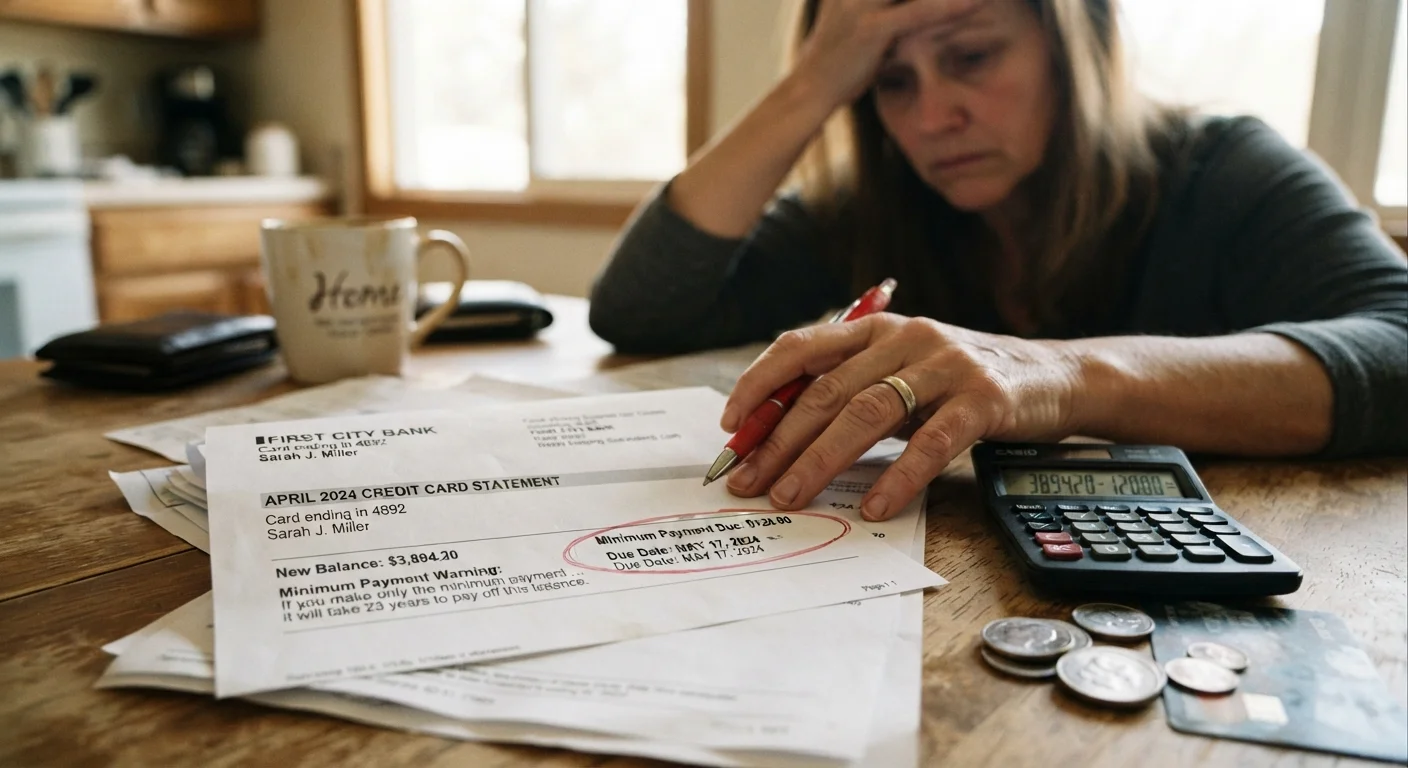
Photo: ReadersChronicle.com | Your Comprehensive Learning Destination editorial
—— In This Article
Key Takeaways
- Minimum payments are calculated to keep you in debt longer, not to help you pay it off faster.
- Interest compounds monthly on your remaining balance, meaning you pay interest on interest over time.
- Even small increases above the minimum payment can cut years and hundreds of dollars off your debt.
- Credit card issuers are required to show payoff timelines on statements - use that information.
- Building a debt payoff plan alongside a savings habit gives you more long-term financial stability.
How Minimum Payments Are Designed - and Why That Matters
Credit card issuers set minimum payments low on purpose. A common formula is roughly 1-3% of your outstanding balance, or a flat dollar floor (often $25-$35), whichever is greater. This structure keeps your account in good standing, which is its only real function - it is not designed to help you get out of debt efficiently.
The problem is that most of your minimum payment goes toward interest first. Only a small fraction chips away at the actual principal - the amount you originally borrowed. Because interest is recalculated on your remaining balance each cycle, a slow payoff means you're constantly paying interest on a balance that barely moves.
Federal law (the Credit CARD Act of 2009) requires issuers to print a payoff disclosure on every statement showing how many years it will take to pay off the balance at the minimum payment rate, and how much you'd pay in total. If you haven't read that section of your statement, it's worth looking at. The numbers are often surprising.
Minimum Payments Are Not a Payoff Strategy
Credit card minimum payments are typically set at 1-3% of your balance, just enough to avoid a late fee. At that rate, a $3,000 balance at 20% APR could take over 15 years to pay off and cost more than $3,000 in interest alone. Treating the minimum as a target - rather than a floor - is one of the most expensive habits in personal finance. This article is for general educational purposes and is not personalized financial advice; consult a licensed financial professional for guidance specific to your situation.
Common Mistakes That Keep You Trapped in Minimum-Payment Debt
Understanding the mechanics of compound interest is one thing - recognizing the habits that keep people stuck is another. The mistakes below are extremely common, and most stem from how credit card billing is presented rather than from careless decision-making.
Treating the minimum payment as the goal rather than the floor.
Why it happens: Statements display the minimum payment prominently, making it feel like the "right" amount to pay. When money is tight, it's tempting to pay only what's required and move on.
Ignoring how compound interest works against you each billing cycle.
Why it happens: Interest calculations feel abstract. Most people think of interest as a one-time fee rather than a monthly charge that grows on itself.
Making only minimum payments while continuing to add new charges to the card.
Why it happens: A card that stays current feels manageable. If the account isn't in collections, it can feel like the situation is under control - even as the balance climbs.
Spreading minimum payments across multiple cards without a payoff priority.
Why it happens: People with several cards often pay the minimum on all of them to keep every account in good standing. This feels balanced but does little to reduce overall interest costs.
Assuming a low minimum means the debt is small or harmless.
Why it happens: Minimum payments shrink as balances drop, which can create a false sense that the debt is resolving itself. A $40 minimum feels minor even when it's tied to a $2,500 balance.
If you're carrying balances across multiple accounts, the approach you take to paying them down matters as much as the amounts involved. See our framework for balancing debt payoff and savings to think through your priorities.
What Paying More - Even a Little - Actually Does
You don't need a windfall to make meaningful progress on credit card debt. Even modest increases above the minimum can shorten your payoff timeline significantly and reduce total interest paid.
15+ years
Estimated payoff time on $3,000 balance at minimum payments
Based on a 20% APR card with a minimum set at 2% of the balance - a common industry structure.
~$3,000+
Interest paid on a $3,000 balance at minimum-only payments
At typical credit card interest rates, you can pay more in interest than the original balance when only making minimums.
20%+
Average credit card APR in recent years
According to Federal Reserve consumer credit data, average credit card rates have exceeded 20% in recent reporting periods.
On a $3,000 balance at 20% APR, raising your monthly payment from the minimum (roughly $60) to $150 can cut the payoff period from 15+ years to under two years - and save well over $2,000 in interest. The math is straightforward once you see it laid out.
Your Balance Can Grow Even While You Pay
If your interest charges each month exceed what you're paying above the minimum, your balance will actually increase - even though you're making payments on time. This is sometimes called a 'negative amortization' effect on revolving credit. Check your statement carefully: if your balance is higher this month than last, your payments aren't keeping pace with interest.
If your debt feels unmanageable across multiple balances, it may be worth understanding your options before the balances grow further. Our article on what debt consolidation actually does explains how rolling balances together works and when it might - or might not - make sense.
Building any savings habit alongside debt payoff also matters. Even a small emergency cushion reduces the chance you'll add new charges when an unexpected expense hits. The building a savings habit on a tight budget article offers a practical starting point.
This article is for general informational and educational purposes only. It is not personalized financial, tax, or legal advice. Consult a qualified financial professional before making decisions about your specific debt situation.

Finance Editorial Team
Finance Editorial Team is the collective byline for our editorial team and contributor network. Articles published under this byline or an editorial pen name are researched, written, and reviewed according to our editorial standards for clarity, consistency, and independence before publication.
View author profile