
Secured vs. Unsecured Credit: How the Two Types Work Differently
From secured cards to personal loans, understand the key structural differences between secured and unsecured credit products.
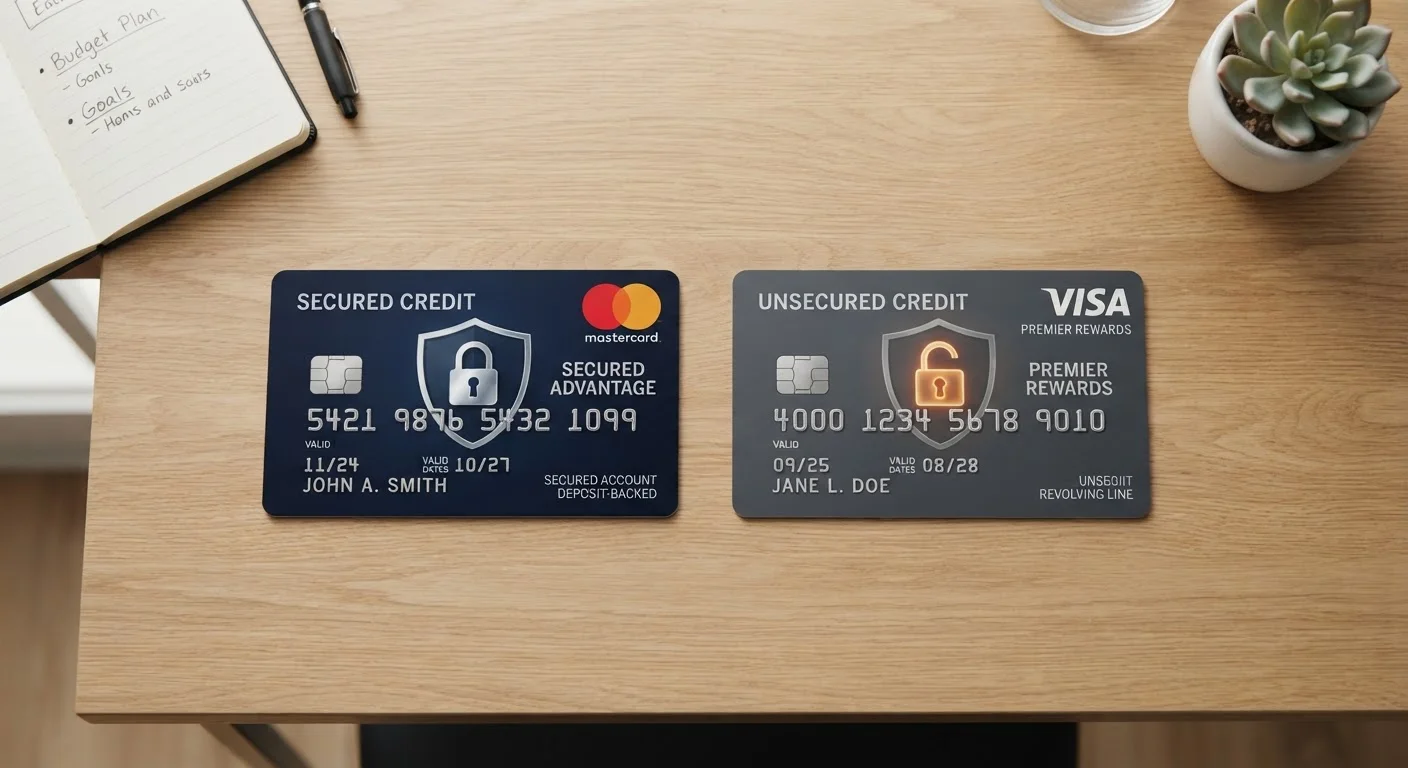
Photo: ReadersChronicle.com | Your Comprehensive Learning Destination editorial
—— In This Article
Key Takeaways
- Secured credit requires collateral - an asset a lender can claim if you don't repay.
- Unsecured credit relies on your creditworthiness alone, with no asset backing the loan.
- Secured products often carry lower interest rates because the lender's risk is reduced.
- Both types report to credit bureaus, so responsible use of either can help build your credit history.
- Your financial situation and credit profile typically determine which type you can access.
The Core Difference: Collateral
The fundamental distinction between secured and unsecured credit comes down to one word: collateral. Collateral is an asset - such as a savings deposit, a car, or a home - that a lender can claim if you stop making payments.
Secured credit is backed by that collateral. Common examples include secured credit cards (which require a cash deposit), auto loans (where the vehicle itself is the collateral), and mortgages (backed by the home). Because the lender has a way to recoup losses, they take on less risk.
Unsecured credit involves no collateral. Personal loans, most student loans, and standard credit cards fall into this category. The lender extends credit based entirely on your credit history, income, and overall financial profile. If you default, the lender has no asset to seize - though they can pursue other collection actions.
If you're new to how credit works overall, the basics of credit are a useful starting point before diving into product types.
How Interest Rates and Terms Differ
Because secured lenders carry less risk, they typically charge lower interest rates. A secured personal loan, for instance, may carry a meaningfully lower annual percentage rate (APR) than a comparable unsecured loan for a borrower with the same credit profile.
Unsecured products carry higher rates on average because the lender has no safety net. If you have strong credit, lenders may still offer competitive unsecured rates - but borrowers with thin or damaged credit often face steep rates, high fees, or outright denial.
| Secured Credit | Unsecured Credit | |
|---|---|---|
| Collateral required | Yes - asset or deposit | No |
| Typical interest rates | Generally lower | Generally higher |
| Approval ease (limited credit) | Easier to qualify | Harder to qualify |
| Risk to borrower | Asset can be seized on default | No asset at risk; credit damage possible |
| Common examples | Secured cards, mortgages, auto loans | Credit cards, personal loans, student loans |
| Reports to credit bureaus | Yes, typically | Yes, typically |
It's worth noting that interest rates vary widely by lender, loan amount, loan term, and your individual credit profile. The general pattern holds - secured tends to be cheaper - but there's no universal guarantee. Always compare the full cost of borrowing, not just the headline rate.
Real-World Examples of Each Type
Secured examples:
- Secured credit card: You deposit $300-$500 with a card issuer, and that deposit becomes your credit limit. Use the card, pay on time, and you build credit history. Many issuers will eventually return your deposit and upgrade you to an unsecured card.
- Auto loan: The car serves as collateral. Miss enough payments and the lender can repossess the vehicle.
- Mortgage: The home is collateral. Foreclosure is the lender's recourse for sustained non-payment.
Unsecured examples:
- Credit card (standard): No deposit required. Your credit limit is based on your creditworthiness.
- Personal loan: A lump-sum loan repaid in fixed installments, with no asset attached.
- Private student loans: Extended based on credit profile and often a co-signer, with no collateral.
Both secured and unsecured accounts are typically reported to the major credit bureaus. That means responsible use of either - paying on time, keeping balances manageable - can help you build a positive credit history. For a closer look at how that history is tracked, see our article on credit reports vs. credit scores.
Using a Secured Card as a Stepping Stone
A secured credit card can be an effective tool for establishing credit when used carefully. Charge only small, routine expenses you can pay off in full each month, and avoid carrying a balance. Over time, a consistent on-time payment history can help you qualify for unsecured products with better terms.
Which Type Makes Sense for Your Situation
If you're starting out with no credit history, a secured credit card is often one of the lowest-risk entry points. You control the deposit amount, limit your exposure, and gain a track record. See realistic paths to building credit from scratch for a fuller breakdown of options.
If your credit is already established, unsecured products give you more flexibility - no deposit tied up, broader product choices, and potentially competitive rates.
Keep in mind that applying for either type may involve a hard credit inquiry, which can temporarily affect your score. Our piece on hard vs. soft credit inquiries explains when that matters and when it doesn't.
Don't Confuse Lower Risk for the Lender With Lower Risk for You
Secured credit may be easier to get and carry a lower rate, but the stakes for the borrower are higher in one key way: defaulting on a secured loan means losing the asset backing it. Missing mortgage payments can lead to foreclosure; missing auto loan payments can mean repossession. Understand what you're putting on the line before signing.
This article is for general informational and educational purposes only and does not constitute personalized financial or legal advice. Consult a qualified financial professional before making decisions specific to your situation.

Finance Editorial Team
Finance Editorial Team is the collective byline for our editorial team and contributor network. Articles published under this byline or an editorial pen name are researched, written, and reviewed according to our editorial standards for clarity, consistency, and independence before publication.
View author profile