
Understanding Credit for the First Time
New to credit? This plain-language guide explains what credit is, how it works in everyday life, and how to build a healthy credit foundation.
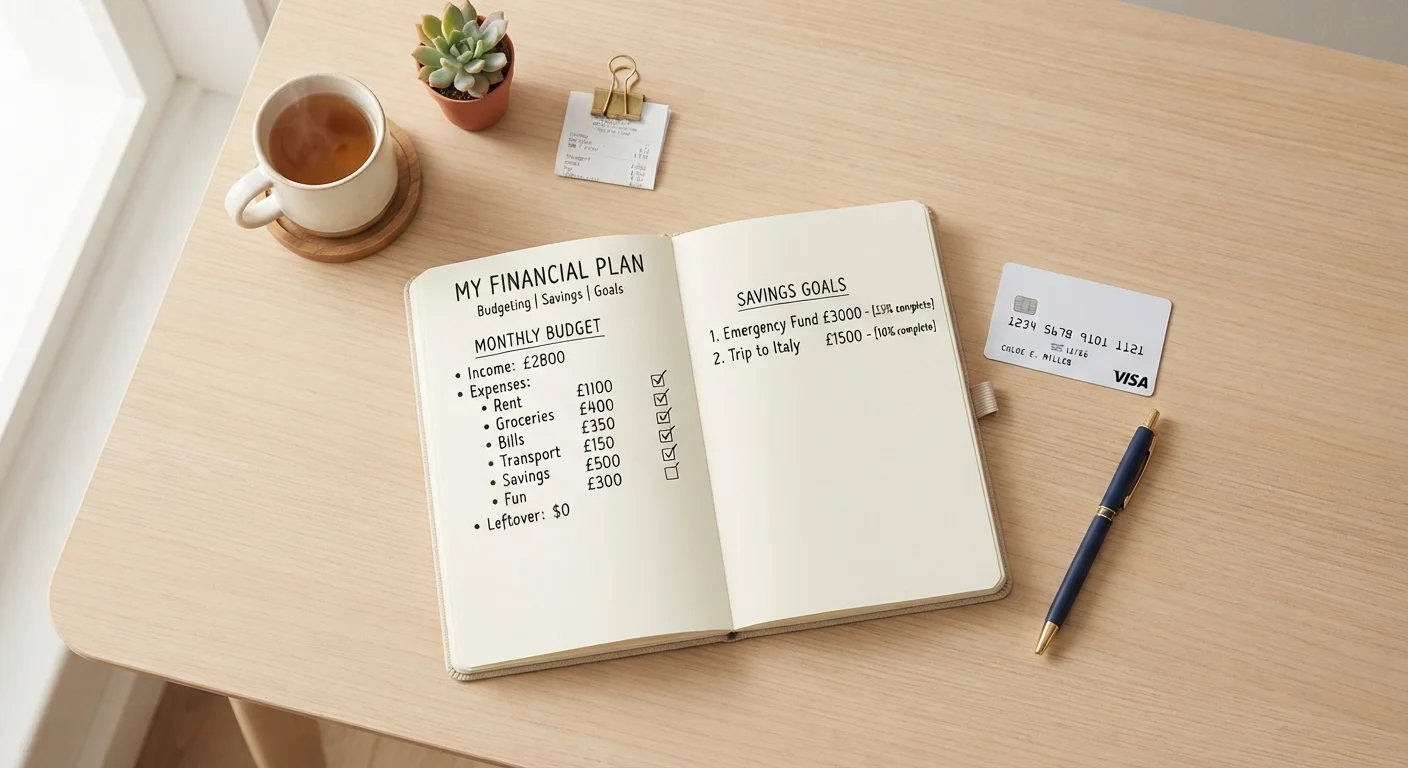
Photo: ReadersChronicle.com | Your Comprehensive Learning Destination editorial
—— In This Article
Key Takeaways
- Credit is a record of how reliably you borrow and repay money over time.
- Your credit report and credit score are two different but related things - both matter.
- Lenders, landlords, and even some employers may review your credit history.
- Building good credit takes consistent habits, not a single action.
- You can check your credit report for free and are entitled to dispute errors.
What Credit Actually Is
At its simplest, credit is an agreement: a lender lets you borrow money now, and you promise to pay it back later - usually with interest. Every time you borrow and repay, that activity gets recorded in your credit history.
Credit isn't a product you buy. It's a reputation you build over time. Lenders look at your history to decide whether lending you money is a reasonable risk, and on what terms.
Credit history
A record of how you've borrowed and repaid money over time, compiled by credit bureaus from lender reports.
Lender
A financial institution or company that provides money to borrowers on the condition it will be repaid, usually with interest.
Interest
The cost of borrowing money, expressed as a percentage of the amount owed. If you carry a balance, interest adds to what you repay.
Credit bureau
One of three national companies - Equifax, Experian, and TransUnion - that collect and maintain consumer credit data.
Credit utilization ratio
The percentage of your total available credit that you're currently using. A lower ratio is generally better for your credit score.
Hard inquiry
A review of your credit report triggered when you apply for new credit. It can temporarily lower your score by a small amount.
If you've never borrowed money before, you don't have a bad credit history - you simply have no history. That's a different problem, and one that's very solvable. Our guide on building credit from scratch covers practical paths forward.
How Credit Affects Everyday Life
Credit touches more of daily life than most people realize when they're starting out.
- Renting an apartment: Many landlords run a credit check before approving a lease. A thin or poor history can result in a denial or a larger security deposit.
- Getting a phone plan: Postpaid wireless carriers often check credit. Poor credit may mean a prepaid-only option or an upfront deposit.
- Borrowing for a car or home: Auto lenders and mortgage lenders rely heavily on credit scores to set interest rates. A lower score typically means a higher rate - which adds up to real dollars over the life of a loan.
- Utility accounts: Electric and gas companies sometimes check credit before establishing service.
The stakes rise significantly when buying a home. If that's on your horizon, it's worth understanding credit score myths that trip up first-time homebuyers before you start the process.
Small Habits, Big Difference Over Time
Paying every bill on time - even utility or phone bills - helps you build a reliable financial track record. Setting up autopay for at least the minimum due on any credit account removes the risk of forgetting a due date. Consistency matters far more than any single financial move.
Your Credit Report and Credit Score
These two terms are related but not interchangeable.
Your credit report is a detailed file maintained by three national bureaus - Equifax, Experian, and TransUnion. It lists your open and closed accounts, payment history, credit limits, balances, and any public records like bankruptcies. Under federal law, you're entitled to free reports from all three bureaus at AnnualCreditReport.com.
Your credit score is a number - typically between 300 and 850 - generated by applying a mathematical formula to the data in your report. The FICO score is the most widely used model by lenders, though other models exist. For a full breakdown of how scores are built and used, see our guide to credit scores and scoring models.
Five factors drive most credit scores: payment history, amounts owed relative to credit limits, length of credit history, new credit inquiries, and the mix of account types. Payment history carries the most weight.
Your Report and Score May Differ by Bureau
Because not all lenders report to all three bureaus, your credit reports - and the scores derived from them - can vary across Equifax, Experian, and TransUnion. It's worth checking all three periodically rather than relying on just one. Errors on one report don't automatically appear on the others.
Common Mistakes to Avoid Early On
A few missteps can set back your credit before it really gets started.
- Missing a payment: Even one late payment - especially one more than 30 days past due - can significantly hurt a score. Autopay on at least the minimum due is a simple safeguard.
- Maxing out a credit line: Using a large percentage of your available credit (called your credit utilization ratio) signals risk to lenders. Keeping utilization under 30% is a widely cited guideline.
- Applying for several accounts at once: Each application triggers a hard inquiry. Multiple inquiries in a short period can lower your score and signal financial stress to lenders.
- Ignoring your credit report: Errors happen. An account you don't recognize or an incorrect balance can drag down your score. You have the right to dispute inaccurate information.
Understanding how debt works more broadly can also help you avoid these traps. Our beginner's roadmap to personal debt explains interest, repayment terms, and strategy in plain terms.
Minimum Payments Are Not a Long-Term Strategy
Paying only the minimum due keeps your account in good standing, but interest continues to accrue on the remaining balance. Over time, carrying a large balance can be expensive and can hurt your credit utilization ratio. Pay as much as you can above the minimum whenever possible.
Taking Your First Steps
Getting started with credit doesn't require taking on risk you're not comfortable with. The goal is simply to demonstrate - over time - that you borrow responsibly and pay back what you owe.
A few starting points worth knowing about:
- Secured credit cards require a deposit that typically becomes your credit limit. They work like regular cards and report to the bureaus.
- Credit-builder loans offered by some credit unions and community banks are designed specifically for people with no credit history.
- Becoming an authorized user on a family member's card can add their positive payment history to your file, though outcomes vary by scoring model.
Whatever path you choose, the fundamentals are the same: pay on time, keep balances low, and give your history time to grow. Credit can't be built overnight, but it can absolutely be built.
For a deeper look at the language you'll encounter along the way, the credit terminology glossary is a useful companion. And when you're ready to go further, explore what's available under Saving & Debt for strategies that complement healthy credit habits.
This article is for general informational and educational purposes only and does not constitute personalized financial advice. Consult a qualified financial professional for guidance specific to your situation.
Frequently Asked Questions

Finance Editorial Team
Finance Editorial Team is the collective byline for our editorial team and contributor network. Articles published under this byline or an editorial pen name are researched, written, and reviewed according to our editorial standards for clarity, consistency, and independence before publication.
View author profile