
Hard Inquiries vs. Soft Inquiries: When a Credit Check Actually Costs You
Not all credit checks affect your score the same way. Learn the difference between hard and soft inquiries and when each one applies.
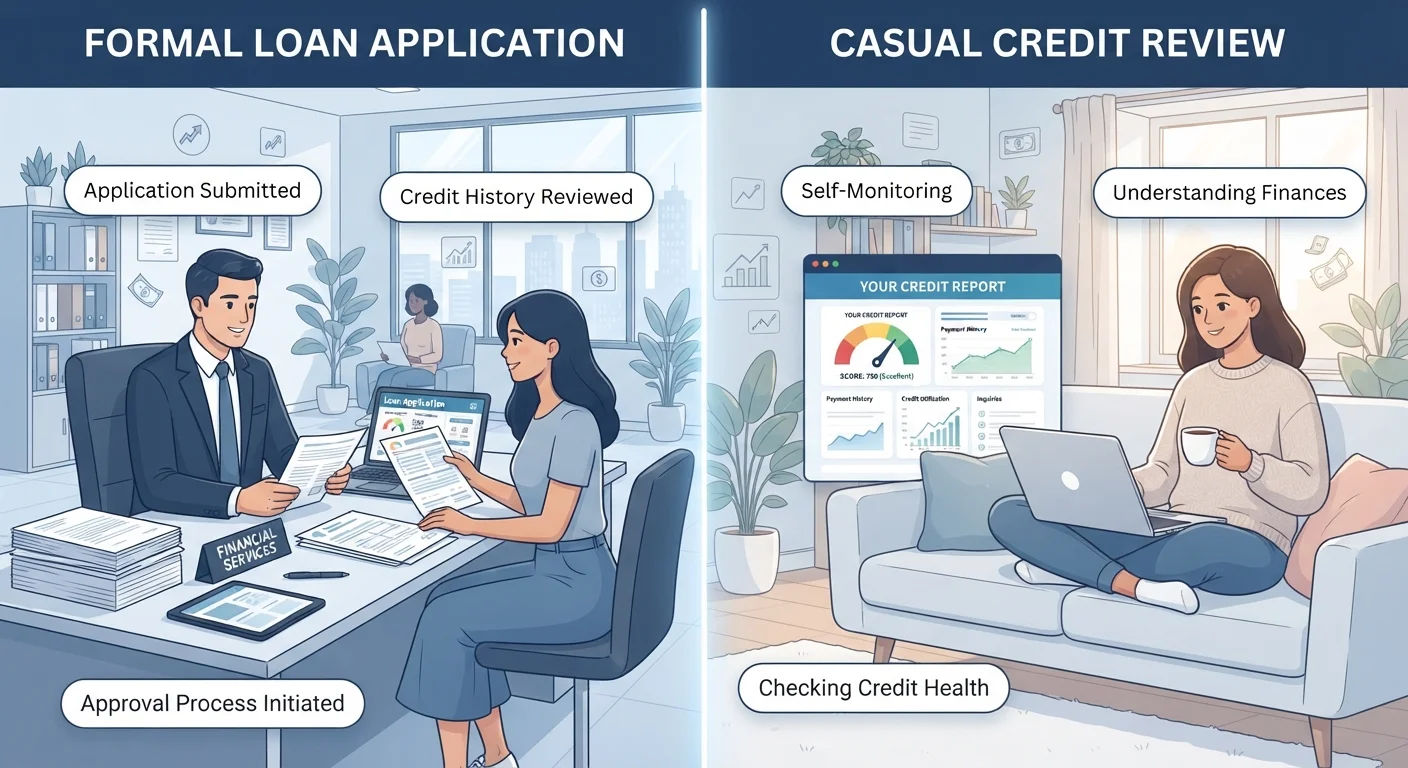
Photo: ReadersChronicle.com | Your Comprehensive Learning Destination editorial
—— In This Article
Key Takeaways
- Hard inquiries occur when a lender reviews your credit as part of a formal application and can temporarily lower your score.
- Soft inquiries - including checking your own credit - have no impact on your credit score.
- Most hard inquiries drop off your credit report after two years and have a modest, short-lived effect on scores.
- Rate-shopping for mortgages, auto loans, or student loans within a short window typically counts as a single hard inquiry.
- Knowing which type of check applies helps you apply for credit strategically without unnecessary score damage.
What Makes an Inquiry 'Hard' or 'Soft'?
A credit inquiry is simply a record that someone accessed your credit file. The key distinction is why your credit was pulled - and that determines whether it can affect your score.
A hard inquiry happens when a lender or creditor reviews your credit as part of a decision to extend credit. You've typically initiated this by submitting a formal application - for a credit card, personal loan, mortgage, or auto financing. Because you're asking someone to take on financial risk with you, they're permitted to make a full review, and that review is recorded on your credit report.
A soft inquiry happens when credit is reviewed without a formal application driving it. Common examples include checking your own credit, a landlord running a background screening, an employer reviewing your file (where permitted by state law), or a credit card issuer pre-screening you for a promotional offer. Soft inquiries are visible on your report when you pull it yourself, but lenders reviewing your file for a credit decision cannot see them - and scoring models ignore them entirely.
The underlying rule is straightforward: only inquiries that result from your own credit-seeking actions can affect your score. Everything else is off the table. For a broader look at what lives on your credit file, see how your credit report and credit score differ.
| Criterion | Hard Inquiry | Soft Inquiry |
|---|---|---|
| Triggered by | Formal credit application | Background check, pre-screening, self-check |
| Affects credit score | Yes, typically minor and temporary | No impact whatsoever |
| Visible to other lenders | Yes | No |
| Stays on report | Up to 2 years | Visible only to you |
| Your consent required | Yes, via application | Not always (varies by context) |
| Common examples | Mortgage, auto loan, credit card application | Checking your own score, pre-qualification, employer check |
How Much Do Hard Inquiries Actually Hurt?
Hard inquiries do affect your credit score, but usually less than people fear. According to FICO - one of the primary credit scoring models used by lenders - a single new hard inquiry typically reduces a score by fewer than five points for most people. The impact is also temporary: inquiries fall off your credit report entirely after two years, and their influence on scoring tends to fade well before that.
<5 pts
Typical score drop from one hard inquiry
FICO states that for most people, a single hard inquiry lowers a score by fewer than five points.
2 years
Time hard inquiries remain on your credit report
Hard inquiries are removed from your credit report after two years, though their scoring impact fades sooner.
14-45 days
Rate-shopping window treated as single inquiry
Depending on the scoring model version, multiple loan inquiries within this window are typically counted as one.
Where hard inquiries become more meaningful is in volume. Multiple hard inquiries in a short period - say, applying for several credit cards back-to-back - can signal financial stress to lenders and cause a more noticeable dip. This is worth factoring in before you apply for credit on impulse.
One important consumer protection built into scoring models: rate-shopping is treated differently. When you're comparing mortgage, auto loan, or student loan offers from multiple lenders, scoring models typically cluster inquiries made within a specific window (commonly 14 to 45 days, depending on the scoring version) and count them as a single inquiry. This lets you shop around without being penalized for being a careful borrower.
It's also worth knowing that a hard inquiry alone rarely makes or breaks a credit decision. Lenders weigh your full credit profile - payment history, balances, length of credit history, and more. One inquiry against an otherwise healthy file is unlikely to change an outcome. You can learn more about how these factors interact by reading about credit utilization and how it shapes your score.
Common Situations and Which Type Applies
Knowing which type of inquiry to expect before you act helps you avoid surprises. Here's how common situations break down:
- Applying for a credit card: Hard inquiry. Even store cards trigger a full credit review.
- Getting pre-qualified for a credit card or loan: Soft inquiry. Pre-qualification doesn't commit the lender to anything, so they use a soft pull.
- Checking your own credit score or report: Always a soft inquiry, regardless of how often you do it.
- A landlord screening your rental application: Typically a soft inquiry, though practices vary.
- An employer background check: Soft inquiry - and employers are generally required to get your written permission first.
- A utility company checking credit before setting up service: Usually a soft inquiry.
- Refinancing a mortgage or auto loan: Hard inquiry, since you're applying for new credit terms.
If you're ever unsure, it's reasonable to ask a lender or service provider directly whether their check will be hard or soft before you consent. This is a normal question and a legitimate part of managing your credit. Before any major application, it also helps to review this pre-application credit checklist so you're not caught off guard.
A Common Myth Worth Clearing Up
Many people believe that checking their own credit will hurt their score. This is not true - pulling your own report or score is always a soft inquiry and has zero effect on your credit. In fact, regularly reviewing your own credit file is considered a sound financial habit, since it helps you catch errors or unfamiliar accounts early. For more on widely held misconceptions, see common credit score myths.
This article is for general informational purposes only and does not constitute personalized financial or credit advice. For guidance specific to your situation, consider consulting a qualified financial professional.

Finance Editorial Team
Finance Editorial Team is the collective byline for our editorial team and contributor network. Articles published under this byline or an editorial pen name are researched, written, and reviewed according to our editorial standards for clarity, consistency, and independence before publication.
View author profile