
Your First Household Budget: A Foundation for Financial Clarity
New to budgeting? Learn the core concepts, simple frameworks, and realistic first steps to build a household budget that actually works.
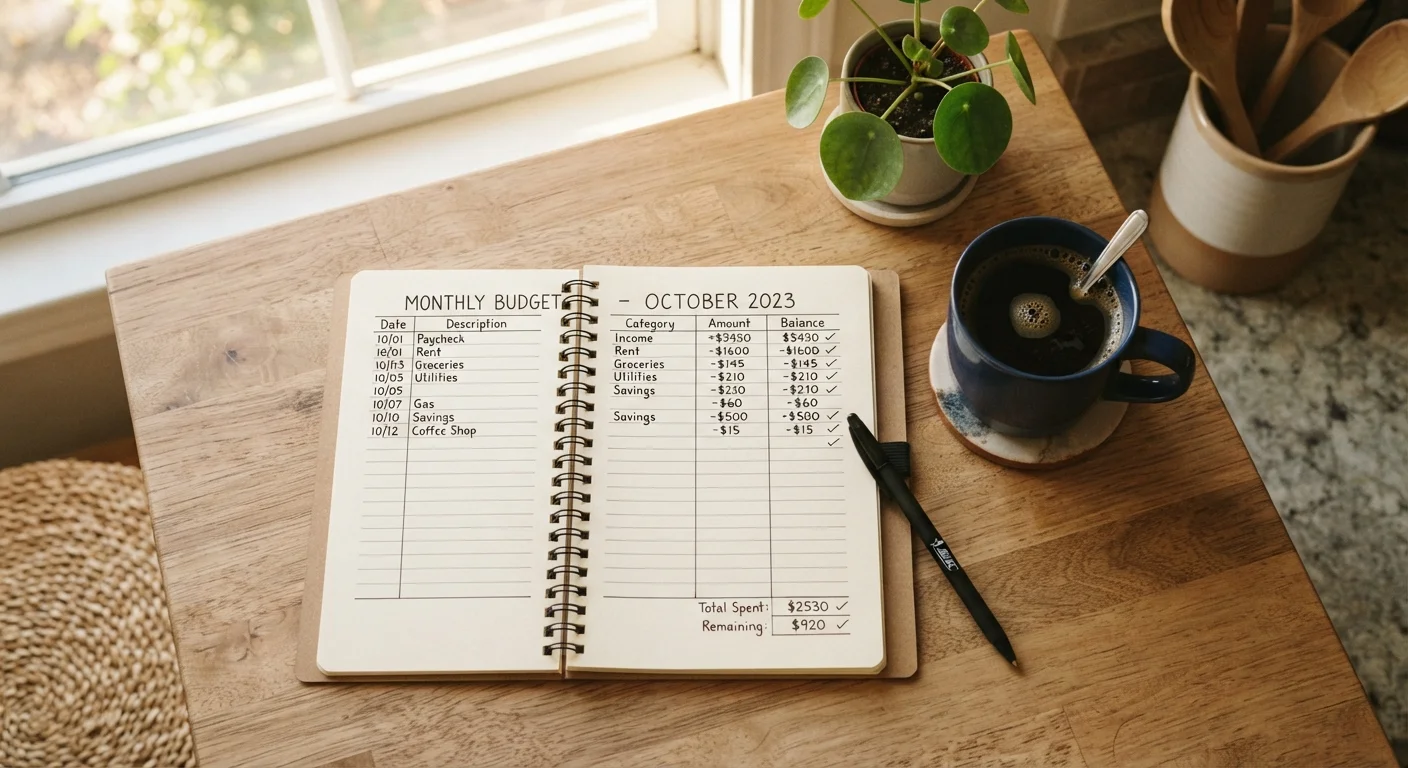
Photo: ReadersChronicle.com | Your Comprehensive Learning Destination editorial
—— In This Article
Key Takeaways
- A budget is a spending plan, not a punishment - it gives you control rather than taking it away.
- Start by calculating your actual take-home (net) income, not your gross salary.
- Separate your expenses into fixed costs, variable costs, and occasional expenses before assigning limits.
- Simple frameworks like the 50/30/20 rule give beginners a proven starting point without complexity.
- Reviewing your budget once a month is enough to keep it working and catch problems early.
Why a Budget Is Worth the Effort
A household budget is simply a written plan for how you intend to use your money each month. That's it. It isn't a restriction on your life or proof that you're struggling - it's a tool that lets you make deliberate choices instead of wondering where your paycheck went.
Without a plan, spending tends to drift. Small daily purchases add up quietly. Irregular expenses - car registration, annual subscriptions, medical co-pays - catch people off guard. A budget makes those costs visible and predictable before they become stressful.
If you've told yourself budgeting is too complicated or only for people in financial trouble, you're not alone. Common budgeting myths stop a lot of people before they even begin. The reality is that a basic household budget takes an hour or two to set up and far less time to maintain each month.
Think of It as a Spending Plan
The word "budget" carries negative connotations for many people, so try reframing it as a spending plan. You're deciding in advance how to use your money - which means more intentional choices and fewer regrets at the end of the month. That shift in perspective can make the habit much easier to maintain.
Know Your Numbers: Income and Expenses
Before you can allocate money, you need to know how much you actually bring home. Use your net income - the amount deposited after taxes, insurance premiums, and any other payroll deductions - not your gross salary. Budgeting from the gross figure leads to a plan that doesn't match reality.
If your income varies month to month, use a conservative estimate: an average of your three lowest recent paychecks works well as a baseline.
Next, list every expense you can think of and group them into three categories:
- Fixed expenses - costs that stay the same each month (rent or mortgage, car payment, insurance premiums).
- Variable expenses - costs that change but recur regularly (groceries, gas, utilities, dining out).
- Occasional expenses - costs that hit a few times a year (car registration, holiday gifts, annual subscriptions). Divide these by 12 and set aside that monthly slice.
Pulling bank and credit card statements from the past two to three months gives you real spending data rather than guesses. Most people are surprised by what they find. For a plain-language explanation of the terms used in budgeting, see key budgeting vocabulary before moving forward.
Net income
The money you actually receive after all taxes and payroll deductions have been taken out - what lands in your bank account each pay period.
Fixed expense
A cost that stays the same amount every month, such as rent, a car payment, or a loan installment.
Variable expense
A recurring cost whose amount changes month to month, like groceries, gas, or your utility bill.
Discretionary spending
Money spent on non-essential wants - dining out, entertainment, hobbies - as opposed to necessities.
Zero-based budgeting
A method where every dollar of income is assigned to a specific category so that income minus all allocations equals zero.
50/30/20 rule
A simple budgeting guideline that suggests allocating roughly 50% of take-home pay to needs, 30% to wants, and 20% to savings or debt repayment.
Choosing a Simple Budgeting Framework
Once you know your income and expenses, you need a structure to organize them. Two frameworks stand out for beginners:
The 50/30/20 Rule
This approach divides take-home pay into three broad buckets: 50% toward needs (housing, food, transportation, utilities), 30% toward wants (entertainment, dining out, hobbies), and 20% toward savings and debt repayment. It's flexible enough to fit most households and simple enough to stick with. Comparing the 50/30/20 rule to zero-based budgeting can help you decide which approach suits your life better.
Zero-Based Budgeting
In this method, you assign every dollar of income to a specific category - expenses, savings, or debt - until nothing is left unallocated. It requires more tracking but leaves no money without a purpose. A digital version of the classic cash envelope approach follows the same logic; see how envelope budgeting works today for more detail.
Neither method is universally better. Choose the one that feels manageable enough that you'll actually use it.
Percentages Are a Starting Point, Not a Rule
The 50/30/20 split won't fit every household perfectly. Someone in a high-cost city may spend 65% on needs alone. Someone carrying significant debt may need to direct more than 20% to repayment. Use the framework as a reference point, then adjust the percentages to reflect your real situation rather than trying to force your life into the template.
Building and Sticking to Your First Budget
Once you've picked a framework, the practical steps are straightforward:
- Write down your monthly net income.
- List all fixed expenses first - these are non-negotiable and come off the top.
- Estimate variable expenses using your real spending data from recent months.
- Add a monthly slice for occasional expenses so irregular costs don't derail you.
- Assign what remains to savings and discretionary spending according to your chosen framework.
- Check the math: income minus all categories should equal zero (zero-based) or leave a deliberate buffer.
Review your actual spending against the plan at the end of each month. Most beginners need two or three monthly cycles before their estimates feel accurate. That's expected - the first month is about collecting data as much as following a plan.
As your financial life grows more complex - adding a mortgage, managing debt, or saving for specific goals - your budget will grow with it. A comprehensive guide to household budgeting at every stage covers what comes next. And if debt is part of your picture, understanding personal debt basics is a useful companion read.
This article is for general informational and educational purposes only and does not constitute personalized financial advice. Please consult a qualified financial professional for guidance specific to your circumstances.
Don't Budget From Your Gross Income
A common first-time mistake is building a budget around your salary before deductions. Taxes, health insurance, and retirement contributions reduce what actually hits your bank account significantly. Always use your net (take-home) income as the foundation, or your plan will show more available money than you actually have.
Frequently Asked Questions

Finance Editorial Team
Finance Editorial Team is the collective byline for our editorial team and contributor network. Articles published under this byline or an editorial pen name are researched, written, and reviewed according to our editorial standards for clarity, consistency, and independence before publication.
View author profile