
Key Budgeting Terms Every Consumer Should Know
A plain-language reference for common budgeting vocabulary—from discretionary spending and net income to sinking funds and budget deficits.
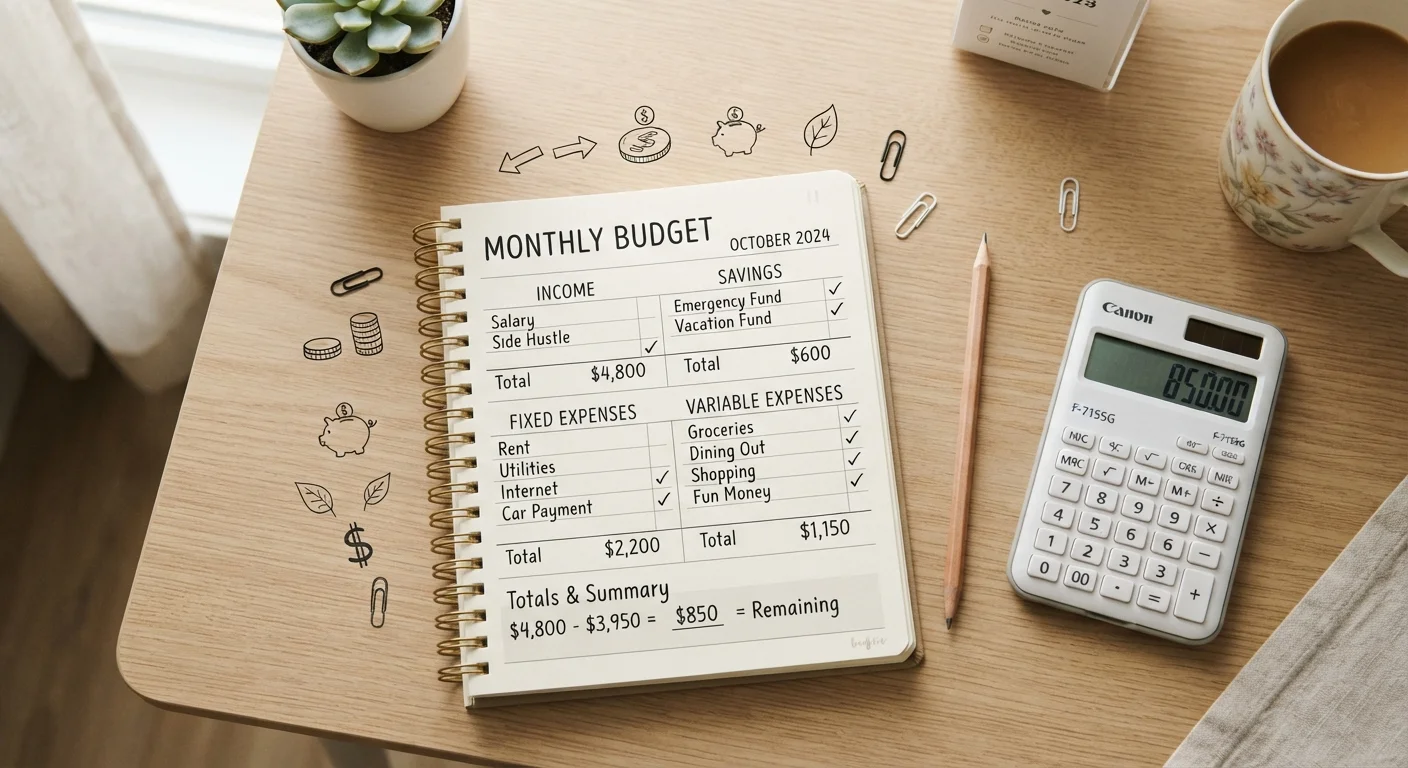
Photo: ReadersChronicle.com | Your Comprehensive Learning Destination editorial
—— In This Article
Why Budgeting Vocabulary Matters
Budgeting guides often throw around terms without stopping to explain them. That gap creates a real problem: if you don't know what "net income" means, building a budget around it is guesswork. This reference defines the core terms you'll encounter so you can read, plan, and act with confidence.
These aren't niche accounting concepts - they're the everyday words that show up in personal finance apps, bank statements, and money conversations. Once you know them, a lot of the confusion clears up fast. If you've run into claims that budgeting is too complicated or not worth the effort, our guide on common budgeting myths addresses those head-on.
Gross Income
Total earnings before taxes or any deductions are removed. This is the headline number from a salary or wage agreement, not what you actually receive in your paycheck.
Net Income
The amount of money you take home after taxes, Social Security, Medicare, and other withholdings are deducted. This is the figure to use when building a budget.
Fixed Expense
A recurring cost that stays the same each billing cycle, such as rent, a mortgage payment, or a set loan installment. These are the easiest to predict in a budget.
Variable Expense
A cost that changes from month to month based on usage or choices, such as groceries, utility bills, or gas. Variable expenses require more active tracking.
Discretionary Spending
Money spent on non-essential items or experiences - dining out, entertainment, or hobbies. It's the most flexible spending category and the first place many people look when cutting back.
Budget Surplus
The amount by which income exceeds expenses during a given period. A surplus gives you room to save more, pay down debt, or build reserves.
Budget Deficit
When spending exceeds income during a given period. Covering a deficit typically means drawing down savings or taking on debt.
Sinking Fund
A savings category where you set aside a fixed amount each month toward a known future expense, such as car repairs or annual insurance premiums. Different from an emergency fund.
Emergency Fund
A dedicated cash reserve set aside for unexpected financial hardships, such as job loss or a major unplanned expense. Commonly recommended at three to six months of essential expenses.
Zero-Based Budgeting
A budgeting method where every dollar of income is assigned a specific purpose - spending, saving, or debt repayment - so income minus allocations equals zero.
50/30/20 Rule
A general budgeting guideline that suggests allocating roughly 50% of net income to needs, 30% to wants, and 20% to savings and debt repayment. It's a starting framework, not a universal rule.
Discretionary vs. Non-Discretionary
Non-discretionary expenses are necessities you cannot reasonably eliminate - housing, utilities, food, minimum debt payments. Discretionary expenses are optional. Distinguishing between the two is foundational to any budget.
Core Income and Spending Terms
Every budget starts with understanding what money comes in and where it goes. Here are the foundational terms:
| Budget starting point | Net income, not gross |
| Emergency fund target (general guideline) | 3-6 months of essential expenses (Widely cited by consumer financial education sources) |
| 50/30/20 allocation - Needs | ~50% of net income |
| 50/30/20 allocation - Savings & debt | ~20% of net income |
| Zero-based budgeting goal | Income minus all allocations = $0 |
| Most flexible budget category | Discretionary spending |
Gross income is your total earnings before any taxes or deductions are taken out - the number on your offer letter or contract. Net income (also called take-home pay) is what actually lands in your bank account after taxes, Social Security, and other withholdings. Your budget should always be built on net income, not gross.
Fixed expenses are costs that stay the same each month - rent, a car loan payment, or a set insurance premium. Variable expenses change from month to month - groceries, gas, and dining out are common examples. Understanding which category each bill falls into shapes how you allocate your money. For a deeper look, see our article on fixed vs. variable expenses.
Discretionary spending covers non-essential purchases - entertainment, hobbies, clothing beyond basics. It's the most flexible part of your budget and the first area most people look at when trying to cut back.
Budget Structure and Planning Terms
Once you understand income and expenses, these terms describe how a budget is organized and measured:
A budget surplus occurs when your income exceeds your spending in a given period - you have money left over. A budget deficit is the opposite: spending exceeds income, which means you're drawing down savings or taking on debt to cover the gap.
A sinking fund is money you set aside gradually for a known future expense - car repairs, holiday gifts, or a vacation. It's different from an emergency fund, which covers unexpected costs. Learn how sinking funds fit into a broader savings plan.
An emergency fund is a separate cash reserve - typically three to six months of essential expenses - kept liquid and untouched except for genuine financial emergencies like job loss or a major unexpected bill.
Zero-based budgeting is a method where you assign every dollar of income a specific purpose - spending, saving, or debt repayment - so the total comes to zero. Nothing sits unallocated. The 50/30/20 rule is a simpler framework: roughly 50% of net income goes to needs, 30% to wants, and 20% to savings and debt payoff. Both are general guidelines, not guarantees of any outcome.
Understanding these terms also applies when making larger financial decisions. Homebuyers, for example, will encounter budget-related language throughout the process - see our home-buying fundamentals hub for context. Credit decisions are equally tied to budget health; the Credit Essentials hub covers how spending and debt affect your credit profile. For savings- and debt-specific vocabulary, personal finance terms every saver should know is a useful companion reference.
This article is for general informational and educational purposes only and does not constitute personalized financial advice. Consult a qualified financial professional for guidance specific to your situation.

Finance Editorial Team
Finance Editorial Team is the collective byline for our editorial team and contributor network. Articles published under this byline or an editorial pen name are researched, written, and reviewed according to our editorial standards for clarity, consistency, and independence before publication.
View author profile