
Trading In vs. Selling Privately: A Real-World Tradeoff
Trade-ins are faster; private sales often yield more money. Here's an honest look at the time, effort, and financial difference between the two.
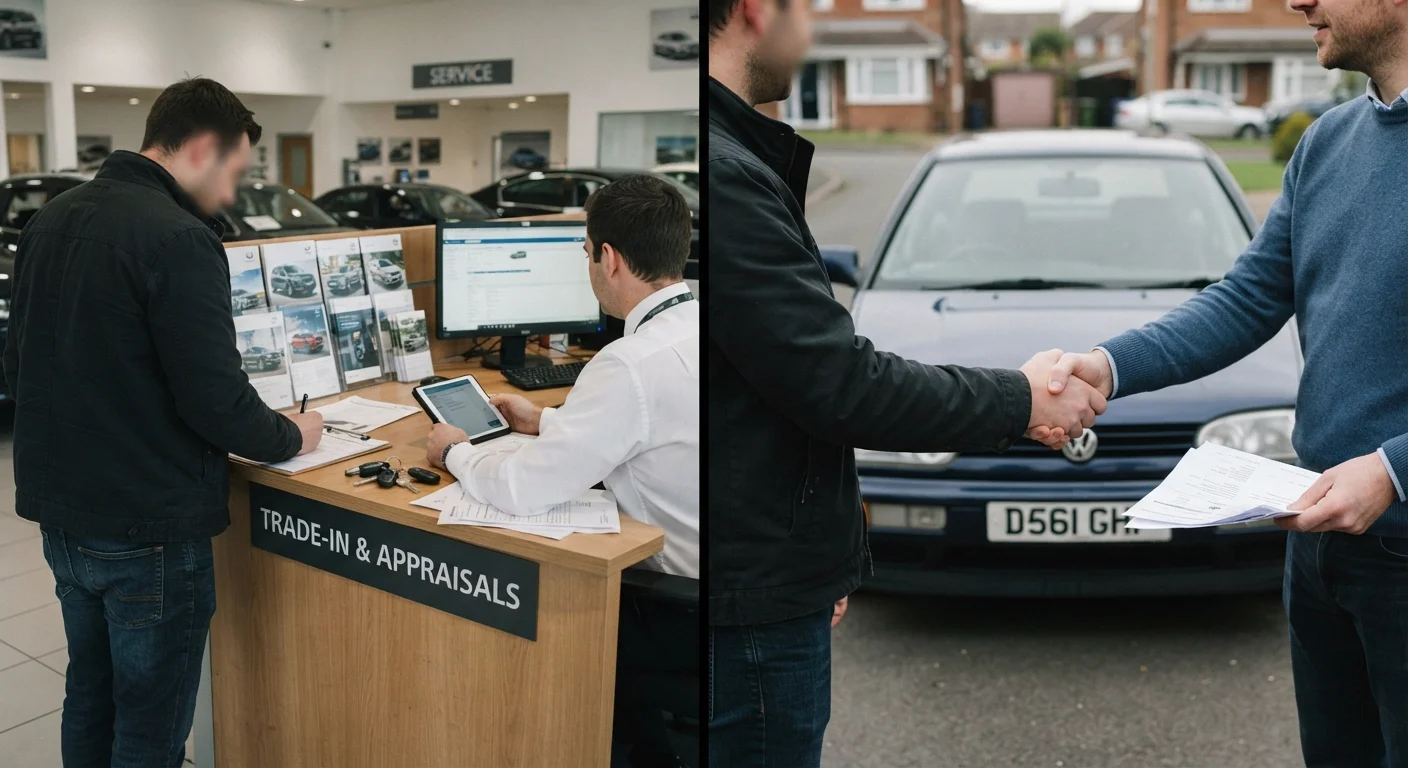
Photo: ReadersChronicle.com | Your Comprehensive Learning Destination editorial
—— In This Article
Key Takeaways
- Private sales typically yield more money, but require more time and effort from the seller.
- Trade-ins are faster and simpler, but dealers generally offer less than market value.
- In most states, a trade-in reduces the taxable purchase price of your next vehicle.
- Safety and payment verification are real considerations when selling to a stranger.
- Neither option is universally better - your situation determines which makes sense.
Fast, simple transaction with minimal paperwork
The dealership handles title transfer and most administrative steps. You can often complete the entire process the same day you walk in.
Potential sales tax savings on your next purchase
In most states, the trade-in value reduces the taxable amount of your vehicle purchase, which can offset some of the price difference versus a private sale.
No need to screen buyers or arrange test drives
You avoid the time and safety considerations of meeting strangers, coordinating schedules, and verifying payment.
Convenient when buying and selling at the same time
Bundling both transactions with one dealer removes the awkward timing gap between selling your old car and taking delivery of a new one.
Trade-in offers are typically below private market value
Dealers price their offers to leave room for reconditioning costs and resale profit, so you'll generally net less than you would selling directly to another consumer.
Private sales demand significant time and effort
Listing, communicating with potential buyers, scheduling viewings, negotiating, and completing paperwork can take days or weeks, depending on demand.
Payment risk when dealing with unknown buyers
Fraudulent cashier's checks are a documented risk in private vehicle sales. Sellers need to take extra steps to verify funds before releasing the vehicle.
You handle all DMV paperwork yourself
Title transfer, bill of sale, and release of liability filings fall on you as the seller. Requirements and processes vary by state and errors can create legal complications.
The Core Difference in Plain Terms
When you trade in a vehicle, you hand it to the dealership as part of a purchase transaction. They assess it, offer you a number, and apply that amount toward your next car. When you sell privately, you find your own buyer, agree on a price, and transfer the title yourself - no dealership involved.
The financial gap between these two paths is real. Dealers need to profit when they resell your vehicle, so their offer typically lands below what a private buyer would pay. How big that gap is depends on the vehicle's condition, local demand, and market timing - but a difference of several hundred to a few thousand dollars is common. Understanding how depreciation affects your car's value before you sell can help you gauge whether that gap is worth chasing.
The Case for Trading In
Fast, simple transaction with minimal paperwork
The dealership handles title transfer and most administrative steps. You can often complete the entire process the same day you walk in.
Potential sales tax savings on your next purchase
In most states, the trade-in value reduces the taxable amount of your vehicle purchase, which can offset some of the price difference versus a private sale.
No need to screen buyers or arrange test drives
You avoid the time and safety considerations of meeting strangers, coordinating schedules, and verifying payment.
Convenient when buying and selling at the same time
Bundling both transactions with one dealer removes the awkward timing gap between selling your old car and taking delivery of a new one.
Beyond convenience, there's one financial advantage to a trade-in that often gets overlooked: the sales tax offset. In most U.S. states, when you trade in a vehicle and buy another from the same dealer, you pay sales tax only on the difference between the purchase price and the trade-in value. On a vehicle costing $30,000 with a $10,000 trade-in, you'd pay tax on $20,000 rather than $30,000. Depending on your state's tax rate, that can narrow the gap between a trade-in and a private sale significantly.
Trade-ins also eliminate the administrative work: no listing, no test drives with strangers, no waiting for a check to clear. If you're buying and selling simultaneously, a dealership handles both sides of the transaction at once.
~$1,000-$3,000
Typical gap between trade-in and private sale price
Industry estimates vary, but consumer advocates commonly note a difference in this range for average used vehicles, though it can be wider for in-demand models.
45+ states
States offering sales tax relief on trade-ins
Most U.S. states allow buyers to deduct the trade-in value from the taxable purchase price of a replacement vehicle, reducing the effective cost of trading in.
The Case for Selling Privately
Trade-in offers are typically below private market value
Dealers price their offers to leave room for reconditioning costs and resale profit, so you'll generally net less than you would selling directly to another consumer.
Private sales demand significant time and effort
Listing, communicating with potential buyers, scheduling viewings, negotiating, and completing paperwork can take days or weeks, depending on demand.
Payment risk when dealing with unknown buyers
Fraudulent cashier's checks are a documented risk in private vehicle sales. Sellers need to take extra steps to verify funds before releasing the vehicle.
You handle all DMV paperwork yourself
Title transfer, bill of sale, and release of liability filings fall on you as the seller. Requirements and processes vary by state and errors can create legal complications.
The primary reason sellers go the private route is money. Because you're selling directly to an end user rather than a middleman, you can price closer to retail market value. Resources like independent vehicle valuation guides can give you a realistic range before you list.
That said, private selling takes real effort. You'll need to prepare the vehicle, write a compelling listing, field inquiries, arrange viewings, and manage negotiations. You'll also handle the paperwork - title transfer, a bill of sale, and potentially a release of liability filing with your state's DMV. For a practical walkthrough of the process, see our guide to selling your car without getting shortchanged.
Payment verification is another real concern. Cashier's checks can be forged; cash is safest but not always practical for larger transactions. Meeting at your bank to complete the transaction is one way to reduce risk.
Check Your State's Title Transfer Rules
Private vehicle sale requirements differ by state. Some states require a notarized title, others require odometer disclosure forms, and a few have specific timelines for completing the transfer. Before you list your vehicle, look up your state DMV's requirements so you're prepared when a buyer is ready to close. Delays in paperwork can stall or kill a deal.
How to Decide Which Path Fits Your Situation
Start by getting a trade-in quote from one or more dealers before you commit to anything. Then research what comparable vehicles are selling for privately in your area. Once you have both numbers, factor in your state's sales tax treatment for trade-ins - your actual net difference may be smaller than the headline gap suggests.
Then ask yourself a few practical questions: How quickly do you need the money or the vehicle gone? Do you have the time and comfort level to manage a private sale? Is your vehicle likely to attract motivated private buyers, or is it a harder sell (high mileage, unusual color, aging model)?
For context on how these same tradeoffs show up in other major financial decisions, the logic in understanding what changes when buying from a private seller versus a dealership applies in reverse when you're the one selling.
This article is for general informational purposes only and does not constitute financial, legal, or tax advice. Tax treatment of trade-ins varies by state; consult your state's DMV or a qualified tax professional for guidance specific to your situation.

Cars Editorial Team
Cars Editorial Team is the collective byline for our editorial team and contributor network. Articles published under this byline or an editorial pen name are researched, written, and reviewed according to our editorial standards for clarity, consistency, and independence before publication.
View author profile