
The Paperwork Behind a Car Sale: A Field Reference
Title transfers, bills of sale, odometer disclosures — a clear reference to the documents involved in buying or selling a vehicle in the US.
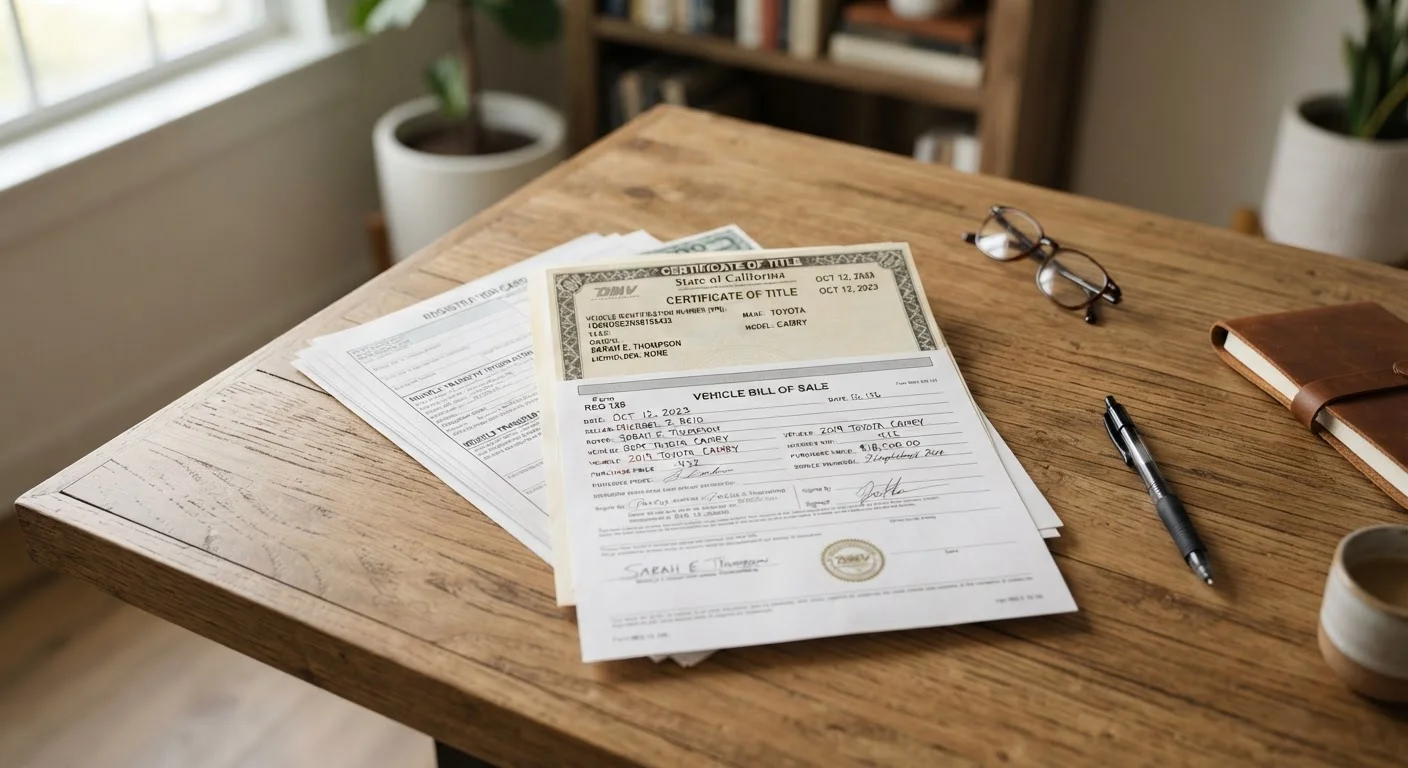
Photo: ReadersChronicle.com | Your Comprehensive Learning Destination editorial
—— In This Article
Why Vehicle Paperwork Matters
Missing or incorrect paperwork is one of the most common ways a vehicle sale goes sideways - for both buyers and sellers. A deal can fall apart at the DMV, or worse, a buyer can end up holding a car they can't legally register. Understanding what each document does before you sit down at the table keeps you in control and protects your wallet.
The documents involved vary slightly by state, but a core set appears in nearly every private or dealer sale in the US. This reference covers each one plainly. For a broader look at how the transaction itself differs depending on who you're buying from, see Private Seller vs. Dealership: What Changes Beyond the Price Tag.
| Documents required in most US states | Title, bill of sale, odometer disclosure |
| Who files the release of liability | The seller, filed with the state DMV |
| Odometer disclosure required for | Most vehicles under 10 years old (federal law) (Truth in Mileage Act) |
| Buyer's Guide sticker required from | Licensed dealers only (not private sellers) (FTC Used Car Rule) |
| Typical window to re-title after purchase | 10-30 days (varies by state) |
| Where to verify local requirements | Your state's DMV website |
The Core Documents Explained
Certificate of Title
The legal document that proves ownership of a vehicle. It lists the owner's name, the vehicle identification number (VIN), and any liens (loans) against the vehicle. A clean title means no outstanding loans are attached.
Bill of Sale
A written record of the transaction between buyer and seller. It typically captures the sale price, vehicle description, VIN, odometer reading, and both parties' signatures. It is not the same as a title.
Odometer Disclosure Statement
A federally required document confirming the vehicle's mileage at the time of sale. Its purpose is to protect buyers from odometer fraud. It is often integrated into the title form itself.
Lien Release
A document from a lender confirming that a loan tied to the vehicle has been paid off and the lender no longer has a claim on the title. Required before a clean title can be transferred to a new owner.
Release of Liability
A form the seller submits to the state DMV after a sale, notifying the state that ownership has changed. It protects the seller from responsibility for tickets, tolls, or accidents that occur after the sale.
Buyer's Guide (As-Is Notice)
A federally mandated disclosure sticker that dealers must display on used vehicles for sale. It states whether the vehicle is sold as-is or with a dealer warranty. Private sellers are generally not required to use this form.
VIN (Vehicle Identification Number)
A unique 17-character code assigned to every vehicle at the factory. It appears on the title, registration, and the vehicle itself. Always verify that VINs match across all documents and the physical car.
A few practical notes on each document:
- Certificate of Title: The seller must sign the title over to the buyer exactly as their name appears on it. Any mismatch - a middle initial, a nickname - can cause a rejection at the DMV. If there's a lien listed, the lender must release it before the title can transfer cleanly.
- Bill of Sale: Many states don't legally require a bill of sale for private transactions, but it's wise to use one anyway. It records the agreed price (relevant for sales tax calculation), the odometer reading, and the "as-is" nature of a private sale. Both parties should keep a signed copy.
- Odometer Disclosure Statement: Federal law (the Truth in Mileage Act) requires this for most vehicles under ten years old. On many state title forms, this is built into the title itself. Falsifying mileage is a federal crime.
- Release of Liability: Sellers should file this with their state DMV as soon as the car changes hands. It documents that you are no longer responsible for the vehicle after a specific date and time - important if the new owner gets a ticket or causes an accident before re-registering it.
- As-Is Notice / Buyer's Guide: Dealers are federally required to display a Buyer's Guide sticker disclosing whether any warranty applies. Private sellers generally sell "as-is" by default, but noting this explicitly in the bill of sale is good practice.
If you're preparing to sell, Selling Your Car Without Getting Shortchanged walks through the full process, including how to document the transaction properly.
Lien on the Title? Extra Steps Required
If the seller still owes money on the vehicle, the lender holds the title - not the seller. The loan must be paid off and a lien release obtained before the title can transfer cleanly to a buyer. Some transactions handle this through an escrow arrangement, but the details vary. If you encounter a liened title in a private sale, consider consulting your state's DMV or a licensed professional before proceeding.
Before and After the Signing
Before any documents are signed, a buyer should verify that the VIN on the title matches the VIN plate on the dashboard and the door jamb sticker. Discrepancies can indicate a salvage swap or worse. Running a vehicle history report using the VIN is also a standard step. See Before You Sign Anything: A Used Car Buyer's Checklist for a full pre-signing walkthrough.
After signing, both parties should keep copies of everything. The buyer typically has a set window - often 10 to 30 days depending on the state - to title and register the vehicle. Driving on an expired or temporary tag can result in fines. Check your state DMV's website for exact deadlines and any additional local forms required, since requirements do vary.
50+
Separate state DMV rule sets govern vehicle transfers
Each US state administers its own title and registration process, meaning requirements for forms, fees, and deadlines differ by location.
~$0-$75
Typical title transfer fee range across states
State title transfer fees vary widely; always check your specific state DMV fee schedule before budgeting for a sale.
This article is for general informational purposes only. Document requirements, fees, and deadlines vary by state. Always verify current requirements with your state's DMV or a licensed professional before completing a vehicle sale.

Cars Editorial Team
Cars Editorial Team is the collective byline for our editorial team and contributor network. Articles published under this byline or an editorial pen name are researched, written, and reviewed according to our editorial standards for clarity, consistency, and independence before publication.
View author profile