
Where Budget Travelers Overspend - and Why It Keeps Happening
The spending patterns that quietly blow travel budgets: airport meals, airport transfers, day tours, and other costs that catch travelers off guard.
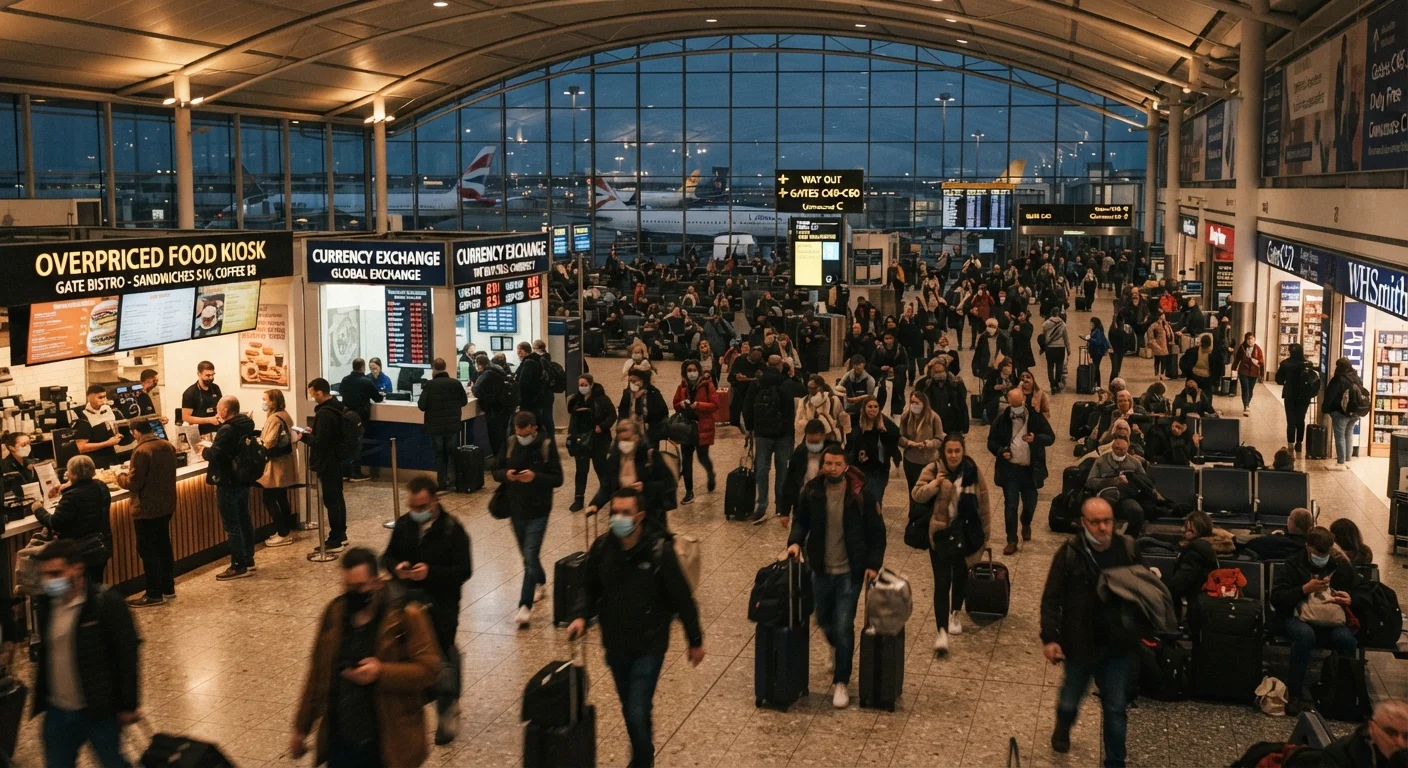
Photo: ReadersChronicle.com | Your Comprehensive Learning Destination editorial
Key Takeaways
- Airport food, drinks, and transfers routinely cost two to three times what you'd pay elsewhere.
- Pre-booked day tours often charge a significant premium over locally arranged alternatives.
- Most budget overruns follow predictable patterns that can be addressed before departure.
- Small daily convenience purchases add up faster than most travelers expect.
- Having a written daily spending cap is one of the most effective guardrails against overspending.
The Pattern Behind Blown Travel Budgets
Most travelers don't blow their budgets on one extravagant mistake. They lose ground in small, repeated ways - a meal here, a transfer there, a tour that seemed reasonable at the time. The pattern is consistent enough that it's worth naming directly before it catches you off guard.
If you've ever landed home and wondered where all the money went, this article is for you. These aren't obscure edge cases; they're the spending habits that quietly drain budgets across destinations, trip types, and experience levels. Understanding why they happen is just as important as knowing what they are - because most of them make complete sense in the moment.
For a broader picture of where everyday trip spending quietly erodes your budget, see our guide on day-to-day spending abroad.
Paying airport food and drink prices without a second thought.
Why it happens: You're tired, hungry, and stuck in a captive environment - and airport vendors count on exactly that. Prices for a sandwich or coffee can run two to three times what you'd pay at a neighborhood spot.
Taking the first airport transfer option available - often a taxi or hotel shuttle - without comparing alternatives.
Why it happens: After a long flight, the path of least resistance feels like a necessity rather than a choice. Drivers and shuttle operators near arrivals know this and price accordingly.
Booking packaged day tours through hotel lobbies or tourist-area kiosks at full rack rates.
Why it happens: Convenience is real - and the tour is right there. But those same tours are often marked up significantly compared to booking directly with local operators or through community-run services.
Ignoring small daily convenience costs like bottled water, souvenir impulse buys, and ATM fees.
Why it happens: Each transaction feels minor in isolation. A $3 water here, a $5 fridge magnet there - none of it seems consequential until you add it up across two weeks.
Eating every meal in the tourist district closest to your accommodation.
Why it happens: Proximity wins when you're unfamiliar with a city. Walking two extra blocks feels unnecessary, and tourist-area restaurants often look perfectly appealing.
Not having a local data plan and relying on paid Wi-Fi or expensive roaming charges.
Why it happens: Sorting out a local SIM card or international plan feels like an administrative task that gets pushed aside during trip planning excitement.
How to Build Guardrails Before You Leave
Recognizing these patterns is useful, but acting on them before departure is what actually protects your budget. Most of these overspending moments are preventable with a modest amount of advance planning.
2-3×
Airport food price premium over city alternatives
Consumer price comparisons consistently find airport food and beverage vendors charge substantially more than equivalent off-airport options in the same cities.
$50-$150
Typical airport taxi premium over public transit
The gap between taxis or rideshares from major international airports and available rail or bus options varies widely by city but is frequently significant - especially for solo travelers.
Start by researching ground transport options for every airport you'll use - not just the one closest to home. Pack food for your departure day. Look up which local SIM card or data plan works in your destination. And if tours interest you, spend 20 minutes checking whether a local guide or public transit could get you to the same place for a fraction of the cost.
Building a trip budget that holds together means accounting for these categories in writing - not just hoping to stay disciplined in the moment. If you haven't set a daily discretionary spending cap before you leave, set one now.
The strategies that consistently help travelers spend less aren't complicated - they mostly come down to making decisions before you're tired, hungry, and standing in an airport.
Currency Exchange Counters at Airports
Airport currency exchange booths are among the least favorable places to convert money. Rates are typically well below interbank rates, and fees are often layered on top. If you need local currency quickly, a modest ATM withdrawal on arrival at a bank-affiliated machine is generally a better option - though fees vary by your home bank. Check what your bank charges for foreign ATM use before you travel.

Travel Editorial Team
Travel Editorial Team is the collective byline for our editorial team and contributor network. Articles published under this byline or an editorial pen name are researched, written, and reviewed according to our editorial standards for clarity, consistency, and independence before publication.
View author profile