
Day-to-Day Spending Abroad: Where US Travelers Overpay Without Realizing It
Airport currency exchanges, hotel minibars, tourist-area restaurants — a breakdown of where everyday spending quietly erodes your travel budget.
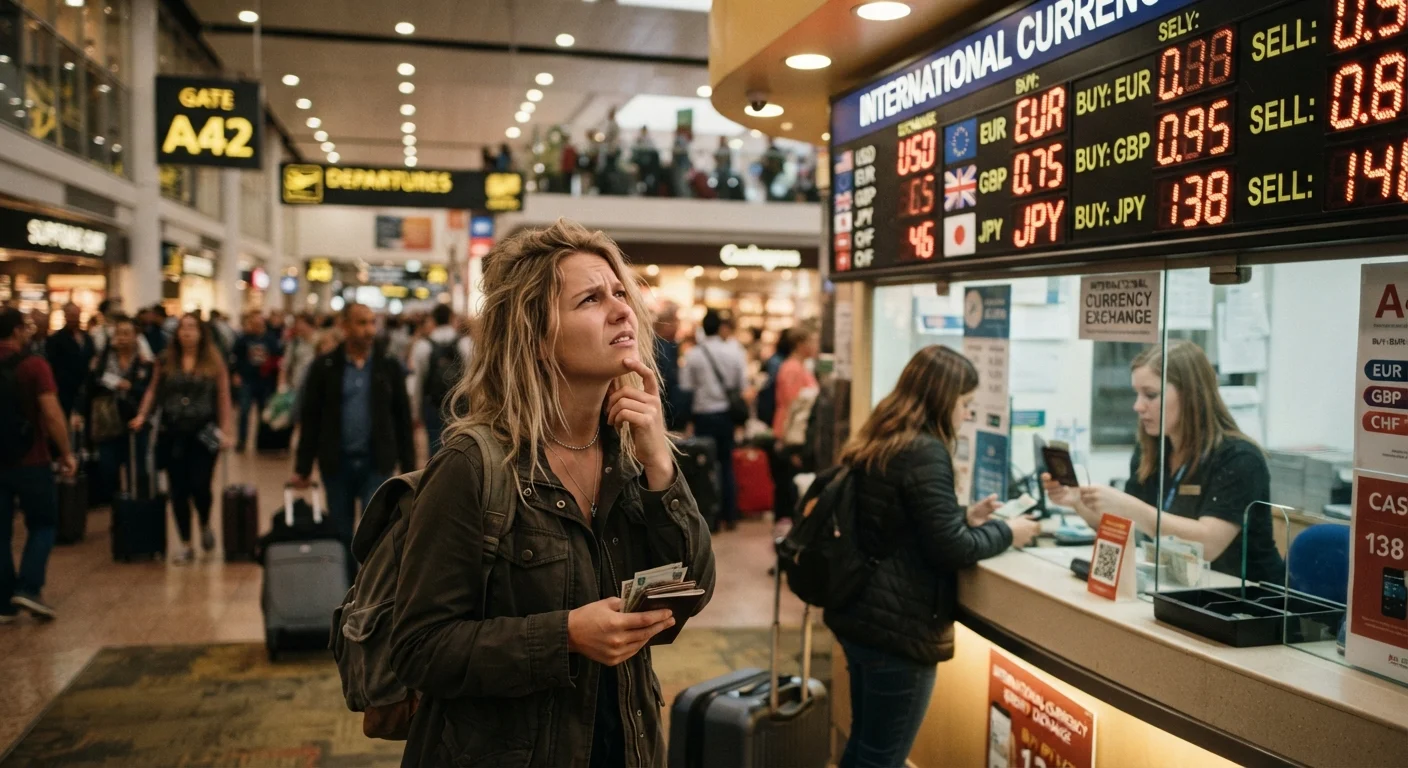
Photo: ReadersChronicle.com | Your Comprehensive Learning Destination editorial
—— In This Article
Key Takeaways
- Airport currency exchanges routinely charge markups of 10-15% over mid-market rates, draining money before your trip begins.
- Hotel minibars, in-room Wi-Fi fees, and resort charges add up to significant daily costs that are easy to overlook.
- Tourist-area restaurants near major attractions can charge two to three times local prices for similar food.
- Dynamic currency conversion at payment terminals lets merchants apply their own exchange rates - almost always to the traveler's disadvantage.
- Foreign transaction fees on standard US credit cards typically add 1-3% to every overseas purchase.
- Small, repeated overpayments - not one large splurge - are what most commonly erode international travel budgets.
The Drain You Don't Notice Until You're Home
Most international travel budgets don't blow up in one dramatic moment. They erode quietly - a few dollars here, a hidden fee there - until you land back home and realize your spending ran 30% over what you planned. The frustrating part is that many of these costs are completely avoidable once you know where to look.
This isn't about skipping experiences or eating only street food. It's about recognizing the structural traps built into tourist travel infrastructure - and sidestepping them with a bit of preparation. As we cover in our guide on why travelers overspend, these missteps compound quietly and are far easier to prevent than to recover from mid-trip.
Below are the most common places US travelers consistently overpay abroad - and what to do instead.
Airport currency exchange booths
Currency exchange kiosks at airports are among the most expensive ways to convert dollars. Margins of 10-15% above the mid-market rate are common, and some airport operators charge additional flat fees per transaction. On a $500 conversion, that markup alone could cost $50-$75 before you've left the terminal.
A more cost-effective approach: use a debit card from a bank or financial app that reimburses ATM fees and charges no foreign transaction markup to withdraw local currency from an in-country ATM. Check your bank's terms before travel - many standard US accounts do carry foreign ATM and conversion fees.
A 12% markup on a $500 currency exchange can cost more than a night's accommodation in many budget destinations.
Dynamic currency conversion at card terminals
When paying by card abroad, merchants and ATMs sometimes offer to charge you in US dollars rather than the local currency - a feature called dynamic currency conversion (DCC). It sounds convenient, but the exchange rate applied is set by the merchant's processor, not by your card network. That typically means an additional 3-8% markup on top of any fees your bank already charges.
The fix is simple: always choose to pay in the local currency when prompted. Your card's network rate - Visa, Mastercard, or similar - will almost always be more favorable than what DCC offers.
Always pay in local currency at terminals abroad - merchant-set DCC rates routinely add 3-8% to your bill.
Foreign transaction fees on standard credit cards
Many standard US credit cards add a foreign transaction fee of 1-3% to every purchase made outside the country. That percentage sounds small, but it applies to every coffee, museum ticket, and taxi ride. On a $3,000 trip, a 3% fee adds $90 - for nothing in return.
Cards marketed as travel-oriented often waive these fees entirely. Whether one makes sense for your situation depends on your overall finances and travel frequency - our overview of travel credit cards and what they actually cost walks through the trade-offs honestly. This article is general financial information, not personalized advice - consult a financial professional for decisions specific to your circumstances.
A 3% foreign transaction fee on a $3,000 trip quietly adds $90 in charges that deliver nothing in return.
Tourist-area restaurants and menus in English
Restaurants within a short walk of major attractions in most international cities operate at a premium. In cities like Rome, Barcelona, or Bangkok's tourist corridors, a meal at a terrace restaurant facing a landmark can cost two to three times what the same dish runs four or five blocks away. Menus printed only in English are a reliable signal that pricing is calibrated for visitors, not locals.
Navigating slightly off the beaten path - using a translation app to read local-language menus - routinely cuts meal costs significantly. Markets, food halls, and lunch specials at sit-down restaurants frequented by workers are other reliable options for eating well without tourist-zone pricing.
An English-only menu near a major landmark is a reliable signal that prices are set for tourists, not locals.
Hotel minibars, in-room Wi-Fi, and resort fees
Hotel room extras are engineered for convenience - and priced accordingly. Minibar items routinely cost three to five times what you'd pay at a nearby convenience store. In-room Wi-Fi fees at mid-range and upscale hotels can run $15-$25 per night even when lobby Wi-Fi is free. Resort fees at US and international hotels sometimes add $25-$50 per night to a rate that looked affordable at booking.
Reading the full rate breakdown before confirming a booking - not just the nightly price - helps avoid resort fee surprises. For minibar costs, a 10-minute walk to a local supermarket on arrival can stock snacks and water at a fraction of the price. See also where budget travelers overspend and why it keeps happening for a broader look at accommodation cost traps.
Resort fees and minibar markups can add $50 or more to your daily hotel cost - often invisible until checkout.
Prepaid airport transfers and hotel-arranged transport
Hotels and travel booking platforms often offer prepaid airport transfer packages at a significant premium over local alternatives. In many cities, metered taxis, rideshare apps, or public transit options cost a fraction of what a hotel-arranged transfer charges. In some destinations - parts of Southeast Asia, Central America, and Southern Europe - local buses or metro lines connect airports to city centers for just a few dollars.
Researching ground transport before arrival takes about 15 minutes and can save $30-$80 per trip segment depending on the destination. Our comparison of Southeast Asia vs. Central America for budget travelers includes typical transport cost ranges for both regions.
Researching local ground transport before arrival takes 15 minutes and can save $30-$80 per airport transfer.
Bringing It All Together
None of these overpayments are inevitable. Most require only a one-time fix - downloading a fee-free banking app before departure, learning to identify tourist-trap menus, or simply declining the currency conversion prompt at a card terminal. The savings on a two-week trip can realistically total hundreds of dollars.
One Check Before Every Trip
Before departing, verify three things: whether your debit or credit card charges foreign transaction or ATM fees, what the full nightly rate at your hotel actually is (including resort fees), and how to get from the airport to your accommodation using local transport. These three checks address the majority of the overpayments described in this article and take less than an hour to complete.
For a fuller picture of where travel budgets quietly inflate, see the hidden costs that quietly inflate your travel budget. And if you're still weighing where to go, our budget destinations hub covers affordable options across both international and US travel.
Building awareness of your spending patterns - before and during a trip - is the single most effective cost-control tool available. For more on that approach, stretching your travel budget without sacrificing the experience offers practical daily tactics worth reading before you pack.

Travel Editorial Team
Travel Editorial Team is the collective byline for our editorial team and contributor network. Articles published under this byline or an editorial pen name are researched, written, and reviewed according to our editorial standards for clarity, consistency, and independence before publication.
View author profile