
Building a Trip Budget That Doesn't Fall Apart by Day Two
A practical approach to estimating travel costs, spotting budget gaps before you leave, and staying financially on track while away.
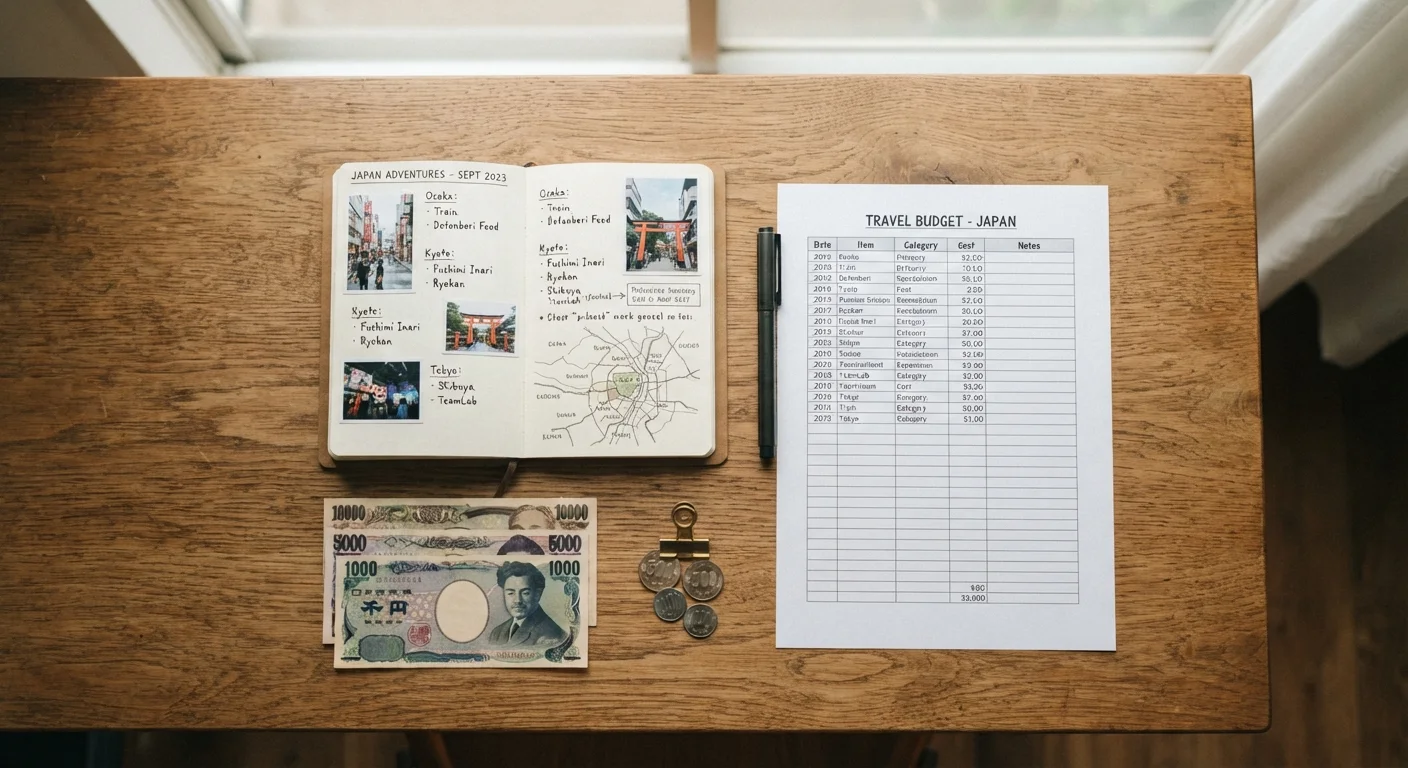
Photo: ReadersChronicle.com | Your Comprehensive Learning Destination editorial
—— In This Article
Key Takeaways
- Most trip budgets collapse because travelers underestimate daily spending, not flight or hotel costs.
- Breaking your budget into fixed and variable categories helps you spot gaps before departure.
- A 10-15% buffer for unplanned expenses is a practical standard for most trips.
- Tracking spending daily while traveling prevents small overruns from becoming big ones.
- Free tools like spreadsheets work just as well as paid apps for most travelers.
Why Trip Budgets Fall Apart So Quickly
Most travelers spend real time researching flights and hotels, then estimate everything else with a rough daily figure pulled from a travel blog or thin air. That number almost never holds. The issue isn't that travelers are careless - it's that variable costs are genuinely hard to predict without deliberate research, and the gaps compound fast.
Overspending on trips rarely comes from one catastrophic mistake. It's a meal that cost twice what you expected, a cab because the subway was confusing, an entrance fee you didn't know existed, a round of drinks that felt reasonable in the moment. By day two, you're already behind - and you may not even know it yet.
A budget that holds up is built from specific line items, not a single daily guess. It accounts for the actual structure of your trip, distinguishes between day types, and includes a buffer for the inevitable surprises. The steps below walk through exactly how to build one.
What you will need
What You'll Need Before You Start
You don't need specialized software or financial expertise to build a solid trip budget. What you do need is the right inputs and a willingness to look up real numbers rather than estimate from memory. Gather the following before working through the steps:
Spreadsheet (Google Sheets or Excel)
Build and maintain your itemized trip budget across fixed and variable cost categories.
Destination travel forums or recent traveler blogs
Verify realistic current prices for meals, transit, and activities at your destination.
A dedicated travel expense tracking app
Log daily spending while traveling to compare actuals against your planned budget.
Your bank or card's fee schedule
Identify any foreign transaction or ATM fees that need to be factored into your budget.
Don't Skip the Variable Cost Categories
Fixed costs like flights and accommodation are easy to track because they're booked in advance. Variable costs - meals, local transit, entrance fees, and incidentals - are where most budgets silently collapse. Estimate these line by line for each day rather than guessing a single daily total. Under-researched variable costs are the leading reason trip budgets fail by day two.
How to Build the Budget Step by Step
Work through these steps in order. Each one builds on the previous, and skipping ahead tends to produce the same loose estimates that cause budgets to collapse mid-trip. If you're new to this kind of planning, our plain-English starting point for first-timers covers the foundational concepts before you dive in.
List every cost category before estimating a single number
Open a blank spreadsheet and create two sections: Fixed Costs (expenses you pay before or at booking - flights, accommodation, travel insurance, rail passes) and Variable Costs (expenses that happen day-to-day - meals, local transit, entrance fees, souvenirs, tips, toiletries). Most budget failures trace back to missing a category entirely, not to being off by a few dollars in a category that's already listed.
Research real prices, not placeholder numbers
For each variable cost category, look up actual current prices at your destination. Check recent posts on destination-specific travel forums, and look at the menu prices of mid-range restaurants in the area using mapping or review tools. For local transit, check the official transit authority website if one exists. Avoid using figures from printed guidebooks - prices shift faster than publishing cycles.
Calculate a realistic daily spending total
Multiply your per-meal estimates by meals per day, add local transport, add an activity estimate based on the specific things you plan to do, and total it up. Do this for each distinct day type - a travel day looks different from a city exploration day or a beach day. Multiply each day type by how many of those days your trip includes, then sum them.
Add a contingency buffer of 10-15%
Once you have a total trip cost estimate, add 10-15% on top as a contingency line. This covers delayed flights requiring an extra night, a pharmacy run, a spontaneous activity, or a transport disruption. Think of it not as spending money but as financial padding that keeps one unexpected event from unraveling your whole trip. If you don't use it, you come home under budget.
Compare your estimate against your actual available funds
Take your full estimated trip cost (fixed + variable + contingency) and compare it against the money you have set aside for travel. If there's a gap, identify which categories have flexibility. Accommodation type is often the highest-leverage variable - lodging choices can shift your total budget by hundreds of dollars. For broader strategies on managing the gap, see our guide to stretching a travel budget.
Track spending every day once you're traveling
Log every expense daily - not weekly, not at the end of the trip. A quick daily total takes under five minutes and tells you immediately if you're tracking above or below your daily target. If you're running over on day two, you still have time to adjust. If you wait until day six to check, your options narrow considerably. A notes app, a small notebook, or a free expense tracker all work equally well for this purpose.
Use Real Prices, Not Hopeful Estimates
Before finalizing any daily spending figure, spend 20 minutes checking prices on destination-specific travel forums or recent blog posts from independent travelers. Guidebook prices are often 1-3 years out of date. A few minutes of research can prevent a daily shortfall of $20 or more.
Staying on Track After You Arrive
Building the budget is only half the job. The other half is using it while you travel. Travelers who check their spending daily are far more likely to finish a trip under budget than those who review only at the end - by then, the damage is done and the options are limited.
Currency Exchange Fees Add Up Fast
Dynamic currency conversion at ATMs and point-of-sale terminals abroad can add 3-8% to every transaction. Know your card's foreign transaction fee policy before you travel, and always choose to pay in local currency when given the option. This detail is easy to overlook during budget planning but meaningful over a full trip.
If you find yourself running over budget by day two or three, identify the specific category driving the overrun before making cuts elsewhere. Cutting food spending to compensate for unexpectedly high transportation costs, for example, treats the wrong problem. Address the actual leak.
For a broader look at how planning habits affect spending across a full trip, see planning an affordable trip from start to finish. And if you want to explore how the same budget discipline applies beyond travel, the budgeting basics hub covers household financial planning in the same practical terms.

Travel Editorial Team
Travel Editorial Team is the collective byline for our editorial team and contributor network. Articles published under this byline or an editorial pen name are researched, written, and reviewed according to our editorial standards for clarity, consistency, and independence before publication.
View author profile