
Satellite Internet for Rural Households: A Realistic Look
Satellite internet can reach remote areas cable can't — but latency, weather sensitivity, and data limits matter. Here's the full picture.
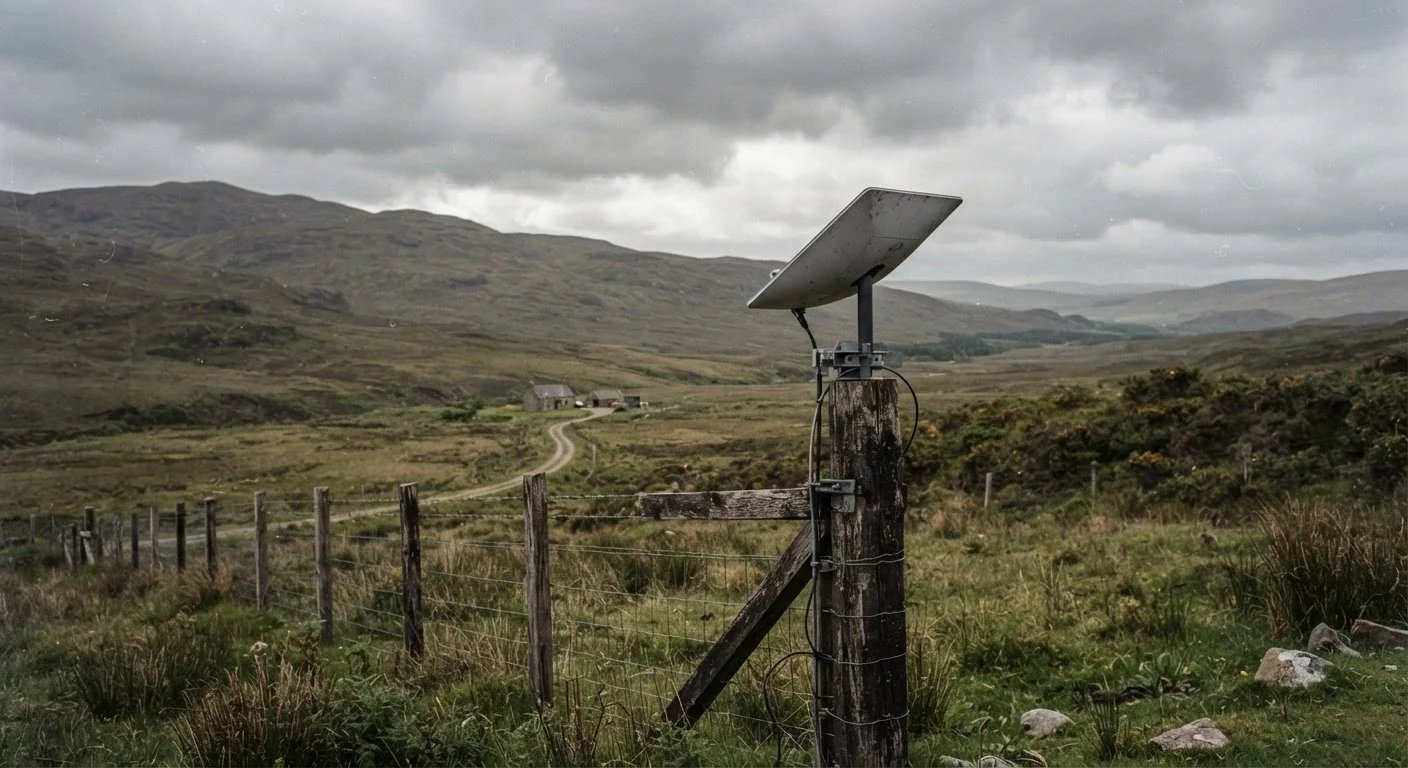
Photo: ReadersChronicle.com | Your Comprehensive Learning Destination editorial
—— In This Article
Key Takeaways
- Satellite internet reaches remote areas where cable, fiber, and DSL cannot go.
- Latency (signal delay) is a structural limitation of satellite connections, especially geostationary systems.
- Weather, obstructions, and data caps can all degrade satellite performance.
- Low-Earth orbit satellite technology has improved speeds but equipment costs remain high.
- Satellite is often the only viable option for truly rural households, not necessarily the preferred one.
Available virtually anywhere with a clear sky view
Satellite signals reach areas that ground-based infrastructure cannot, making it one of the only broadband options for households in remote rural, mountainous, or agricultural regions.
LEO systems deliver meaningfully faster speeds
Low-Earth orbit satellite constellations can offer download speeds in the range of 50-200 Mbps under good conditions - a significant improvement over what older GEO systems historically provided.
No phone line or cable infrastructure needed
Installation requires only a clear line of sight to the sky and a mounted dish, removing dependency on aging telephone or cable networks that may not exist in rural areas.
Service is independent of local grid outages in some cases
Because the signal comes from orbit rather than local towers or cables, some satellite systems continue operating during localized infrastructure disruptions, though power to the dish itself is still required.
High latency on geostationary systems
GEO satellites orbit roughly 22,000 miles up, meaning the round-trip signal delay (latency) typically ranges from 500-800 milliseconds. This makes real-time applications like video calls and online gaming noticeably sluggish.
Higher monthly costs than most wired alternatives
Satellite plans generally carry premium pricing compared to cable or DSL at equivalent speeds, partly because of the infrastructure and spectrum costs involved in operating a satellite network.
Significant upfront equipment and installation expense
LEO-based services in particular can require purchasing proprietary dish hardware that may cost several hundred dollars before monthly service fees begin.
Weather can disrupt signal quality
Heavy rain, snow accumulation on the dish, and dense cloud cover can degrade or temporarily interrupt satellite signals - a phenomenon known as rain fade.
Data caps limit heavy usage households
Many satellite plans impose data thresholds after which speeds are reduced or additional charges apply, which can be a significant constraint for households that stream video or work from home regularly.
Dish placement requires an unobstructed sky view
Trees, buildings, or terrain features that block the required arc of sky can prevent installation or cause frequent dropouts, limiting suitability for heavily wooded or hilly properties.
Why Satellite Internet Exists as an Option
In the US, millions of households sit beyond the reach of cable and fiber infrastructure. Running physical lines across mountains, farmland, or forests is expensive for providers, so many rural communities are left without those options. Satellite internet solves the coverage problem by bouncing signals between a dish at your home and an orbiting satellite - no ground-level infrastructure required.
It's worth understanding how satellite differs from the technologies used in towns and suburbs before deciding if it fits your needs. Our plain-English breakdown of internet connection types covers how each technology works side by side. Satellite currently comes in two main forms: traditional geostationary (GEO) satellites that orbit roughly 22,000 miles above Earth, and newer low-Earth orbit (LEO) constellations operating at a few hundred miles up. The distance difference has a direct impact on performance.
GEO vs. LEO: A Key Distinction
Not all satellite internet is the same. Older geostationary (GEO) services use satellites positioned at a fixed point roughly 22,000 miles above Earth - their high altitude causes significant signal delay. Newer low-Earth orbit (LEO) constellations operate much closer to the surface, dramatically reducing latency. When evaluating satellite options, confirming which type of technology the service uses is an important first step.
The Real Advantages of Satellite Internet
For consumers in genuinely remote locations, satellite offers benefits that no other technology can match.
Available virtually anywhere with a clear sky view
Satellite signals reach areas that ground-based infrastructure cannot, making it one of the only broadband options for households in remote rural, mountainous, or agricultural regions.
LEO systems deliver meaningfully faster speeds
Low-Earth orbit satellite constellations can offer download speeds in the range of 50-200 Mbps under good conditions - a significant improvement over what older GEO systems historically provided.
No phone line or cable infrastructure needed
Installation requires only a clear line of sight to the sky and a mounted dish, removing dependency on aging telephone or cable networks that may not exist in rural areas.
Service is independent of local grid outages in some cases
Because the signal comes from orbit rather than local towers or cables, some satellite systems continue operating during localized infrastructure disruptions, though power to the dish itself is still required.
~21 million
US rural residents lacking fixed broadband access
The FCC's broadband deployment reports have consistently documented tens of millions of Americans in rural and tribal areas without access to fixed broadband at standard speed benchmarks.
20-40 ms
Typical LEO satellite latency range
Low-Earth orbit satellite services have achieved latency figures in this range under normal conditions, compared to 500-800 ms common on older geostationary systems.
The Genuine Drawbacks You Should Know
Satellite internet involves trade-offs that are structural - not bugs that providers will eventually fix. Understanding them upfront helps set realistic expectations.
High latency on geostationary systems
GEO satellites orbit roughly 22,000 miles up, meaning the round-trip signal delay (latency) typically ranges from 500-800 milliseconds. This makes real-time applications like video calls and online gaming noticeably sluggish.
Higher monthly costs than most wired alternatives
Satellite plans generally carry premium pricing compared to cable or DSL at equivalent speeds, partly because of the infrastructure and spectrum costs involved in operating a satellite network.
Significant upfront equipment and installation expense
LEO-based services in particular can require purchasing proprietary dish hardware that may cost several hundred dollars before monthly service fees begin.
Weather can disrupt signal quality
Heavy rain, snow accumulation on the dish, and dense cloud cover can degrade or temporarily interrupt satellite signals - a phenomenon known as rain fade.
Data caps limit heavy usage households
Many satellite plans impose data thresholds after which speeds are reduced or additional charges apply, which can be a significant constraint for households that stream video or work from home regularly.
Dish placement requires an unobstructed sky view
Trees, buildings, or terrain features that block the required arc of sky can prevent installation or cause frequent dropouts, limiting suitability for heavily wooded or hilly properties.
For a deeper look at how terms like latency, data caps, and Mbps affect everyday use, see our guide on decoding ISP plan terminology.
How to Evaluate Whether Satellite Is Right for You
Start by confirming what options actually exist at your address. Fixed wireless internet - which uses radio towers rather than satellites - is available in some rural areas and often offers lower latency and more predictable pricing. Our comparison of DSL and fixed wireless explores whether those last-mile alternatives might apply to your location.
If satellite is your only realistic choice, focus on a few practical factors: the upfront equipment and installation cost, the monthly data allowance relative to your household's actual usage, and whether your primary use cases - video calls, remote work, streaming - are sensitive to higher latency. LEO-based services generally perform better on latency than older GEO systems, though equipment costs tend to be higher. For a broader orientation to home internet decisions, the comprehensive home internet guide covers plan selection, bill negotiation, and troubleshooting in one place.
This article is for general informational purposes only. Availability, pricing, and performance vary by provider, location, and plan. Verify current offerings directly with providers before making a purchasing decision.

Tech Editorial Team
Tech Editorial Team is the collective byline for our editorial team and contributor network. Articles published under this byline or an editorial pen name are researched, written, and reviewed according to our editorial standards for clarity, consistency, and independence before publication.
View author profile