
DSL vs. Fixed Wireless Internet: Comparing the Last-Mile Options
DSL uses phone lines; fixed wireless uses radio towers. See how they compare on speed, reliability, and rural availability.
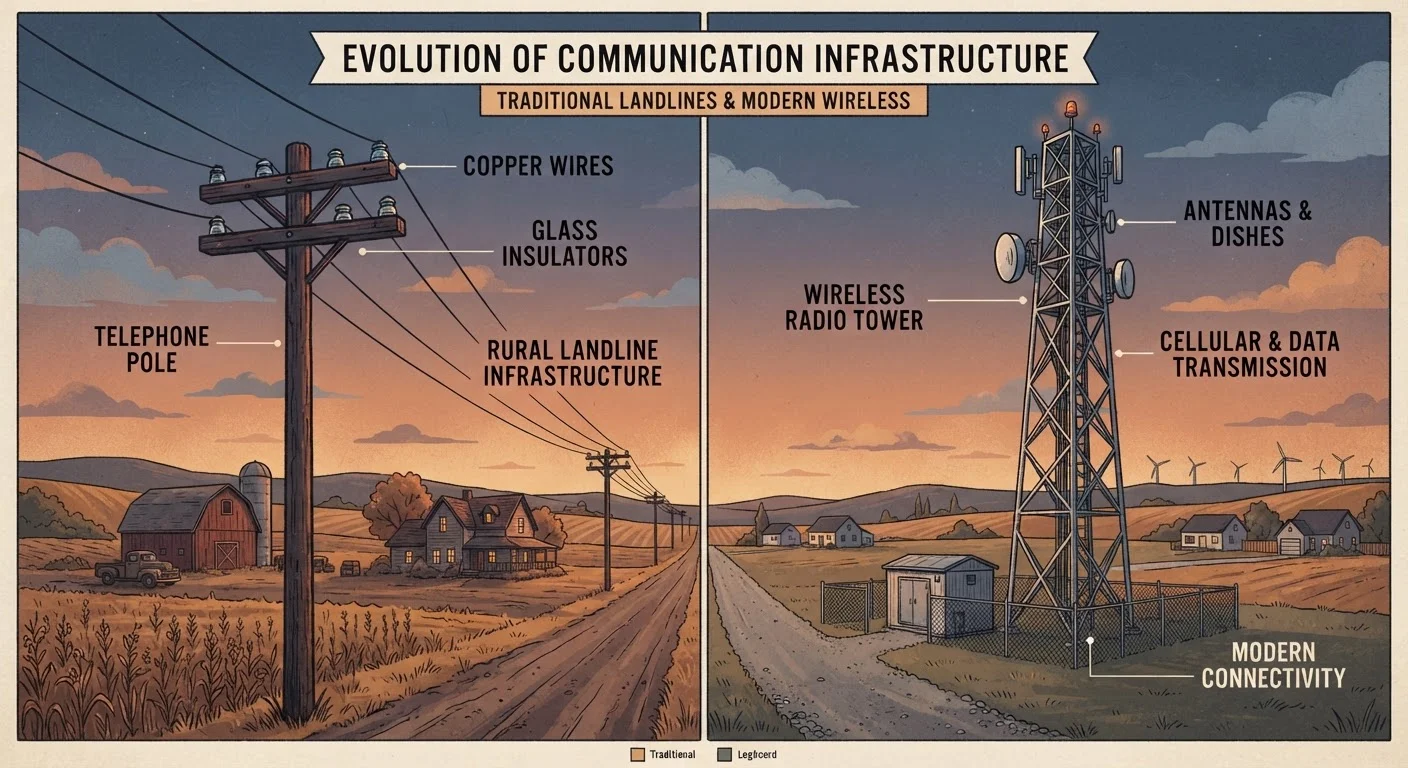
Photo: ReadersChronicle.com | Your Comprehensive Learning Destination editorial
—— In This Article
Key Takeaways
- DSL travels over copper phone lines; fixed wireless uses radio signals from a nearby tower.
- DSL speeds slow noticeably the farther your home is from the provider's central office.
- Fixed wireless can deliver faster speeds than DSL in many rural areas, but requires clear line-of-sight to a tower.
- Both technologies are subject to weather and physical interference, though in different ways.
- Neither option typically matches fiber or cable for raw speed, but both can handle everyday household internet tasks.
- Availability - not preference - often determines which technology is a realistic option for your address.
How Each Technology Actually Works
DSL - short for Digital Subscriber Line - piggybacks on the copper telephone wiring that already runs to most US homes. A modem at your address converts digital data into signals that travel along those phone lines to your provider's central office, called a DSLAM. No new physical infrastructure is needed in most cases, which is why DSL was historically one of the most accessible broadband options. The catch: copper lines lose signal strength over distance, so households far from a central office receive noticeably slower speeds.
Fixed wireless internet works differently. A provider installs a small antenna or receiver dish on your home's exterior - typically the roof or an exterior wall - that communicates via radio frequency with a nearby transmission tower. That tower connects to a fiber backbone, and the radio link is your last-mile connection. Because the signal travels through the air rather than a physical wire, it can reach addresses where running cable or phone infrastructure is cost-prohibitive.
For a broader overview of how these technologies fit into the home internet landscape, see our plain-English breakdown of all four major connection types.
Speed and Reliability: A Realistic Comparison
DSL speeds in the US typically range from roughly 1 Mbps at the low end - for lines stretched far from a central office - to around 100 Mbps for homes close to infrastructure. Most real-world DSL connections land between 10 and 50 Mbps download. Upload speeds are usually a fraction of download speeds, often 1-10 Mbps, because standard ADSL technology is designed with downloading as the priority.
Fixed wireless speeds vary more widely depending on the provider, tower capacity, and local terrain, but many modern deployments offer 25-100 Mbps downloads, with some rural carriers advertising higher tiers. Crucially, upload performance tends to be stronger relative to DSL. Reliability for fixed wireless can dip during heavy rain or dense fog, though most providers engineer systems to tolerate typical weather. DSL, by contrast, is affected by line quality - aging or corroded copper wiring can introduce inconsistency regardless of distance.
| Criterion | DSL | Fixed Wireless |
|---|---|---|
| Infrastructure | Copper telephone lines | Radio towers + exterior antenna |
| Typical download speed | 1-100 Mbps (distance-dependent) | 25-100+ Mbps (tower-dependent) |
| Upload speed | Often 1-10 Mbps | Closer to download speeds |
| Rural reach | Degrades significantly over distance | Strong where towers exist |
| Line-of-sight required | No | Yes |
| Weather sensitivity | Low (affected by line condition) | Moderate (heavy rain or fog) |
| Typical installation | Minimal - often self-install | Exterior antenna mount required |
If you encounter unfamiliar terms - Mbps, latency, data caps - in any ISP offer, our ISP jargon guide explains what each one actually means before you sign up.
Availability, Installation, and What to Expect
DSL is available in most US communities that have telephone service, which historically made it one of the widest-reaching broadband technologies. However, rural addresses far from a central office may find advertised speeds drop sharply in practice, or that the provider simply doesn't offer service past a certain distance threshold.
Fixed wireless has grown rapidly as a rural broadband option, partly driven by federal funding programs aimed at expanding access. Eligibility depends on whether a provider's tower covers your address and whether your home has an unobstructed view - called line-of-sight - to that tower. Trees, hills, and buildings can block or degrade the signal. A provider will typically conduct a site survey before installation to confirm viability.
~65%
Rural US homes lacking reliable broadband
The FCC's broadband maps have historically shown that a significant share of rural Americans lack access to speeds meeting the federal definition of broadband, with DSL often cited as the only wired option available.
25 Mbps / 3 Mbps
FCC minimum broadband definition (download/upload)
The FCC has historically defined broadband as at least 25 Mbps download and 3 Mbps upload; many DSL connections in distant rural areas fall below this threshold.
Installation for DSL usually requires only a technician visit or self-install kit, with minimal exterior work. Fixed wireless requires mounting an antenna outside your home, which some renters may need landlord approval to do. Both services generally require a modem or router provided or approved by the ISP.
If your address is in a remote area where neither DSL nor fixed wireless is available, satellite internet may be worth evaluating, though latency and data limits are important factors to weigh. Before committing to any plan, read the ISP offer carefully for fees and fine print - promotional rates and equipment rental costs can significantly affect the true monthly cost.

Tech Editorial Team
Tech Editorial Team is the collective byline for our editorial team and contributor network. Articles published under this byline or an editorial pen name are researched, written, and reviewed according to our editorial standards for clarity, consistency, and independence before publication.
View author profile