
Wired Headphones vs. Wireless: The Trade-Offs No One Talks About
Sound quality, battery life, latency, and convenience — a balanced look at what you gain and give up with each type of headphone connection.
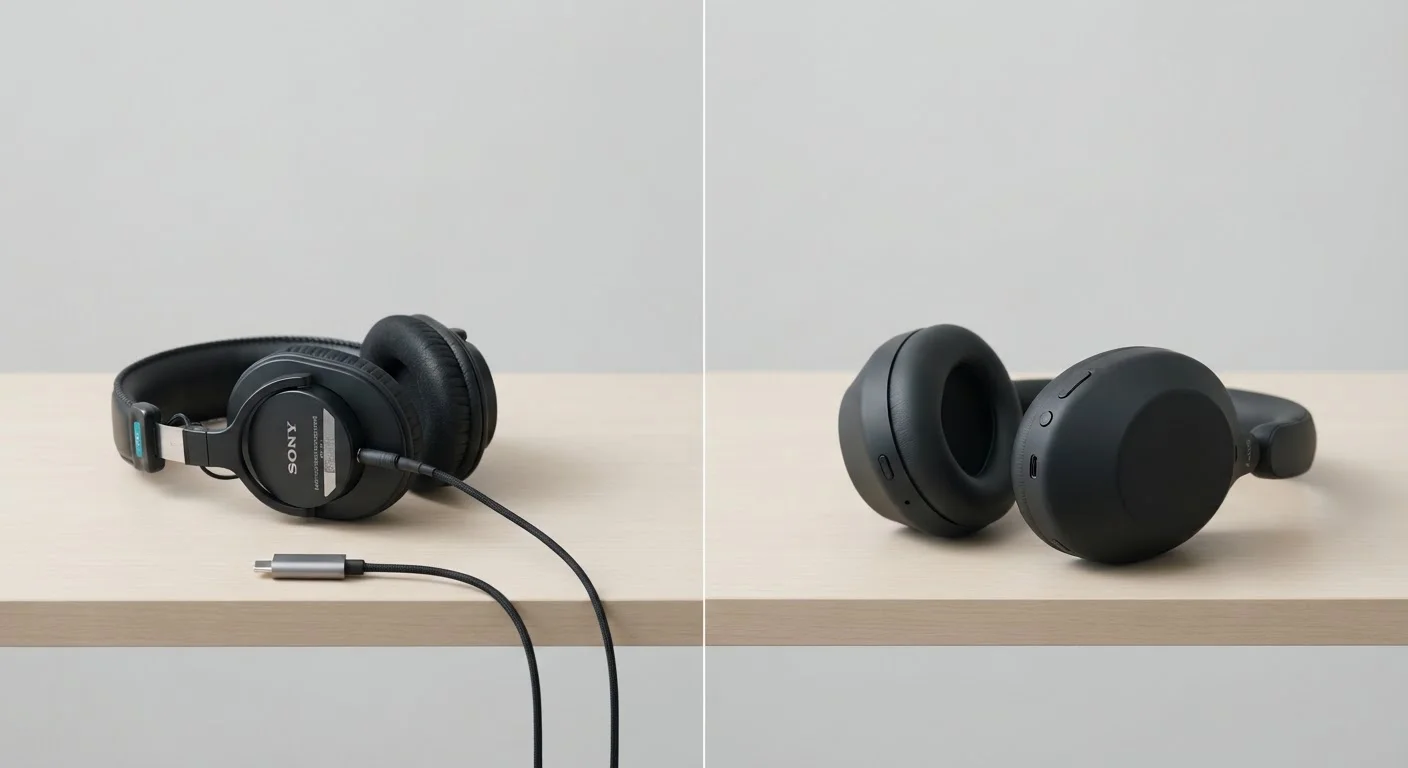
Photo: ReadersChronicle.com | Your Comprehensive Learning Destination editorial
—— In This Article
Key Takeaways
- Wired headphones deliver consistently lower latency and require no charging, making them reliable for critical listening.
- Wireless headphones offer genuine convenience but introduce battery dependency and potential audio compression.
- Bluetooth audio codecs significantly affect sound quality - not all wireless connections are equal.
- Budget-conscious buyers can find capable options in both categories, but value looks different for each use case.
- The right choice depends on your primary use: commuting, studio work, gaming, or casual listening.
Why the Wired vs. Wireless Debate Still Matters
Wireless headphones have become the default recommendation in most electronics conversations, yet wired models haven't disappeared - and for good reason. The choice between a cable and a Bluetooth connection involves a set of real, measurable trade-offs that rarely get explained clearly. Understanding them helps you match a headphone to your actual habits rather than marketing language.
Bluetooth itself is a short-range wireless protocol designed for personal device communication. For a deeper look at how it differs from other wireless technologies, see how Bluetooth and Wi-Fi compare. That foundation matters here because Bluetooth's design choices - compression, pairing, power consumption - are central to every wireless headphone trade-off discussed below.
A Note on Audio Codecs
Not all Bluetooth connections transmit audio the same way. Codecs - the algorithms that compress and decompress audio for wireless transmission - vary widely by device and headphone. SBC is the universal baseline; aptX, AAC, and LDAC offer higher quality but require support on both the headphone and the source device. If sound quality is a priority for wireless listening, checking codec compatibility between your phone and headphones is worth doing before buying.
The Case for Wired Headphones
Wired headphones pass audio as an analog signal directly from the source device. This means no compression codec, no pairing step, and no battery to drain. For anyone doing audio editing, gaming competitively, or simply preferring to press play without troubleshooting, these qualities matter in practical ways.
Latency - the delay between audio being sent and heard - is near-zero with a wired connection. Wireless headphones introduce measurable latency, typically between 30 and 200 milliseconds depending on the codec and device, which is noticeable when watching video or playing games where lip sync and audio cues matter.
Wired headphones also tend to offer more consistent performance across a wider price range. A modestly priced wired pair can outperform a similarly priced wireless model simply because no cost is allocated to a battery, charging circuitry, or Bluetooth chip.
30-200ms
Typical Bluetooth audio latency range
Codec and device pairing heavily influence latency; aptX Low Latency targets below 40ms while standard SBC can exceed 150ms.
990 kbps
Maximum LDAC Bluetooth transmission rate
Sony's LDAC codec, supported on Android devices, reaches up to 990 kbps - significantly higher than the 328 kbps ceiling of standard SBC.
The Case for Wireless Headphones
Wireless headphones remove the physical tether entirely. For commuters, gym users, and anyone who moves frequently between rooms or devices, that freedom solves a real daily friction point. The convenience argument isn't trivial - a cord that snags on a chair arm or limits movement is a genuine usability issue.
Modern Bluetooth codecs - including aptX, AAC, and LDAC - have meaningfully narrowed the audio quality gap compared to earlier wireless generations. LDAC, for instance, supports transmission rates up to 990 kbps, which approaches the data throughput of lossless formats for many casual listening scenarios. Whether that difference is audible depends heavily on the listener, the content, and the rest of the audio chain.
Wireless headphones have also improved substantially in noise cancellation. Active noise cancellation (ANC) technology, which uses microphones to generate opposing sound waves and reduce ambient noise, is far more common in wireless designs than wired ones.
Trade-Offs That Often Go Unmentioned
Several practical considerations rarely make it into standard comparisons.
Device Compatibility
Many newer laptops and smartphones have removed the 3.5mm headphone jack, which means wired headphones require a USB-C or Lightning adapter. That adapter adds a point of failure and an extra item to carry - a cost to the wired convenience argument that is easy to overlook.
Repairability and Longevity
Wired headphones are generally easier and cheaper to repair. A broken cable can often be replaced for a few dollars. Wireless headphones have non-replaceable batteries in most consumer models - after 300 to 500 charge cycles, battery capacity degrades, and in many designs the headphone becomes effectively unusable without professional repair.
Environmental Considerations
Battery degradation means wireless headphones generate more electronic waste over time. For budget-conscious consumers, this also affects the total cost of ownership: a wired pair that lasts a decade may represent better long-term value than a wireless pair requiring replacement every three to five years.
Interference and Reliability
Wireless signals can be affected by congested 2.4 GHz environments - airports, offices, and crowded public spaces may introduce dropouts or stuttering. Wired connections are immune to this. The trade-off comparison here resembles the reliability considerations covered in discussions like DSL vs. fixed wireless internet, where the physical medium tends to offer more consistent performance than a wireless one.

Tech Editorial Team
Tech Editorial Team is the collective byline for our editorial team and contributor network. Articles published under this byline or an editorial pen name are researched, written, and reviewed according to our editorial standards for clarity, consistency, and independence before publication.
View author profile