
Signs Your Debt Load Has Become Unmanageable
Recognising the warning signs of unsustainable debt early gives you more options. Here are the indicators financial counselors say to watch for.
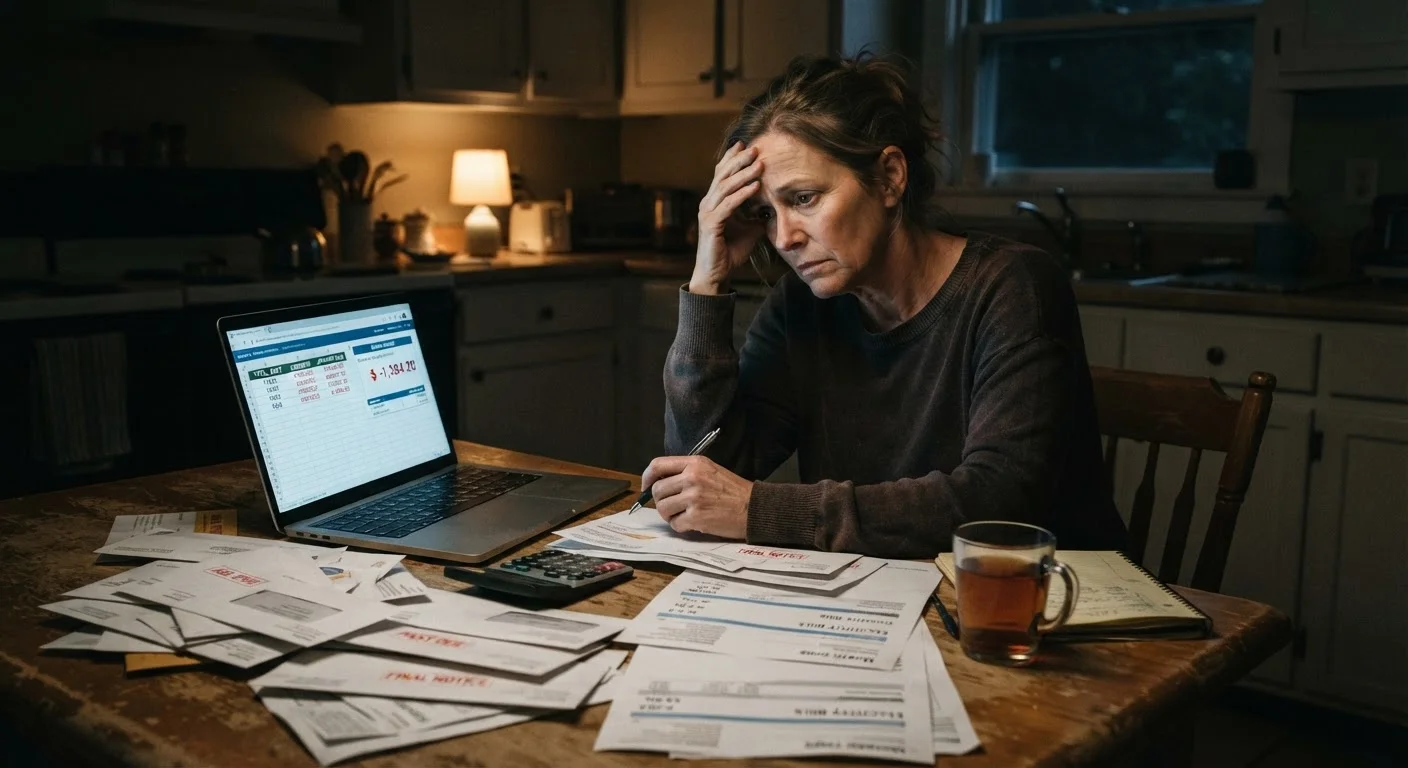
Photo: ReadersChronicle.com | Your Comprehensive Learning Destination editorial
—— In This Article
Key Takeaways
- Spending more than 20% of take-home pay on non-mortgage debt is a widely cited warning threshold.
- Making only minimum payments while balances grow is one of the clearest signs of unsustainable debt.
- Borrowing new debt to cover existing debt payments signals a debt cycle that typically worsens without intervention.
- Financial stress affecting sleep, relationships, or work performance is a serious indicator worth acting on.
- Nonprofit credit counseling agencies offer free or low-cost help for people struggling with unmanageable debt.
When Debt Stops Being Manageable
Almost every American household carries some form of debt - a mortgage, a car loan, a credit card balance. Most of the time, that debt is manageable: payments get made, balances stay stable or shrink, and the household keeps moving forward. But debt can quietly cross a line into territory that's genuinely hard to recover from without a change in strategy.
The problem is that line is easy to miss. Debt tends to grow gradually, and it's human nature to assume the situation will improve on its own. For a primer on how debt works, it helps to understand the fundamentals before assessing your own situation.
The signs below are indicators that financial counselors commonly use to assess whether someone's debt load has moved from manageable to problematic. None of them is a definitive diagnosis - they're patterns worth taking seriously. If several apply to you, consulting a nonprofit credit counselor is a reasonable next step.
Your debt-to-income ratio exceeds 20% (excluding your mortgage)
A common benchmark used by financial educators is the 20/10 rule: non-mortgage consumer debt payments shouldn't exceed 20% of your annual after-tax income, and monthly payments shouldn't exceed 10% of monthly take-home pay. If your credit cards, car loans, personal loans, and other consumer debts are consuming more than that, you have less cushion for emergencies and are likely paying a significant amount in interest each month.
Calculate your ratio by adding up all monthly non-mortgage debt payments and dividing by your monthly take-home pay. A figure above 20% deserves a closer look.
Consumer debt payments above 20% of take-home pay leave little room for emergencies or savings.
You regularly make only the minimum payment on credit cards
Minimum payments are designed to keep accounts in good standing - not to pay down balances efficiently. On a card with a high interest rate, making only the minimum payment means the majority of each payment goes to interest, and the principal barely moves. If you're consistently making only minimums because that's all you can afford, your balances are likely growing month over month even though you're technically paying on time.
Minimum-only payments on high-rate cards often mean your balance is quietly growing, not shrinking.
You're borrowing to pay other debts
Using one form of credit to cover another - taking a cash advance to make a loan payment, moving balances repeatedly without a clear payoff plan, or relying on a line of credit to stay current on bills - is a sign that your income isn't sufficient to service your current debt obligations. This pattern can delay the problem temporarily while making it worse over time through additional fees and interest. It's one of the clearest signals that the debt load itself needs to be restructured, not just shuffled.
Borrowing to make debt payments is a cycle that almost always worsens without direct intervention.
You don't know your total debt balance
Many people in debt trouble avoid tallying up what they owe because the number feels too overwhelming to confront. But not knowing the full picture makes it impossible to build a realistic plan. If you've avoided adding up your balances because you don't want to see the total, that avoidance itself is worth paying attention to. A complete, accurate picture - however uncomfortable - is the starting point for any workable strategy. Consistent debt-reduction habits always begin with knowing exactly what you're working with.
Avoiding the total balance figure is often a sign the debt feels out of control.
Debt is affecting your sleep, relationships, or job performance
Financial stress is real stress. Research consistently links high consumer debt with elevated anxiety, sleep disruption, and relationship conflict. If worry about debt is becoming a recurring presence - affecting how you sleep, causing friction with a partner, or making it hard to focus at work - that's a signal the situation has moved beyond a simple budgeting issue. Chronic financial stress can have genuine mental health consequences, and addressing the underlying debt is often part of addressing the stress itself.
When debt worry disrupts sleep or relationships, the financial and emotional problems reinforce each other.
You have no emergency fund and no realistic path to build one
An emergency fund - typically three to six months of essential expenses - is the buffer that keeps a car repair or a medical bill from becoming a new debt problem. If your debt payments are consuming so much of your income that saving anything feels impossible, you're essentially one unexpected expense away from adding more debt. The inability to save even a small amount each month, despite genuine effort to cut spending, is a sign that the debt level itself may be the core obstacle.
If debt payments leave no room for any emergency savings, the next unexpected expense will likely add to the problem.
What to Do If These Signs Sound Familiar
Recognizing a problem is genuinely the hardest part for many people. Debt carries real stigma, which causes people to wait longer than they should before seeking help - and waiting tends to reduce the options available.
Free Help Is Available
Nonprofit credit counseling agencies accredited by the NFCC offer free or low-cost budget reviews and debt assessments. These are not debt settlement companies - they're educational and counseling services. A single session with an accredited counselor can clarify your options without any obligation to enroll in a program.
Not all debt is equally urgent. Understanding the difference between good debt and bad debt can help you prioritize which balances deserve the most attention first. If you're wondering how to handle saving while managing debt, a structured approach to balancing saving and debt payoff may also be worth reviewing.
The National Foundation for Credit Counseling (NFCC) connects consumers with nonprofit credit counselors who can review your full financial picture and outline realistic options - including debt management plans, budgeting support, and referrals when bankruptcy may warrant professional legal evaluation. Unmanageable debt has solutions. The earlier you assess it honestly, the more of those solutions remain available to you.
This article is for general informational purposes only and does not constitute personalized financial, legal, or credit advice. Consult a qualified financial professional for guidance specific to your situation.

Finance Editorial Team
Finance Editorial Team is the collective byline for our editorial team and contributor network. Articles published under this byline or an editorial pen name are researched, written, and reviewed according to our editorial standards for clarity, consistency, and independence before publication.
View author profile