
Fixed vs. Variable Expenses: Understanding the Building Blocks of Any Budget
Learn the difference between fixed and variable costs, why the distinction matters, and how it shapes every budgeting decision you make.
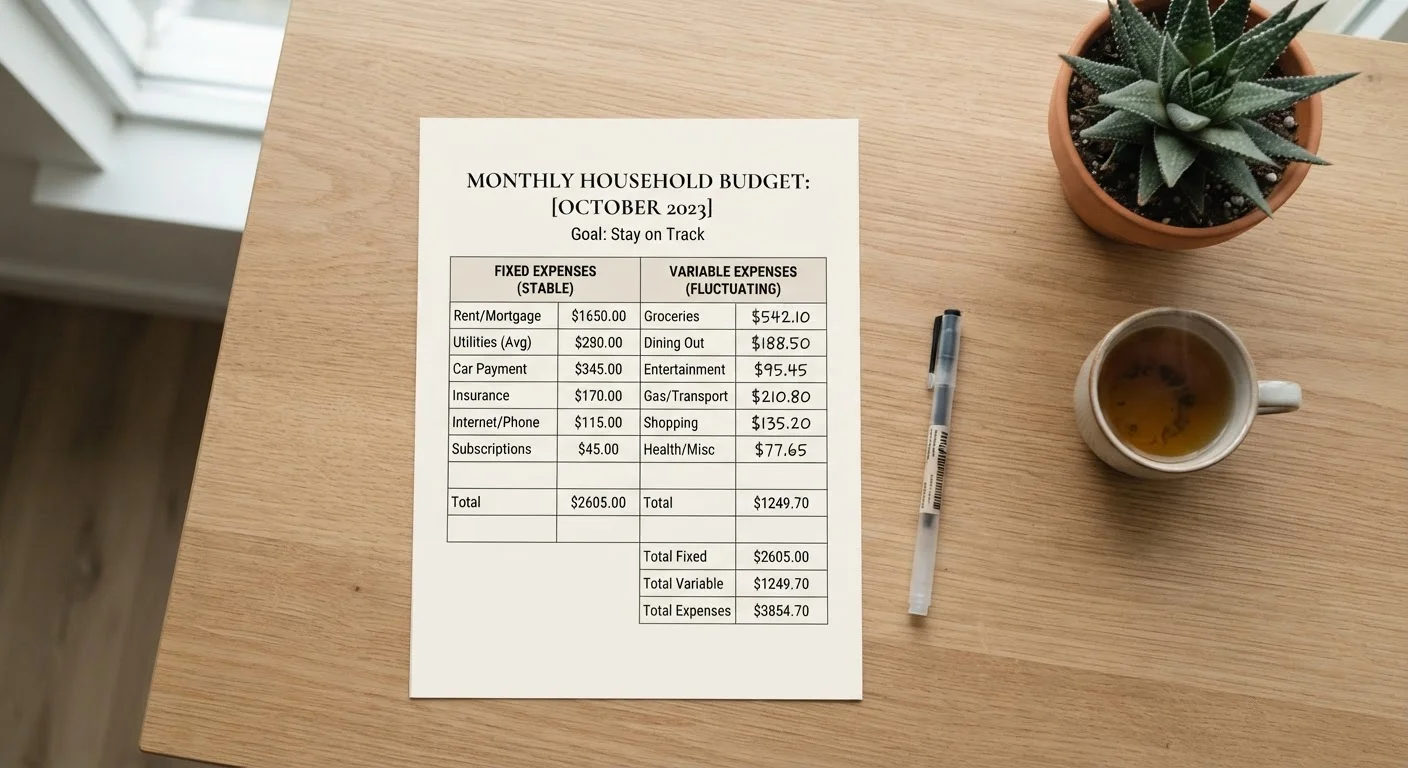
Photo: ReadersChronicle.com | Your Comprehensive Learning Destination editorial
—— In This Article
Key Takeaways
- Fixed expenses stay constant each month; variable expenses shift based on your behavior or usage.
- Knowing which category each expense falls into helps you predict your spending more accurately.
- Variable expenses are generally easier to cut in the short term than fixed ones.
- Some expenses - like utilities - have a fixed baseline but a variable portion based on usage.
- Understanding this distinction is a foundational step before building any working budget.
What Makes an Expense 'Fixed'
A fixed expense is any cost that comes due on a regular schedule for a set amount. You don't have to decide whether to pay it - the obligation is already locked in. Common examples include your monthly rent or mortgage, car loan payments, insurance premiums, and subscription services billed at the same rate each month.
Because fixed expenses don't change, they're the easiest part of your budget to map out in advance. If your rent is $1,200 and your car loan is $350, you already know $1,550 of your monthly budget is committed before you spend a single discretionary dollar.
That predictability is useful - but it also means fixed expenses are the hardest to adjust quickly. Reducing them usually involves a significant decision: refinancing a loan, moving to a less expensive home, or canceling a contract. For that reason, keeping fixed costs manageable relative to your income is one of the most important long-term budgeting moves you can make. If you're exploring homeownership, understanding how mortgage structure affects your monthly commitment is worth studying - see our explainer on fixed-rate vs. adjustable-rate mortgages for how different loan structures can affect what you owe each month.
What Makes an Expense 'Variable'
Variable expenses are costs that shift from month to month depending on your behavior, usage, or circumstances. Groceries, gas, clothing, dining out, entertainment, and medical co-pays all fall into this category. The amount you spend isn't locked in - it responds to your choices.
That flexibility is a double-edged sword. On one hand, variable expenses are where you have the most control. Spending less on restaurants, pausing a hobby expense, or shopping more carefully at the grocery store can all free up meaningful cash relatively quickly. On the other hand, variable expenses are also where overspending tends to quietly accumulate - small purchases add up faster than most people expect.
Tracking variable expenses is the active work of budgeting. Unlike fixed costs, they require ongoing attention. Most people find that simply recording where their variable dollars go - even for a few weeks - reveals spending patterns they hadn't noticed before.
The In-Between Category: Semi-Variable Expenses
Not every expense fits neatly into one box. Semi-variable expenses - sometimes called mixed costs - have both a fixed component and a variable one. Utilities are the clearest example: your electricity bill includes a flat service charge plus a usage-based charge that rises or falls with how much power you consume.
Other examples include cell phone plans with overage fees, water bills, and even some subscription services that charge more when you add features. The fixed portion is predictable; the variable portion depends on your behavior.
When budgeting for semi-variable expenses, a practical approach is to look at your last 12 months of bills and calculate the average. Use that figure as your monthly budget line - it smooths out seasonal swings and gives you a realistic baseline to work with. This is especially relevant for expenses like heating and cooling that can vary significantly by season.
Why This Distinction Shapes Every Budget Decision
Understanding whether an expense is fixed or variable changes how you approach it. Fixed expenses tell you the minimum amount of income you need every month just to keep the lights on and the rent paid. Variable expenses show you where you have room to maneuver - and where your habits are driving your spending.
When income drops or an unexpected bill arrives, knowing which costs are flexible lets you act quickly. You can't easily lower your car insurance mid-month, but you can cook at home instead of eating out, or pause a streaming service. That's real, usable flexibility - and it comes directly from knowing your budget's structure.
This framework also applies outside your monthly household budget. When planning travel, for instance, lodging is often a fixed cost once you've booked - which is why understanding how accommodation type shapes your total trip budget can help you make smarter decisions before you commit. Similarly, if you're ready to build your first full budget, our guide on building your first household budget walks through a practical starting framework.
This article provides general financial education and is not personalized financial advice. Consider speaking with a qualified financial professional about decisions specific to your situation.
Frequently Asked Questions

Finance Editorial Team
Finance Editorial Team is the collective byline for our editorial team and contributor network. Articles published under this byline or an editorial pen name are researched, written, and reviewed according to our editorial standards for clarity, consistency, and independence before publication.
View author profile