
Overlooked Trip-Planning Steps That Save Serious Headaches
Most travelers nail the big stuff. These less obvious planning steps—often skipped—are what separate smooth trips from stressful ones.
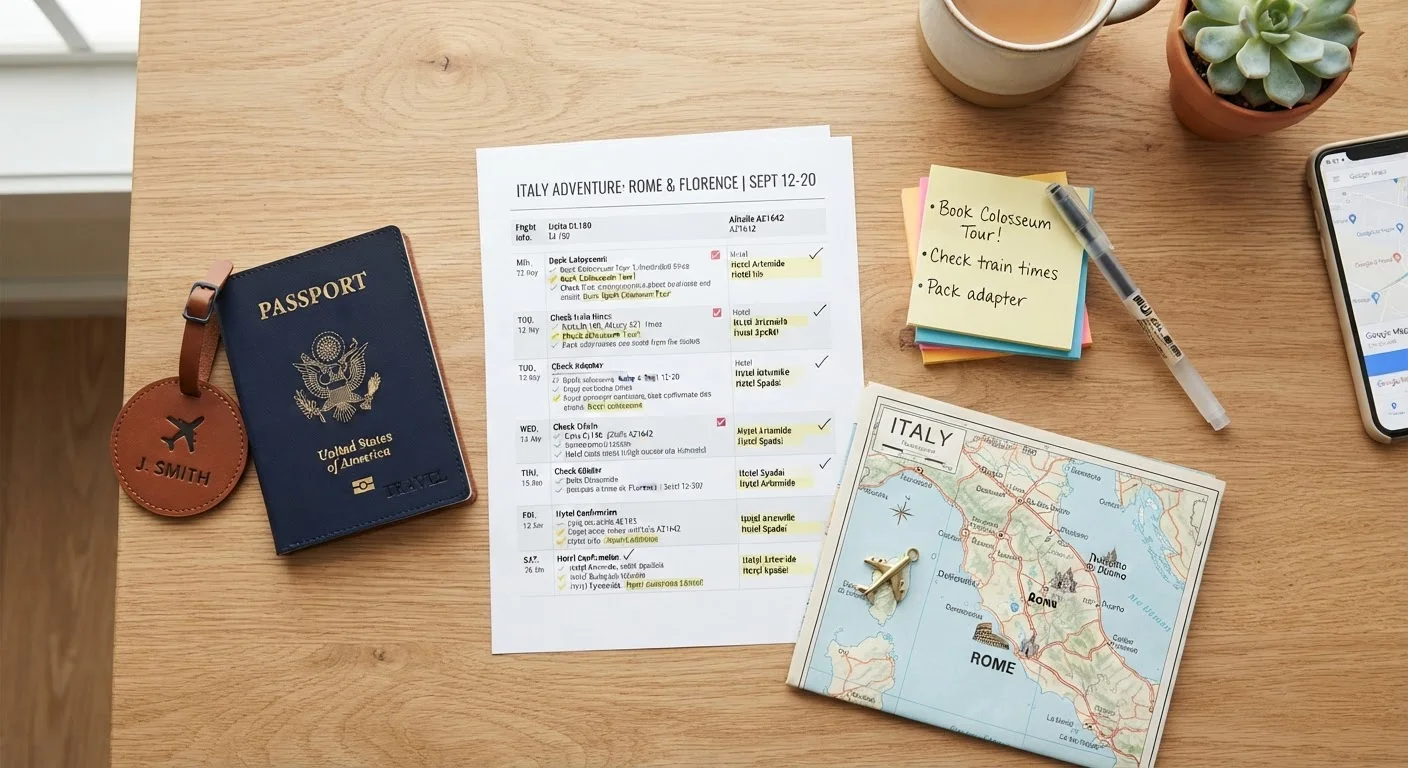
Photo: ReadersChronicle.com | Your Comprehensive Learning Destination editorial
—— In This Article
Key Takeaways
- Confirming entry requirements and visa rules well in advance prevents costly last-minute scrambles.
- Saving offline maps and key documents locally protects you when connectivity fails abroad.
- Notifying your bank before departure stops legitimate charges from being blocked at critical moments.
- Building a simple emergency contact sheet saves time and stress if something goes wrong.
- Checking baggage and carry-on policies for every leg of your trip avoids unexpected fees at the gate.
The Planning Gaps That Derail Good Trips
Most travelers handle the obvious checklist: flights, hotels, a rough itinerary. Where trips quietly fall apart is in the smaller, less glamorous details - the ones that feel unnecessary until they suddenly aren't. If you're building a trip from the ground up, our first-trip planning primer covers the full foundation. This list focuses on the specific steps that experienced travelers still routinely skip.
None of these are complicated. They're just easy to forget when you're focused on the exciting parts of planning. Taking an extra hour to work through them can be the difference between a smooth trip and one spent on hold with a credit card company in a foreign airport.
Verify entry requirements - not just visa status
Many travelers check whether they need a visa and stop there. But entry requirements often include passport validity windows (many countries require six months of validity beyond your travel dates), proof of onward travel, or minimum funds on hand. Some destinations also have health documentation requirements that aren't widely publicized.
Check the official government travel advisory site for your country - for US citizens, that's travel.state.gov - and cross-reference with the destination country's embassy page. Do this at least 60 days out so you have time to act if anything needs addressing.
A valid passport isn't enough - many countries enforce validity windows and proof of onward travel.
Download offline maps and save key documents locally
Relying on real-time data abroad is risky. Roaming fees, spotty coverage, and dead phone batteries all cut off your access to navigation and bookings when you need them most. Download offline maps for your destination before you leave home. Save PDFs of your hotel confirmations, transportation tickets, and insurance documents somewhere you can reach without a signal.
A cloud backup is useful, but a locally stored copy on your device is more reliable when connectivity fails.
Offline maps and locally saved documents keep you functional when connectivity disappears at the worst moment.
Notify your bank and understand your card's foreign transaction fees
Banks regularly flag international charges as potentially fraudulent and freeze cards mid-trip. A quick call or app notification before departure takes minutes and prevents the scenario of standing at a checkout counter with a declined card and no easy way to resolve it. While you're at it, confirm whether your card charges foreign transaction fees - typically 1-3% per purchase - and consider whether a no-fee card makes sense for international travel. This is general financial information; talk to your bank or a financial adviser about what's right for your situation.
A two-minute bank notification before departure prevents declined cards at the worst possible moment.
Build a one-page emergency contact sheet
If your phone dies or gets stolen, how quickly can you access your travel insurance policy number, the local emergency number, your bank's international collect line, or the nearest US embassy contact? Most people can't answer that without their phone. A printed or handwritten card with six to eight key numbers and addresses - kept in your wallet, separate from your phone - is a simple safeguard that takes ten minutes to create. For budget travel destinations where infrastructure is less predictable, this becomes even more important.
A printed emergency contact card in your wallet costs nothing and matters enormously if your phone is lost or stolen.
Check baggage rules for every leg of your journey - including connections
Baggage allowances aren't uniform across a single itinerary. A codeshare flight, a low-cost carrier segment, or an international-to-domestic connection can each have different size and weight limits. Getting hit with gate fees because one leg had stricter rules than the others is a common and avoidable expense. Review the baggage policy for each individual carrier on each segment. This is especially relevant when looking for travel savings through multi-carrier bookings, where the ticket price looks attractive but fees aren't always surfaced upfront.
Baggage rules vary by carrier on each leg - a single itinerary can hide three different sets of restrictions.
Plan for realistic travel days - not just arrival times
People carefully plan activities for their destination days but treat travel days as dead time. In practice, a red-eye flight plus a two-hour airport transfer means you arrive exhausted and lose most of a day to recovery. Factor travel day energy into your itinerary. Scheduling a demanding activity the afternoon you land - after a five-hour flight and a late check-in - sets a rough tone. Our guide on building a well-paced itinerary goes deeper on how to structure days realistically rather than optimistically.
Travel days have real costs in time and energy - plan your first and last days accordingly.
Make These Steps Part of Every Trip
These aren't one-time fixes - they're habits worth building into your planning routine regardless of destination or budget. For a broader look at how smart pre-trip decisions affect what you spend on the road, see our guide on planning habits that prevent overspending.
Consolidate everything into one planning document
Instead of juggling confirmation emails, downloaded PDFs, and scattered notes, create a single shared document - a simple spreadsheet or notes file works fine - that holds your reservation numbers, contact info, and daily logistics. Share it with a trusted person back home as well. This single habit reduces a significant amount of mid-trip confusion and serves as a recovery tool if documents are lost.
The week before departure deserves its own dedicated checklist. Our final pre-departure logistics checklist walks through everything worth double-checking in the last seven days before you leave.

Travel Editorial Team
Travel Editorial Team is the collective byline for our editorial team and contributor network. Articles published under this byline or an editorial pen name are researched, written, and reviewed according to our editorial standards for clarity, consistency, and independence before publication.
View author profile