
Southeast Asia vs. Central America: Which Region Stretches a Dollar Further?
Comparing two of the world's most popular budget travel regions — costs, visa rules, safety, and what everyday Americans should know before choosing.
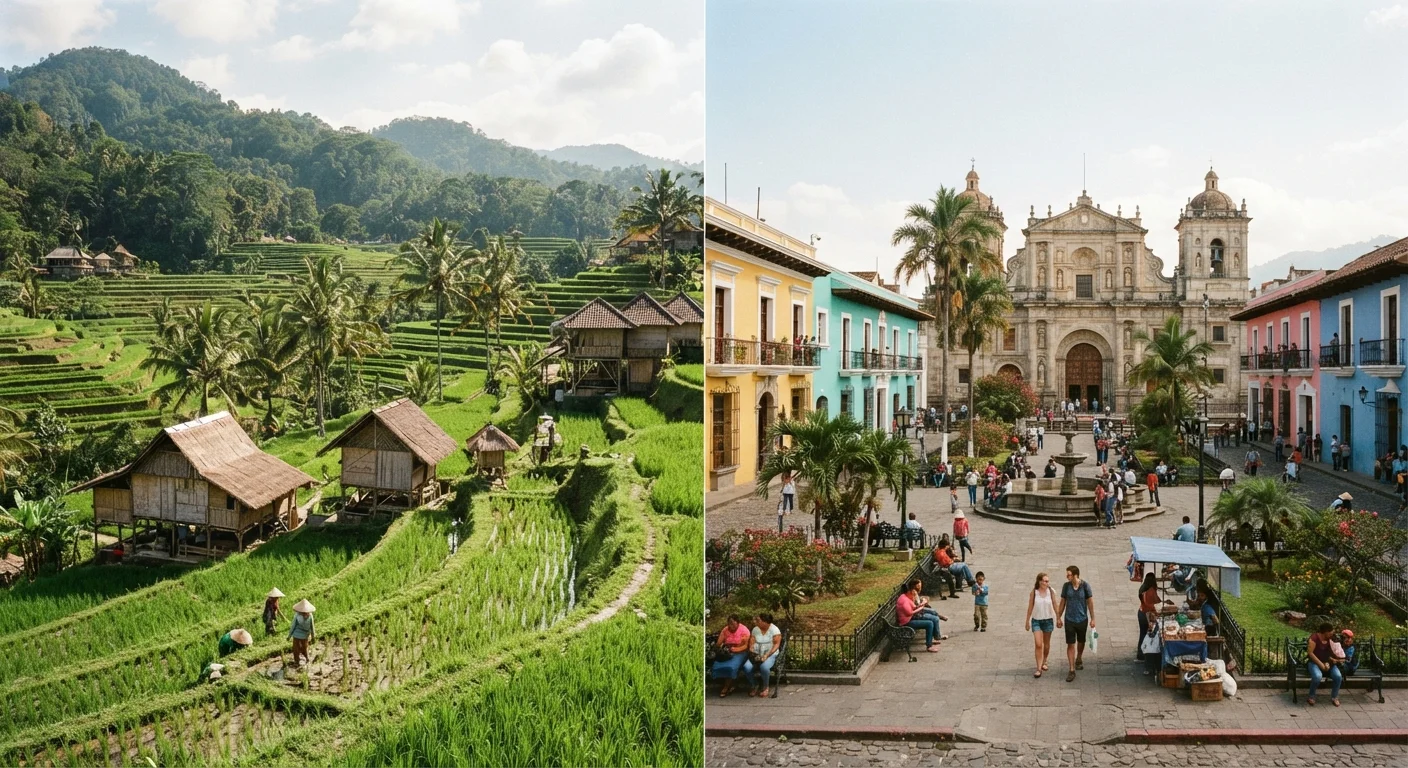
Photo: ReadersChronicle.com | Your Comprehensive Learning Destination editorial
—— In This Article
Key Takeaways
- Southeast Asia generally offers lower daily costs, but flights from the US are significantly more expensive and time-consuming.
- Central America is far easier to reach from most US cities, with shorter flights and no time zone shock.
- Both regions require research on visa rules, entry requirements, and travel advisories before booking.
- Food, accommodation, and transport costs can vary widely within each region depending on country and city.
- Neither region guarantees safety - both have areas with elevated risk that travelers should research in advance.
- Your total trip cost depends heavily on flight price, length of stay, and travel style - not just daily spending rates.
Daily Costs: Where Your Dollar Goes Further
Southeast Asia has long held a reputation as one of the most affordable regions on earth for travelers. In countries like Vietnam, Cambodia, and Laos, budget travelers can realistically manage on $30-$50 per day covering a private guesthouse room, three meals at local restaurants, and basic local transportation. Thailand and Bali tend to run slightly higher - closer to $50-$70 per day - but still represent strong value compared to most destinations.
Central America offers genuine value, but daily costs tend to run higher than Southeast Asia's floor. Guatemala and Nicaragua are among the more affordable options, where $50-$70 per day is achievable with careful spending. Costa Rica and Panama - especially in tourist-heavy areas - can push $80-$120 per day for similar comfort levels. That said, street food, local markets, and public buses keep costs manageable if you're willing to travel like a local.
| Criterion | Southeast Asia | Central America |
|---|---|---|
| Typical daily budget (budget traveler) | $30-$70/day | $50-$120/day |
| Round-trip airfare from US | $600-$1,100 | $250-$500 |
| Flight duration from US | 16-24 hours | 3-6 hours |
| US passport visa-free entry | Varies by country | Most countries, 90 days+ |
| USD widely accepted | Rarely outside hotels | Yes, in several countries |
| Time zone difference from US East Coast | 11-13 hours | 0-2 hours |
| Established budget travel infrastructure | Extensive hostels, buses, guesthouses | Good in tourist corridors |
For a practical comparison of what budget travel looks like domestically, see The Real Cost of Traveling on a Budget in the US.
Flights, Visa Rules, and Getting There
This is where Central America's geography becomes a significant advantage. Flights from major US hubs to Guatemala City, San José (Costa Rica), or Belize City typically range from $250-$500 round-trip, with flight times of 3-6 hours depending on your departure city. Most Central American countries allow US passport holders to enter visa-free for 90 days or more.
Southeast Asia is a different calculation. Round-trip flights from the US to Bangkok, Hanoi, or Kuala Lumpur typically run $600-$1,100 and involve 16-24 hours of total travel time, often with a layover. Visa rules vary significantly: Thailand offers a visa-exemption on arrival for US citizens (duration and terms can change - always verify with the Thai embassy before booking), while Vietnam and others may require advance visa applications. The US State Department's travel advisories and each country's official consulate website are the authoritative sources to check before any booking.
Always Verify Entry Requirements Before Booking
Visa rules, entry fees, and vaccination requirements change without much notice. What applied to a traveler last year may not apply to you today. The definitive sources are the US State Department's country information pages and the official embassy or consulate website of each destination country. Do not rely on travel blogs or forums for current visa and entry details.
The flight cost gap is real but narrows on a longer trip. Someone spending 30 days in Vietnam at $40/day pays $1,200 in-country - potentially less than the same 30 days in Costa Rica at $90/day ($2,700). Do the full math for your specific trip length. See Budget Travel in the US vs. Traveling Abroad for a broader framework.
Safety, Practicalities, and What First-Timers Should Know
Neither region is uniformly safe, and generalizations do travelers a disservice. Both Southeast Asia and Central America contain countries with very different safety profiles. The US State Department issues country-specific travel advisories - consulting these before booking is essential, not optional. Within Central America, safety concerns vary sharply by country and even by city. El Salvador and Honduras have historically carried higher advisory levels for certain areas; Costa Rica and Belize are generally considered lower-risk, though petty theft remains common in tourist zones.
In Southeast Asia, most popular tourist destinations in Thailand, Vietnam, Malaysia, and Cambodia are well-traveled with established tourism infrastructure. That said, travelers should research local laws carefully - some countries impose strict regulations on behavior, substances, and dress that differ significantly from US norms.
Practically speaking, Central America's use of USD in Panama and El Salvador, and USD acceptance in many tourist areas elsewhere, simplifies money management. Southeast Asia involves more currency juggling, though ATMs are widely available in cities. Where US travelers overpay abroad covers common spending traps in both regions worth reading before you go.
$700+
Average flight cost difference: Southeast Asia vs. Central America
Round-trip airfare gap between the two regions can represent a significant share of a two-week budget traveler's total trip cost.
90 days
Typical visa-free stay for US citizens in most Central American countries
The CA-4 agreement covers Guatemala, El Salvador, Honduras, and Nicaragua - US citizens can generally stay up to 90 days combined across these four countries, though rules should be verified before travel.
~50%
Potential daily cost savings in Southeast Asia vs. Central America
A traveler spending $40/day in Vietnam versus $80/day in Costa Rica would pay roughly half the in-country costs over the same period, offsetting some of the higher airfare.
For approaches that work regardless of which region you choose, Stretching Your Travel Budget Without Sacrificing the Experience offers practical, tested strategies.

Travel Editorial Team
Travel Editorial Team is the collective byline for our editorial team and contributor network. Articles published under this byline or an editorial pen name are researched, written, and reviewed according to our editorial standards for clarity, consistency, and independence before publication.
View author profile