
Data Caps: What They Are, How They Work, and When They Bite
A clear explainer on ISP data caps — how usage is counted, what overage fees look like, and which plan types are most likely to have them.
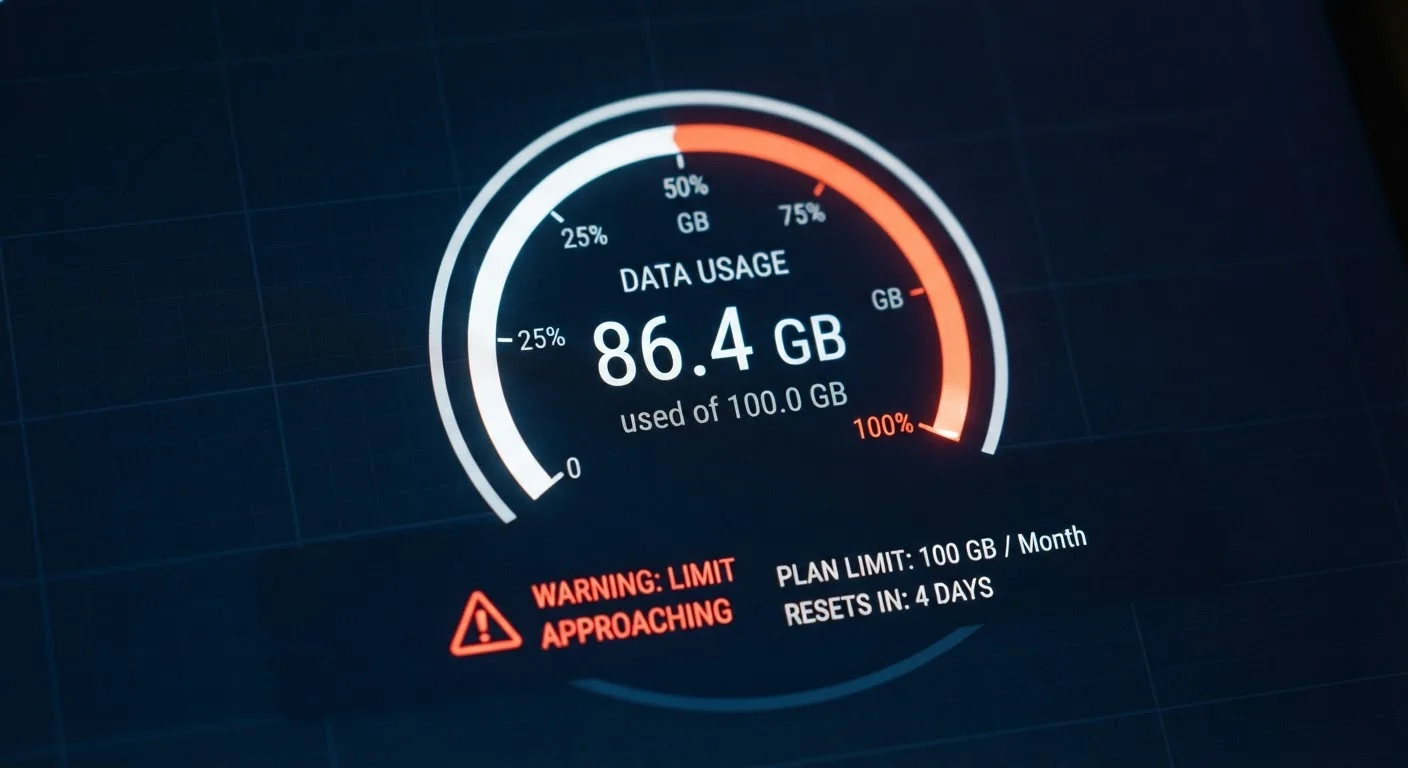
Photo: ReadersChronicle.com | Your Comprehensive Learning Destination editorial
—— In This Article
What Is a Data Cap?
A data cap - sometimes called a data allowance or usage limit - is a ceiling your internet service provider (ISP) places on how much data you can send and receive within a billing cycle, typically one calendar month. Once you hit that ceiling, one of three things happens: your connection speed gets throttled (slowed significantly), you're charged overage fees for each additional block of data used, or both.
Data is measured in gigabytes (GB) or terabytes (TB). A gigabyte is roughly enough to stream two hours of standard-definition video, browse the web for many hours, or send thousands of emails. Modern household usage - with multiple devices, video calls, and streaming - can easily reach several hundred gigabytes per month.
Data Cap
A monthly limit set by an ISP on the total amount of data a customer can send and receive. Exceeding it may result in throttled speeds, overage charges, or a temporary service cutoff.
Overage Fee
A charge applied when a customer exceeds their plan's data allowance. Fees are typically billed per additional block of data - for example, $10 per extra 50 GB.
Throttling
The intentional slowing of a customer's internet connection speed, usually triggered after a data cap is exceeded or during network congestion periods.
Deprioritization
A practice where an ISP lowers the network priority of heavy data users during congestion, resulting in slower speeds. Common in "unlimited" plans that include usage thresholds.
Broadband Facts Label
A standardized disclosure format required by the FCC that ISPs must provide, summarizing plan speed, price, data allowances, and other key terms in plain language.
Unmetered
A plan where data usage is not tracked or capped. Truly unmetered plans do not throttle or charge extra regardless of how much data is consumed.
Not every plan has a data cap. ISP terms like "unlimited" and "unmetered" can mean different things depending on the provider, so it pays to read the fine print carefully.
How ISPs Count and Enforce Data Usage
ISPs measure data at the network level using equipment installed at or near your home. Every file downloaded, every video streamed, every video call made, and every software update sent or received counts toward your total. Uploads - data sent from your home to the internet - are also counted by most providers, though some older or legacy plans count only downloads.
| Typical cable internet data cap | 1,000-1,500 GB (1-1.5 TB) per month |
| What counts toward your cap | Downloads AND uploads on most plans |
| Common overage fee structure | Fixed charge per additional data block (e.g., per 50 GB) |
| FCC-required disclosure | Broadband Facts label must list data allowances (FCC Open Internet rules) |
| Plan types least likely to cap data | Fiber internet (varies by provider) |
| Plan types most likely to cap data | Geostationary satellite and some cable plans |
Usage is typically tracked in near real-time, but the figure displayed in your ISP's portal or app may lag by a few hours. This delay can make it harder to monitor usage precisely as you approach your cap.
When you exceed your monthly allowance, enforcement takes one of these forms:
- Hard cutoff: Service stops until the next billing cycle or until you purchase an add-on data block.
- Speed throttling: You remain connected but at severely reduced speeds - often 1-3 Mbps - for the remainder of the billing period.
- Overage fees: You are billed for additional data in increments (for example, $10 per 50 GB) added automatically or upon confirmation.
Understanding your plan type matters here. Fiber, cable, DSL, and fixed wireless plans differ significantly in how caps are applied and how strictly they are enforced.
Which Plan Types Are Most Likely to Have Caps
Data cap practices vary by connection technology and provider.
- Cable internet: Many major cable providers impose monthly data caps - commonly in the 1-1.5 TB range - on standard residential plans. Exceeding the limit typically triggers automatic overage charges unless you pay a flat fee for an unlimited add-on.
- DSL: Caps vary widely. Some DSL plans are uncapped; others impose stricter limits due to network constraints.
- Fixed wireless (including 5G home internet): Cap structures differ by provider. Some fixed wireless plans market themselves as unlimited but include deprioritization clauses - meaning your speeds may drop during network congestion even if no hard cap applies.
- Fiber: Many fiber providers offer genuinely uncapped plans, though this is not universal. Always verify the terms for the specific plan you are considering.
- Satellite internet: Traditional geostationary satellite plans often carry strict caps with significant speed throttling after the threshold is reached, due to limited bandwidth capacity.
"Unlimited" Doesn't Always Mean Uncapped
Many plans marketed as "unlimited" include a deprioritization threshold - for example, speeds may be reduced after 30-50 GB of use during periods of network congestion. This is different from a hard data cap, but it can still result in noticeably slower service. Always check the fine print of any "unlimited" plan for phrases like "during times of congestion" or "after [X] GB, speeds may be reduced."
Data caps are one of the less visible factors that drive your monthly internet bill higher over time, especially if your household's streaming or remote-work habits have increased since you first signed up.
How to Spot and Manage Data Cap Risk
The most important step is reading your plan's terms and conditions or Broadband Facts label - a standardized disclosure the FCC requires ISPs to provide - before committing. Look specifically for the phrases "data allowance," "data threshold," "after GB," or "network management policy."
Before signing any ISP contract, confirm: whether a cap applies, the exact GB or TB limit, what enforcement mechanism is used (fees, throttling, or both), and whether an unlimited upgrade exists and what it costs.
Once you're on a plan, practical steps to stay within limits include:
- Enable data-usage alerts through your ISP's app or account portal.
- Check whether your router provides per-device usage tracking.
- Reduce video streaming quality settings from 4K to HD or lower when usage is high.
- Schedule large software updates and cloud backups for off-peak hours if your ISP offers a "bonus zone" (unmetered hours).
When comparing offers, reading the fine print on ISP offers - including data policies - is just as important as comparing the advertised price and speed.
1 TB
Common monthly data cap on cable plans
Many major U.S. cable internet providers set a 1 TB (1,000 GB) monthly threshold before overage fees or throttling apply.
~500 GB
Estimated average U.S. household monthly data use
Household data consumption has grown significantly as video streaming, remote work, and connected devices have become standard, according to broadband industry research.

Tech Editorial Team
Tech Editorial Team is the collective byline for our editorial team and contributor network. Articles published under this byline or an editorial pen name are researched, written, and reviewed according to our editorial standards for clarity, consistency, and independence before publication.
View author profile