
What Closing Costs Include and Why They Catch People Off Guard
Closing costs can add thousands to your purchase price. This breakdown explains every line item so nothing comes as a surprise.
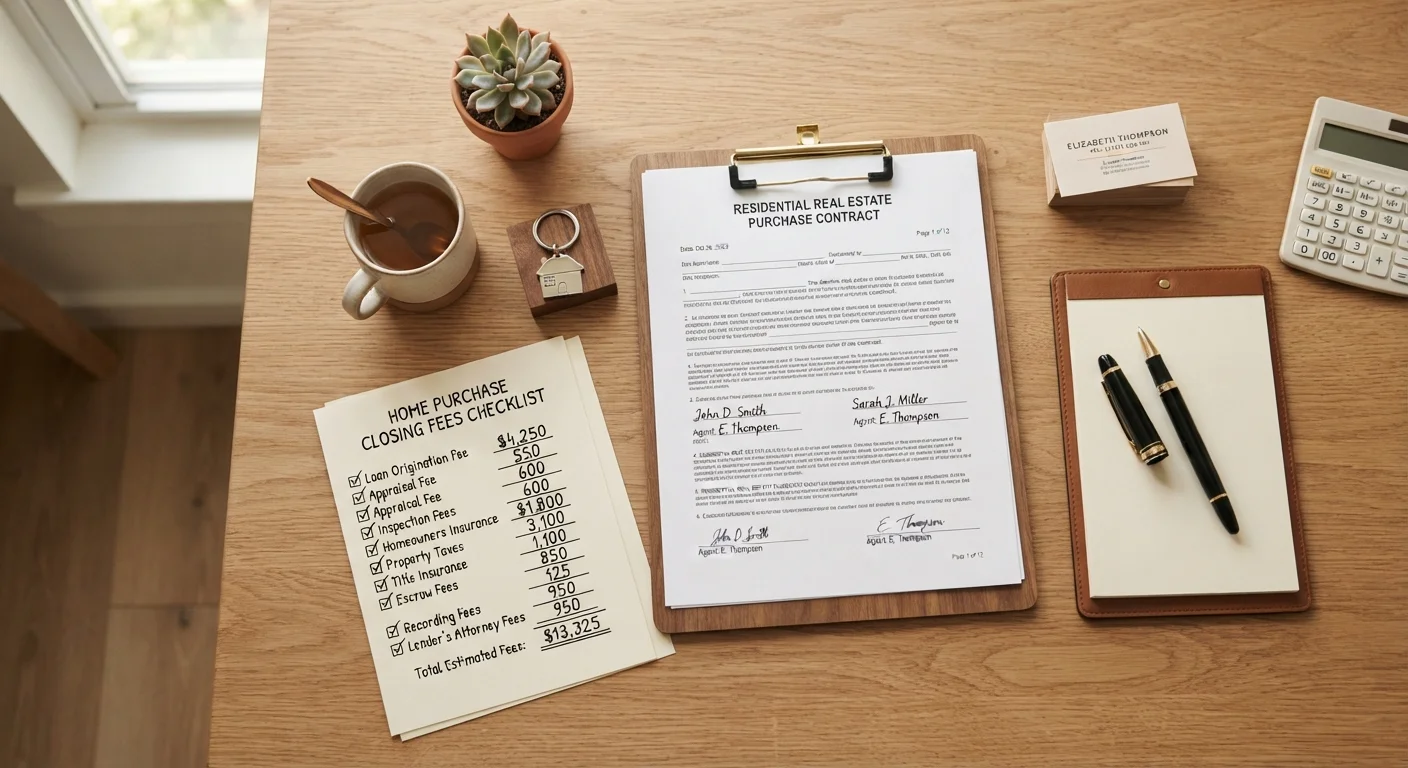
Photo: ReadersChronicle.com | Your Comprehensive Learning Destination editorial
—— In This Article
Key Takeaways
- Closing costs typically run 2%-5% of the purchase price, separate from your down payment.
- They cover a wide range of services including lender fees, title insurance, appraisals, and prepaid items.
- You receive a Loan Estimate early in the process and a Closing Disclosure before settlement - review both carefully.
- Some closing costs are negotiable or can be covered by the seller under certain conditions.
- First-time buyers are often surprised because closing costs are frequently underestimated or not mentioned upfront.
Why Closing Costs Catch Buyers Off Guard
Most first-time buyers spend months saving for a down payment, only to learn at the finish line that they owe several thousand dollars more. Closing costs rarely receive the same attention as the purchase price, even though they can represent a significant out-of-pocket expense. Part of the problem is timing: these fees become concrete only after you're already emotionally invested in a home.
Another factor is that closing costs are a collection of separate charges from multiple parties - your lender, a title company, local government, and insurance providers - bundled into one settlement statement. Without a clear explanation of each line item, the final total can feel arbitrary or inflated.
Understanding common real estate terminology from the start makes that settlement statement far less intimidating.
Your Closing Disclosure Is a Legal Document
Lenders are required by federal law to send you the Closing Disclosure at least three business days before your closing date. Do not treat this waiting period as a formality - use it to compare every line against your original Loan Estimate. If any fee increased beyond allowable limits, you have the right to ask your lender to explain or correct it before you proceed.
The Two Main Categories: Lender Fees and Third-Party Fees
Closing costs fall into two broad groups. Lender fees are charges the bank or mortgage company collects for processing, underwriting, and originating your loan. These may appear as an origination fee (often 0.5%-1% of the loan amount), an underwriting fee, or a credit report fee. Some lenders bundle these differently, so comparing Loan Estimates side by side is the clearest way to evaluate them.
Third-party fees are paid to service providers who are required to complete the transaction. These include:
- Appraisal fee - A licensed appraiser assesses the property's market value to protect the lender. Typically $300-$600.
- Title search and title insurance - A title company reviews public records to confirm the seller has the legal right to sell the home, and insurance protects against any undiscovered claims. This is often the largest third-party expense.
- Attorney or settlement fees - Some states require a real estate attorney to conduct the closing; others use a title or escrow company.
- Home inspection - Usually paid before closing but a common pre-settlement cost.
2%-5%
Typical closing cost range as a share of purchase price
This widely cited range from the Consumer Financial Protection Bureau (CFPB) means costs on a median-priced U.S. home can easily reach $8,000-$20,000.
$6,000+
Average closing costs paid by U.S. homebuyers
ClosingCorp data has consistently shown average closing costs, excluding taxes, exceeding $6,000 for purchase transactions in recent years.
3 days
Time lenders must provide Loan Estimate after application
Under RESPA rules, lenders must deliver a Loan Estimate within three business days of receiving a completed mortgage application.
Prepaid Items: Not Fees, But Still Due at Closing
A section of your Closing Disclosure will list prepaid items - money collected in advance for ongoing homeownership expenses. These are not lender profits; they fund accounts that protect you and your lender going forward. Common prepaids include:
- Homeowners insurance premium - Lenders typically require the first year's premium paid at or before closing.
- Prepaid mortgage interest - Interest that accrues between your closing date and the first day of the next month.
- Escrow reserves - An initial deposit into your escrow account to cover upcoming property tax and insurance installments.
Understanding how escrow works makes these line items easier to accept. See our guide on how escrow works in a home purchase for a complete walkthrough.
Review Your Loan Estimate Early
Request your Loan Estimate as soon as you apply for a mortgage and go through it line by line. Note any fees labeled 'can change' versus those that are capped by law. Comparing estimates from multiple lenders on the same day gives you the most accurate side-by-side picture, since rates change daily.
Government Recording Fees and Transfer Taxes
Local and state governments also collect fees at closing. Recording fees cover the cost of officially entering the deed and mortgage into public records - typically modest amounts of $50-$250. Transfer taxes, sometimes called deed stamps or conveyance taxes, are calculated as a percentage of the sale price and vary significantly by state and municipality. In some locations they are the buyer's responsibility; in others, the seller pays or costs are split.
These charges aren't negotiable with your lender, but they should appear clearly in your Loan Estimate. If you're budget-planning for a home purchase, closing costs deserve their own line - much like the expense categories covered in our piece on budget categories most people forget to include.
How to Reduce What You Pay at Closing
While some closing costs are fixed, others offer room to plan strategically. A few approaches worth discussing with your lender or agent:
- Shop for third-party services. Your lender must provide a list of approved providers for certain services. You may be able to choose a lower-cost title company or attorney in states where that applies.
- Ask about seller concessions. In a slower market, sellers may agree to cover a portion of closing costs as part of the negotiated deal.
- Timing your closing date. Closing near the end of the month reduces prepaid daily interest, lowering one line item modestly.
- First-time buyer programs. Many state housing finance agencies offer closing cost assistance grants or loans alongside down payment help.
For a deeper look at every specific line item you're likely to encounter, our article closing costs unpacked goes line by line through a typical settlement statement.
This article is for general informational and educational purposes only and does not constitute financial, legal, or real estate advice. Consult a licensed professional for guidance specific to your situation and location.
Frequently Asked Questions

Real Estate Basics Editorial Team
Real Estate Basics Editorial Team is the collective byline for our editorial team and contributor network. Articles published under this byline or an editorial pen name are researched, written, and reviewed according to our editorial standards for clarity, consistency, and independence before publication.
View author profile