
Primer vs. Paint-and-Primer-in-One: What the Labels Don't Tell You
Separate primer and combo products aren't interchangeable in every situation. Here's what each does well and where each falls short.
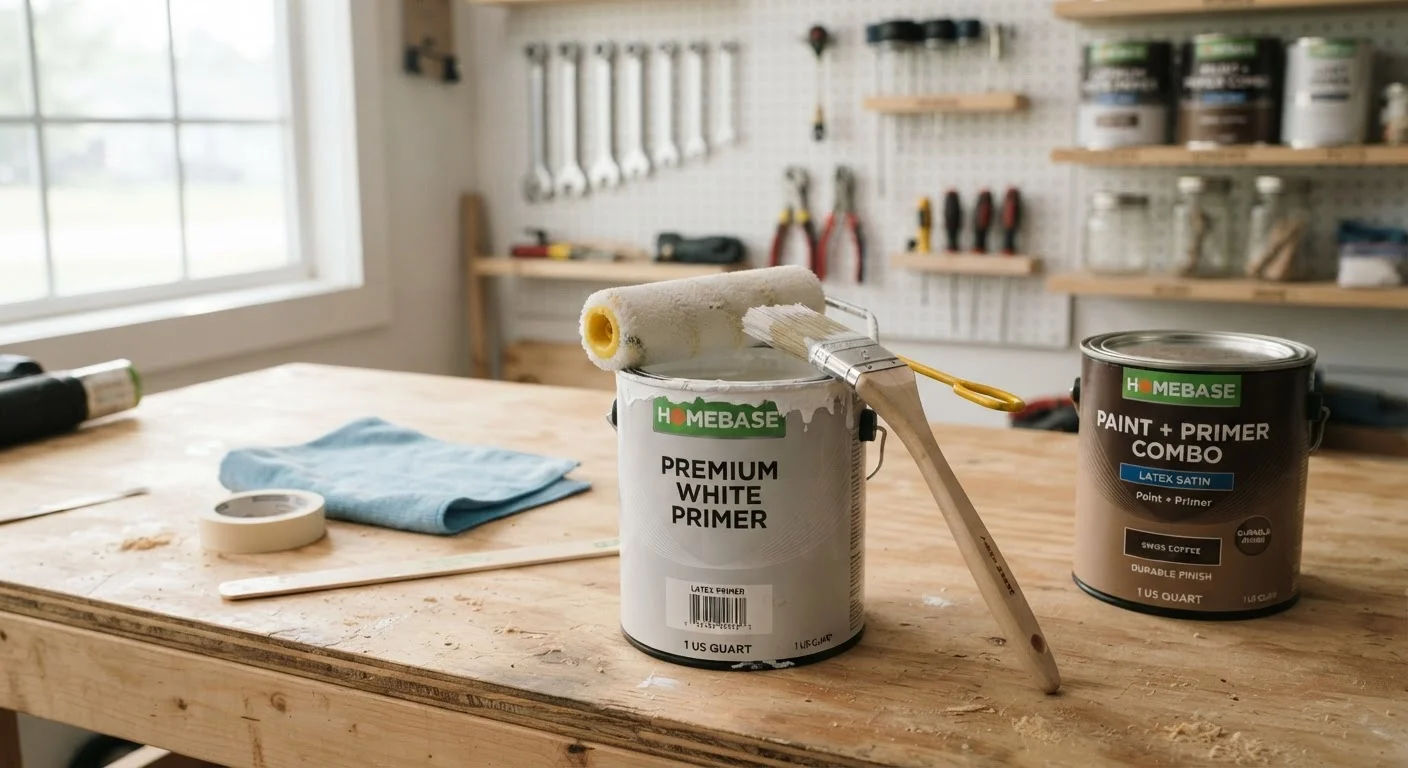
Photo: ReadersChronicle.com | Your Comprehensive Learning Destination editorial
—— In This Article
Key Takeaways
- Separate primer penetrates and bonds to raw or damaged surfaces in ways combo products cannot match.
- Paint-and-primer-in-one works well on previously painted, smooth surfaces - not on bare or stained ones.
- Using a combo product on bare drywall or wood often leads to poor adhesion, bleed-through, and extra coats.
- Separate primer typically costs less per square foot when a surface genuinely needs it - skipping it can mean more paint overall.
- The label 'paint-and-primer-in-one' describes a thicker formulation, not a true two-step primer beneath the paint.
What These Products Actually Are
Walk down any paint aisle and you'll see the phrase "paint-and-primer-in-one" on nearly every premium can. It sounds like a shortcut that saves a step - and sometimes it genuinely is. But the label can mislead homeowners into skipping prep work that a surface actually needs.
A separate primer is a purpose-built sealer and bonding agent. It contains higher concentrations of resins and binders designed to penetrate a surface, seal porosity, and create a stable foundation for topcoats. It is not meant to provide color or a finished appearance - it's purely functional.
A paint-and-primer-in-one is a thicker, higher-solids paint formulation. The "primer" in the name reflects its ability to cover and hide in fewer coats compared to standard paint - not that it chemically behaves like a true primer beneath the surface. Think of it as paint that works harder, not as primer that also colors.
| Criterion | Separate Primer | Paint-and-Primer-in-One |
|---|---|---|
| Primary function | Seal, bond, and prep surfaces | Color and cover in fewer coats |
| Works on bare drywall | Yes - ideal | No - causes flashing |
| Blocks stains and tannins | Yes (stain-blocking formulas) | Rarely reliable |
| Previously painted surfaces | Works, but often unnecessary | Yes - sweet spot |
| Major color changes | Best option (tinted primer) | Requires more coats |
| Typical cost per gallon | Lower than premium paint | Higher than standard paint |
| Number of products needed | Two (primer + paint) | One |
Where Separate Primer Is the Right Call
Certain surfaces and situations make separate primer non-negotiable. Skipping it here causes problems that no amount of extra topcoat will fix.
- Bare drywall: The paper facing and joint compound are extremely absorbent. Without primer, your paint soaks in unevenly, producing a finish called "flashing" - dull patches where the surface sucked up more product. A dedicated drywall primer-sealer solves this completely.
- Raw or unfinished wood: Wood grain raises, tannins bleed, and knots can leach yellow or brown residue through any paint. A stain-blocking primer - particularly an oil-based or shellac formula - stops this bleed-through at the source.
- Water stains and smoke damage: Latex paint, including combo products, won't reliably seal these stains. They'll ghost back through within weeks. A shellac-based primer is the standard fix.
- Major color changes: Going from a deep charcoal wall to a pale yellow? A tinted primer cuts down the number of topcoats dramatically, saving both time and money.
Shellac Primer: When Nothing Else Works
For the toughest stains - nicotine, pet odors, water damage, or heavy tannin bleed - shellac-based primer is generally considered the most reliable option by painting professionals. It dries fast and seals almost any stain. The trade-off: it has a strong odor and requires denatured alcohol for cleanup, so ventilate well and wear gloves. It is not a product for everyday use, but when a stain is bleeding through everything else, it's worth knowing about.
Where Paint-and-Primer-in-One Actually Delivers
Combo products aren't marketing gimmicks across the board - they genuinely simplify certain jobs. The key is matching the product to the right surface condition.
They perform well when you're repainting a surface that is:
- Already painted and in sound condition (no peeling, staining, or major repairs)
- A similar or related color to what you're applying
- Clean and lightly scuffed - the standard prep you'd do for any paint job
In these scenarios, the thicker formulation provides better hide and adhesion than standard paint, and you may genuinely get away with one coat instead of two. That's a real time savings on a big room.
They're also practical for interior ceilings, where the surface is typically painted and in reasonable shape, and where rolling on a second product would be especially cumbersome.
3-4 coats
Paint needed on bare drywall without primer
Painting contractors commonly note that unprimed drywall can require three to four coats of paint to achieve even coverage versus one primer coat plus two paint coats.
~30%
Of a paint's cost is its pigment and resin load
Industry formulation data indicates that pigment and resin content account for a significant share of paint cost - which is why higher-solids combo products carry a higher price tag.
The Cost Equation Most People Get Wrong
Many homeowners avoid separate primer because it adds a purchase and a step. But the math often flips when you account for the full job.
On a surface that genuinely needs primer - bare drywall, for example - skipping it means your first coat of paint disappears into the surface. You end up needing three or four coats of paint to achieve an even finish, using far more product than one coat of primer plus two coats of paint would have required. Primer is typically less expensive per gallon than premium paint, so the separate-primer route can actually cost less.
On a prepped, previously painted surface, the combo product earns its higher price tag by potentially saving you an entire coat. Just don't let the label convince you it performs like a true primer when the surface calls for one. Just as garden soil and potting mix look alike but behave differently, primer and paint-and-primer-in-one may appear interchangeable on the shelf but function in meaningfully distinct ways where it counts.

Home Editorial Team
Home Editorial Team is the collective byline for our editorial team and contributor network. Articles published under this byline or an editorial pen name are researched, written, and reviewed according to our editorial standards for clarity, consistency, and independence before publication.
View author profile