
Bodyweight Training at Home: Building Strength Without Equipment
A practical introduction to bodyweight exercises—squats, push-ups, planks, and more—for anyone starting a home fitness routine from scratch.
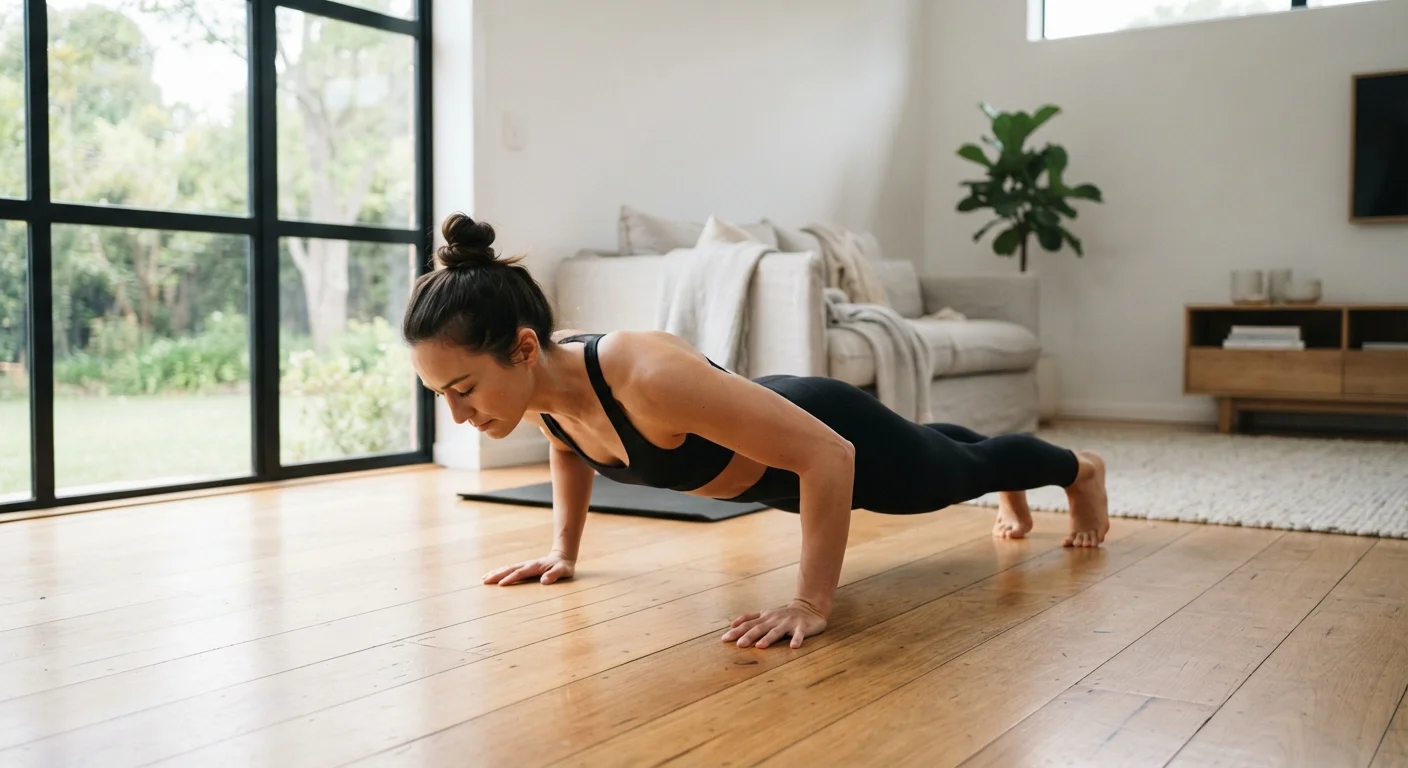
Photo: ReadersChronicle.com | Your Comprehensive Learning Destination editorial
—— In This Article
Key Takeaways
- Bodyweight exercises can build meaningful strength with zero equipment and minimal space.
- A few foundational movements - squats, push-ups, planks, and lunges - cover most of the major muscle groups.
- Beginners should prioritize form and consistency over intensity or volume.
- Progressive overload - gradually increasing difficulty - applies to bodyweight training just as it does to gym workouts.
- Rest and recovery are essential parts of any training routine, not optional extras.
Why Bodyweight Training Works
A gym membership, free weights, or specialized machines are not prerequisites for getting stronger. Bodyweight training - using your own body as resistance - has a long, documented history in general fitness practice and military conditioning alike. The mechanics are straightforward: your muscles respond to resistance, regardless of whether that resistance comes from a barbell or gravity acting on your own frame.
For budget-conscious Americans, the appeal is obvious. There's no monthly fee, no commute, and no waiting for a machine to open up. All that's typically needed is enough floor space to lie down. That accessibility removes one of the most common barriers to starting - cost - while leaving the other variables, like consistency and effort, in your hands.
It's worth noting that bodyweight training is not a lesser alternative to gym work. Research in exercise science consistently shows that progressive resistance - gradually increasing the difficulty of movements - drives strength and muscle adaptation. Bodyweight exercises can deliver that stimulus effectively when programmed with intention. For a broader look at common misconceptions that might be holding you back, see common fitness myths unpacked.
This article is for general informational and educational purposes only and is not a substitute for professional medical advice. Consult a qualified healthcare provider before beginning any new exercise program, especially if you have an existing health condition or injury.
Core Movements Every Beginner Should Know
A handful of foundational movements cover the major muscle groups and form the backbone of most effective bodyweight routines.
Progressive overload
Gradually increasing the difficulty of an exercise over time - through more reps, slower tempo, or harder variations - so the body continues to adapt and grow stronger.
Repetition (rep)
One complete execution of a movement, such as one push-up from the starting position down and back up again.
Set
A group of consecutive repetitions performed without resting, followed by a brief recovery period before the next group.
Core
The group of muscles surrounding the midsection - including the abdomen, lower back, and hips - that stabilize the spine during movement.
Muscle soreness (DOMS)
Delayed-onset muscle soreness - a normal, temporary aching sensation that typically peaks one to two days after unfamiliar exercise as muscles repair and adapt.
- Squat: Stand with feet roughly shoulder-width apart, lower your hips toward the floor as if sitting back into a chair, then return to standing. Squats train the quads, hamstrings, and glutes - the largest muscles in the body.
- Push-up: Starting in a high plank position, lower your chest to the floor with your elbows at roughly a 45-degree angle to your torso, then press back up. Builds chest, shoulder, and tricep strength. Knee-supported variations are a valid starting point.
- Plank: Hold a straight-body position on your forearms or hands, keeping your core engaged and hips level. Primarily trains the deep stabilizing muscles of the trunk.
- Lunge: Step one foot forward and lower your back knee toward the floor, keeping your front knee over your ankle. Develops single-leg strength and balance.
- Glute bridge: Lying on your back with knees bent, press through your heels to lift your hips off the floor. Targets the glutes and lower back without spinal loading.
These five movements, practiced with attention to form, create a solid foundation. Rushing past form to add repetitions is a common early mistake - controlled, deliberate movement is more effective and significantly safer.
How to Structure a Simple Home Routine
A beginner routine doesn't need to be elaborate. A straightforward approach: choose three to four of the core movements above, perform two to three sets of each with a brief rest between sets, and aim for two to three sessions per week with at least one rest day in between.
Time Your Sessions to Fit Your Life
Twenty focused minutes three times a week will deliver more benefit than an hour-long session you can only manage once. Shorter, regular sessions are easier to schedule and sustain, especially when you're just establishing the habit. Even ten minutes is meaningful when you're starting from zero.
Rather than chasing a specific number of repetitions on day one, work within a range that feels challenging but allows you to maintain good form throughout. As a general principle, if you can complete every rep with ease and good technique, you're ready to add a little more challenge - more reps, a slower tempo, or a more difficult variation.
For structure without spending money, public libraries and government health platforms offer free, vetted exercise guidance. See free fitness resources available online for an overview of what's genuinely useful.
If you're weighing whether a home routine suits you versus a class-based environment, group exercise versus solo workouts offers a balanced comparison.
Progressing Safely Without Hurting Yourself
One of the most important concepts in any training approach is progressive overload - the gradual increase in training demand that prompts the body to adapt and grow stronger. In bodyweight training, this doesn't mean doing more reps indefinitely. It means moving to harder variations of a movement over time.
Examples of how this works in practice:
- Knee push-ups → standard push-ups → decline push-ups (feet elevated)
- Assisted squats (holding a surface for balance) → bodyweight squats → single-leg variations
- Short plank holds → longer holds → plank with leg or arm lifts
Pain - distinct from the general discomfort of effort - is a signal to stop and assess. Muscle soreness in the day or two following a workout is normal. Sharp, joint-based, or persistent pain is not, and warrants evaluation by a healthcare professional before continuing. Don't try to push through it.
Don't Ignore Persistent Pain
Muscle fatigue and mild post-workout soreness are normal. Sharp, stabbing, or joint-located pain during exercise - or pain that lingers for more than a few days - is not a signal to push through. Stop the activity and consult a qualified healthcare professional before resuming. Exercising through real injury often makes it worse.
Staying Consistent Over Time
Consistency matters far more than any single workout. A routine you return to reliably - even an imperfect one - will produce better outcomes than a demanding program you abandon after two weeks. Rest days, sleep, and adequate nutrition all contribute meaningfully to how your body responds to training.
Common patterns that undermine home fitness habits - unrealistic scheduling, skipping recovery, never varying the routine - are worth understanding early. what tends to go wrong with home workout routines covers these in detail. If you're also curious about how strength training compares to cardio and whether you need both, cardio vs. strength training is a useful companion read.
Start small enough that skipping feels harder than doing it. Build the habit first; intensity can follow.
Frequently Asked Questions

Health Editorial Team
Health Editorial Team is the collective byline for our editorial team and contributor network. Articles published under this byline or an editorial pen name are researched, written, and reviewed according to our editorial standards for clarity, consistency, and independence before publication.
View author profile