
Building a Savings Habit When You're Living Paycheck to Paycheck
Small, consistent deposits matter more than big irregular ones. Practical approaches for starting a savings habit even on a tight budget.
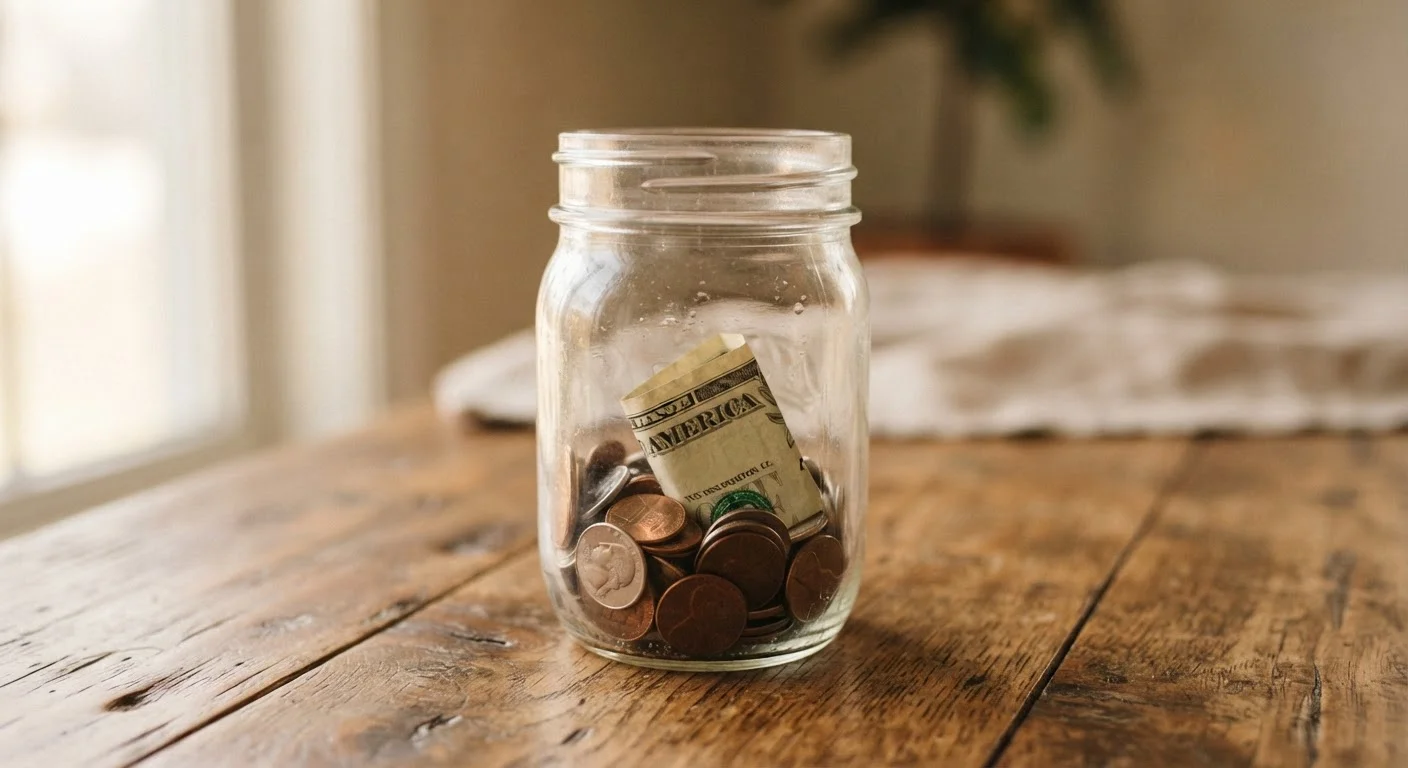
Photo: ReadersChronicle.com | Your Comprehensive Learning Destination editorial
—— In This Article
Key Takeaways
- Starting with as little as $5 per paycheck builds a real savings habit over time.
- Automating transfers removes willpower from the equation and increases consistency.
- A small emergency fund - even $500 - reduces reliance on credit cards for surprises.
- Saving and paying down debt can happen simultaneously with the right framework.
- Consistency beats amount: frequency matters more than the size of each deposit.
Why the Paycheck-to-Paycheck Cycle Is Hard to Break
Living paycheck to paycheck doesn't mean you're bad with money. It usually means your income covers your expenses, but not much more - leaving no natural moment where saving feels obvious. The margin is thin, and any unexpected cost (a medical bill, a car repair, a utility spike) lands directly on a credit card or borrowed money.
The problem isn't willpower. It's structure. Most households that build savings successfully don't do it through discipline alone - they use systems that remove decision-making from the equation. That's the core of what this guide covers.
If you've felt like saving is only possible once you earn more, it's worth reading common myths about saving money that hold people back - several widely held beliefs about saving simply don't hold up.
Small Amounts Are Not a Compromise
If you're saving $10 a paycheck and feel embarrassed by it, don't be. The habit of moving money consistently to savings is genuinely the hardest part - and you're doing it. Many households that eventually build strong financial cushions started exactly where you are. Common myths about saving money reinforces why starting small is legitimate, not a fallback.
What You Need Before You Start
You don't need a large income or a complicated spreadsheet to begin. You do need a few basic things in place.
What you will need
Separate savings account
Keeps saved money out of your spending account so it's less tempting to use.
Automatic transfer feature
Schedules recurring deposits to savings without requiring manual action each pay period.
Spending tracker or budgeting app
Helps identify where money is currently going so you can find room to save.
Pay stub or direct deposit notice
Confirms exact net pay amount to set an accurate transfer target.
If you're carrying debt alongside your tight budget, that doesn't disqualify you from saving. The two goals can coexist - the framework for saving and paying off debt at the same time can help you think through how to split your limited dollars between the two priorities.
How to Build the Habit: Step by Step
Follow these steps in order. Each one builds on the last, and none requires a large income or a perfect budget to execute.
Find your starting number
Look at your last two or three pay stubs and identify your consistent take-home amount. Then list every fixed expense that must be paid before anything else: rent or mortgage, utilities, minimum debt payments, and groceries. Subtract those from your take-home pay. Whatever remains - even if it's small - is your working margin.
Don't worry if that number is $20 or $50. You're not trying to save all of it. You're looking for a slice of it.
Set a savings amount you can actually sustain
Choose a fixed dollar amount - not a percentage - that feels almost too small. For many households starting out, that might be $10 or $25 per paycheck. The goal at this stage is to build the habit, not to fund retirement. Behavioral research consistently shows that people who start small are more likely to stick with saving than those who set ambitious targets and abandon them after a bad month.
If you want a reference point: even $25 every two weeks totals $650 over a year. That's a meaningful cushion.
Automate the transfer on payday
Log into your bank or credit union and set up an automatic transfer from your checking account to a separate savings account. Schedule it to trigger on the same day your paycheck posts - ideally the same day or the day after. This is sometimes called "paying yourself first."
When the money moves before you see it sitting in your checking account, you adjust your spending to what remains rather than trying to save from what's left at the end of the month.
Build toward a $500 starter emergency fund
Your first savings goal should be a small emergency fund - not a vacation, not a large purchase. Aim for $500 initially. This single buffer dramatically reduces the likelihood that an unexpected car repair or medical copay will force you onto a credit card, which can trap you in a cycle of carrying a balance and paying interest.
Once you reach $500, keep the habit going. The next milestone is one month of essential expenses. From there, you can think about expanding toward the commonly cited three-to-six-month guideline - though the right size for your situation depends on your income stability, household size, and other factors. See how to think through emergency fund sizing for a more detailed framework.
Increase your transfer amount incrementally
Every time your take-home pay increases - a raise, a side gig payment, a tax refund - add a portion of that increase to your automatic savings transfer before it gets absorbed into everyday spending. Even adding $5 or $10 more per paycheck over time compounds into meaningful progress.
This approach, sometimes called "save the raise," prevents lifestyle inflation from consuming every income gain.
Don't Skip Minimum Debt Payments to Save
Saving is important, but never reduce a debt payment below its required minimum to fund savings. Late or missed payments trigger fees, damage your credit score, and can accelerate interest charges. If you're carrying high-interest debt alongside limited savings, consider reading how to balance saving and debt payoff before deciding how to allocate each dollar.
What Comes After the Emergency Fund
Once you have a small emergency fund established, you can start thinking about saving for specific future costs - car registration, irregular medical bills, holiday spending. These are sometimes handled through what are called sinking funds: dedicated pools of money set aside for predictable but irregular expenses. Sinking funds explained covers how this approach works in practice.
At this stage, it's also worth thinking about where your savings actually live. A standard checking-linked savings account is fine to start, but accounts vary significantly in the interest they pay. Savings account types explained provides a plain-language breakdown of high-yield savings accounts, money market accounts, and CDs.
This Is General Information, Not Personal Advice
The strategies here are general financial education, not personalized advice for your specific situation. Everyone's income, expenses, and debt load are different. For guidance tailored to your circumstances, consider speaking with a nonprofit credit counselor or a licensed financial adviser.
This article is for general informational and educational purposes only and does not constitute personalized financial, tax, or legal advice. Consult a qualified financial professional for guidance specific to your situation.

Finance Editorial Team
Finance Editorial Team is the collective byline for our editorial team and contributor network. Articles published under this byline or an editorial pen name are researched, written, and reviewed according to our editorial standards for clarity, consistency, and independence before publication.
View author profile