
Avalanche vs. Snowball: Two Debt Payoff Strategies Compared
The debt avalanche saves money on interest; the snowball builds momentum. See how each method works and which suits different financial personalities.
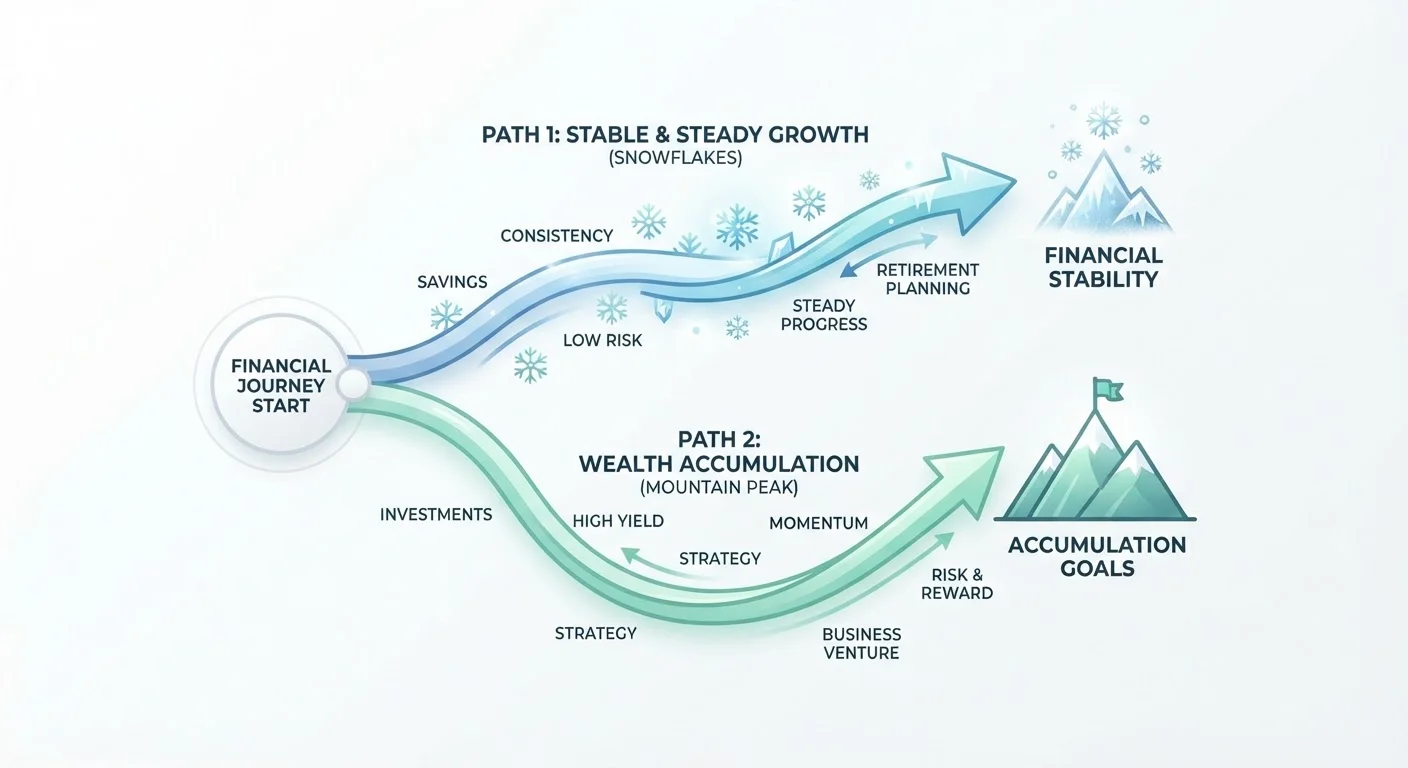
Photo: ReadersChronicle.com | Your Comprehensive Learning Destination editorial
—— In This Article
Key Takeaways
- The debt avalanche targets the highest-interest debt first, reducing total interest costs over time.
- The debt snowball pays off the smallest balances first, generating motivation through quick wins.
- Both methods require you to make minimum payments on all debts while directing extra money to one target account.
- Neither strategy is universally better - the right choice depends on your financial situation and personality.
- Consistency matters more than which method you choose; sticking with either plan beats switching between them.
How Each Method Works
Both strategies share the same foundation: you make minimum payments on every debt each month, then direct any extra money toward one specific account. The difference is which account you target first.
Debt Avalanche: You rank your debts by interest rate, highest to lowest. Every extra dollar goes to the highest-rate balance until it's gone. Then you roll that payment to the next-highest rate, and so on. Because high-interest debt compounds faster, eliminating it first reduces the total amount you'll pay over the life of your debts.
Debt Snowball: You rank your debts by balance, smallest to largest. Extra money goes to the smallest balance first, regardless of interest rate. Once that account is cleared, you apply that payment to the next-smallest, building momentum - a snowball effect - as each payoff frees up more cash for the next.
If you're new to managing debt altogether, the beginner's roadmap to personal debt covers the core concepts - interest, repayment terms, and strategy - before you pick a method.
| Criterion | Debt Avalanche | Debt Snowball |
|---|---|---|
| Priority order | Highest interest rate first | Smallest balance first |
| Total interest paid | Lower (mathematically optimal) | Potentially higher |
| Time to first payoff | Longer if high-rate debt is large | Faster - smallest balance cleared first |
| Psychological reward | Delayed gratification | Frequent early wins |
| Best for | Numbers-driven, disciplined payers | Motivation-driven, progress-focused payers |
| Complexity | Low - just rank by rate | Low - just rank by balance |
The Math Argument vs. the Motivation Argument
The avalanche method wins on pure arithmetic. By reducing the principal on high-rate debt sooner, you shrink the base on which interest accrues each billing cycle. Over months and years, that difference compounds in your favor.
But personal finance is personal. Behavioral research consistently shows that many people abandon financially optimal plans because they feel slow or abstract. The snowball method trades some mathematical efficiency for psychological rewards - crossing a debt off your list entirely is motivating in a way that a slightly smaller interest charge often isn't.
~$1,000+
Potential interest savings with avalanche vs. snowball
The exact difference varies by balance size and rate spread, but studies in behavioral finance (including work published by the National Bureau of Economic Research) show the gap can be meaningful on larger, mixed-rate debt portfolios.
77%
Americans carrying some form of debt
According to Experian's annual State of Credit report, the vast majority of U.S. adults hold at least one form of debt, underscoring how broadly these payoff strategies apply.
Neither approach is wrong. The one you'll stick with is the one that actually works for you. As a general principle: if you have one debt with a dramatically higher rate than the others, the avalanche advantage is large enough to notice. If rates are clustered closely together, the snowball's behavioral benefits may outweigh the marginal interest savings.
It's also worth thinking about how debt payoff fits into your broader financial picture. Our article on balancing saving and debt payoff offers a useful framework for doing both at once rather than treating them as competing priorities.
Putting a Strategy Into Practice
Whichever method you choose, the mechanics are straightforward:
- List all your debts. Write down each balance, minimum payment, and interest rate.
- Order them. By rate (avalanche) or by balance (snowball).
- Find extra money. Even an additional $25-$50 per month accelerates payoff. Review your budget for subscriptions, dining, or discretionary spending that can be redirected temporarily.
- Automate minimum payments. Set minimums on auto-pay so you never risk a late fee while focusing your extra cash on the target debt.
- Redirect each payoff. When an account reaches zero, immediately roll its full payment to the next target. Don't absorb that cash into spending.
What About Balance Transfers or Consolidation?
Some borrowers combine a payoff strategy with a balance transfer or debt consolidation loan to lower their interest rates first. This can amplify the savings from either method - but consolidation has its own costs and risks. Not every borrower qualifies for favorable terms, and extending a repayment timeline can increase total interest even at a lower rate. Understand the full picture before combining approaches.
If managing multiple accounts feels overwhelming, debt consolidation is sometimes raised as an alternative. Before going that route, it's worth reading about what debt consolidation actually does and when it helps - it simplifies payments but isn't a fit for everyone.
Building durable habits around debt reduction matters as much as the strategy itself. The habits that help households reduce debt steadily reinforces the consistency side of the equation.
This article is for general informational and educational purposes only and does not constitute personalized financial or legal advice. Consult a qualified financial professional for guidance specific to your situation.

Finance Editorial Team
Finance Editorial Team is the collective byline for our editorial team and contributor network. Articles published under this byline or an editorial pen name are researched, written, and reviewed according to our editorial standards for clarity, consistency, and independence before publication.
View author profile