
Needs vs. Wants: A Practical Guide to Sorting Your Spending
The needs-versus-wants distinction sounds simple but gets complicated fast. Learn how to apply it honestly and without judgment to your own expenses.
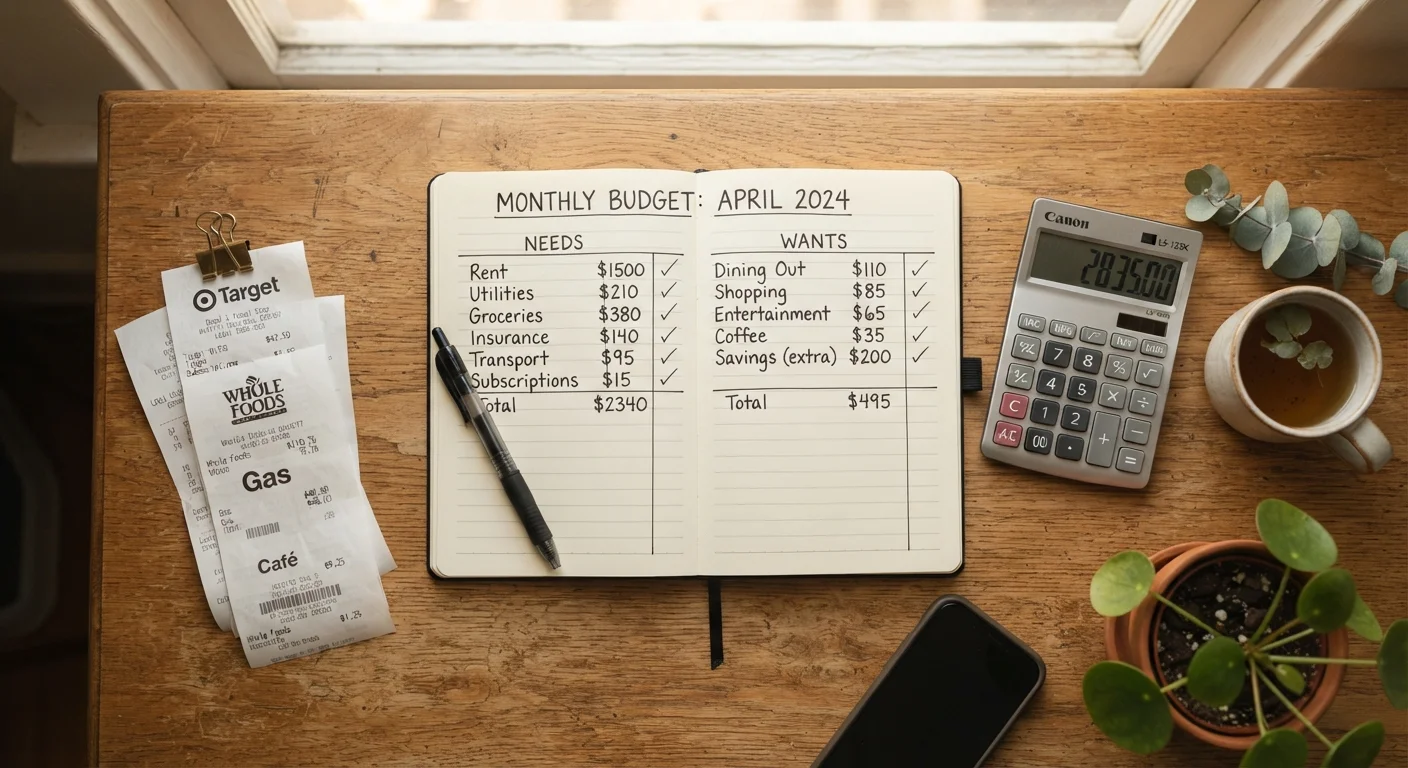
Photo: ReadersChronicle.com | Your Comprehensive Learning Destination editorial
—— In This Article
Key Takeaways
- A need is something required for basic safety, health, or financial stability - not just comfort.
- Wants are things that improve quality of life but can be adjusted or delayed without serious harm.
- Context matters: the same expense can be a need for one person and a want for another.
- Sorting your spending honestly - not harshly - is the starting point for any effective budget.
- The goal is awareness and choice, not eliminating every enjoyable expense.
Why the Line Isn't Always Obvious
The needs-vs-wants concept sounds straightforward until you sit down with your actual bank statement. Is a car a need? It depends on whether public transit can get you to work. Is a smartphone a need? For most working adults in the US today, a reliable phone is difficult to function without - but the specific model and plan tier involve real want-side choices.
The honest answer is that many expenses contain both elements. The base cost of something may be a need; the premium version of that same thing may layer in a want. Recognizing this overlap is more useful than forcing every expense into a hard binary.
This matters especially for large fixed costs. Housing, for instance, involves a need (a safe, stable place to live) but also a want dimension (location, space, amenities). If you're weighing that balance, the tradeoffs involved in renting versus buying are worth understanding as part of the bigger picture.
When You're Unsure, Ask One Question
If you skipped this expense for three months, would something essential break down - your health, housing, job, or ability to meet obligations? If yes, it's likely a need. If not, it's probably a want. This single question cuts through a lot of the gray area.
What You'll Need to Get Started
This exercise doesn't require any special software or financial expertise - just your actual expense data and a willingness to look at it honestly. Gather the following before you begin:
What you will need
Bank or credit card statements (last 1-2 months)
Provides a complete, realistic picture of where money is actually going rather than where you think it goes.
Spreadsheet or budgeting notebook
Used to organize expenses into needs and wants columns so patterns become visible.
Calculator or phone calculator app
Helps total each category so you can see the dollar split between needs and wants.
Highlighters (two colors)
Optional visual tool for marking needs and wants directly on printed statements.
Avoid Cutting Needs to Pay for Wants
Skipping insurance, delaying necessary medical care, or falling behind on rent or utilities to free up spending money can create serious financial and safety risks. When trimming your budget, always protect core needs first. If your income doesn't cover basic needs, that's a separate problem that sorting categories alone won't solve.
Step-by-Step: Sort Your Spending
This Is Education, Not Financial Advice
This article provides general budgeting information for educational purposes. It is not personalized financial advice. Every household's situation is different. For guidance tailored to your specific circumstances, consider consulting a licensed financial professional.
Pull your real spending data
Before you can sort anything, you need to see everything. Gather bank statements or credit card statements covering the past one to two months. Include any cash spending you remember. The goal is a complete, honest inventory - not an idealized version of your habits.
If you've never done this before, tracking your spending for 30 days first gives you an even more accurate foundation to work from.
List every expense in one place
Write down or type every expense you find. Don't filter yet - just list. Group recurring expenses (rent, utilities, subscriptions) separately from one-time purchases if that helps you see patterns. You're building a raw inventory before any judgment happens.
Apply a working definition of 'need'
A need is an expense that, if unpaid or skipped, would directly threaten your health, housing, employment, or ability to meet basic obligations. Common needs include:
- Rent or mortgage payments
- Utilities required for safe living (electricity, heat, water)
- Groceries and basic household supplies
- Health insurance and necessary medical care
- Transportation required to get to work
- Minimum debt payments that protect your credit standing
Notice that 'need' doesn't mean 'comfortable version of that thing.' Basic transportation is a need; a luxury vehicle lease may include a significant want component.
Identify your wants with equal honesty
A want is anything that improves your quality of life but isn't required for basic stability. This includes dining out, streaming subscriptions, gym memberships, clothing beyond functional basics, vacations, and entertainment. Wants aren't bad - they're part of a livable budget - but they're where flexibility exists.
Context genuinely matters here. A gym membership might be a want for someone with a safe place to exercise for free nearby, but it may serve a more important role for someone managing a health condition. Apply your own honest judgment rather than a rigid rulebook.
Sort each expense and total each column
Go through your full expense list and assign each item to needs or wants. For items that feel genuinely mixed - say, a phone plan that is necessary for work but on a more expensive tier than required - split them. Mark a portion as a need (the minimum functional plan cost) and the difference as a want.
Once sorted, total each column. This dollar split tells you a great deal about where your spending is concentrated and where you have room to make intentional choices.
Use your sorted list to make deliberate choices
Now that you can see the split, you can make informed decisions. If needs are consuming most of your income, the problem may be income level, housing costs, or debt load - not lifestyle spending. If wants are crowding out savings or debt repayment, you have clear targets for adjustment.
Either way, the exercise gives you a factual starting point rather than a vague sense of unease about money. That clarity is the practical value of this process. For further reading on managing what comes next, the Saving & Debt hub covers approaches to building savings and reducing debt systematically.
After You Sort: What to Do With the Picture
Sorting your spending is a diagnostic exercise, not a verdict. The output isn't a list of things you did wrong - it's a map of where your money currently goes versus where you want it to go. That distinction matters for how you use the information.
If your needs are genuinely high relative to your income, the solution isn't guilt - it's looking at which needs can be reduced at the margin (negotiating bills, refinancing debt, adjusting housing costs over time) and whether income has room to grow. If wants are larger than you expected, you now have specific, concrete items to weigh against your savings goals rather than an abstract sense that you're overspending.
Budget travel, for example, is one area where many households find meaningful flexibility. If travel matters to you, planning trips on a tight budget is a learnable skill that can keep the experience while reducing the cost.
The deeper value here is that sorting your spending builds the habit of intentional choice. Every dollar you move from an unexamined want to a stated goal is a dollar you controlled consciously. That's what budgeting, at its core, is about.
This article is for general informational and educational purposes only. It does not constitute personalized financial advice. Consult a licensed financial professional for guidance specific to your situation.

Finance Editorial Team
Finance Editorial Team is the collective byline for our editorial team and contributor network. Articles published under this byline or an editorial pen name are researched, written, and reviewed according to our editorial standards for clarity, consistency, and independence before publication.
View author profile