
Synthetic vs. Conventional Motor Oil: Which One Does Your Engine Actually Need?
Synthetic oil costs more, but is it always worth it? A clear breakdown of the differences, trade-offs, and when each type makes sense.
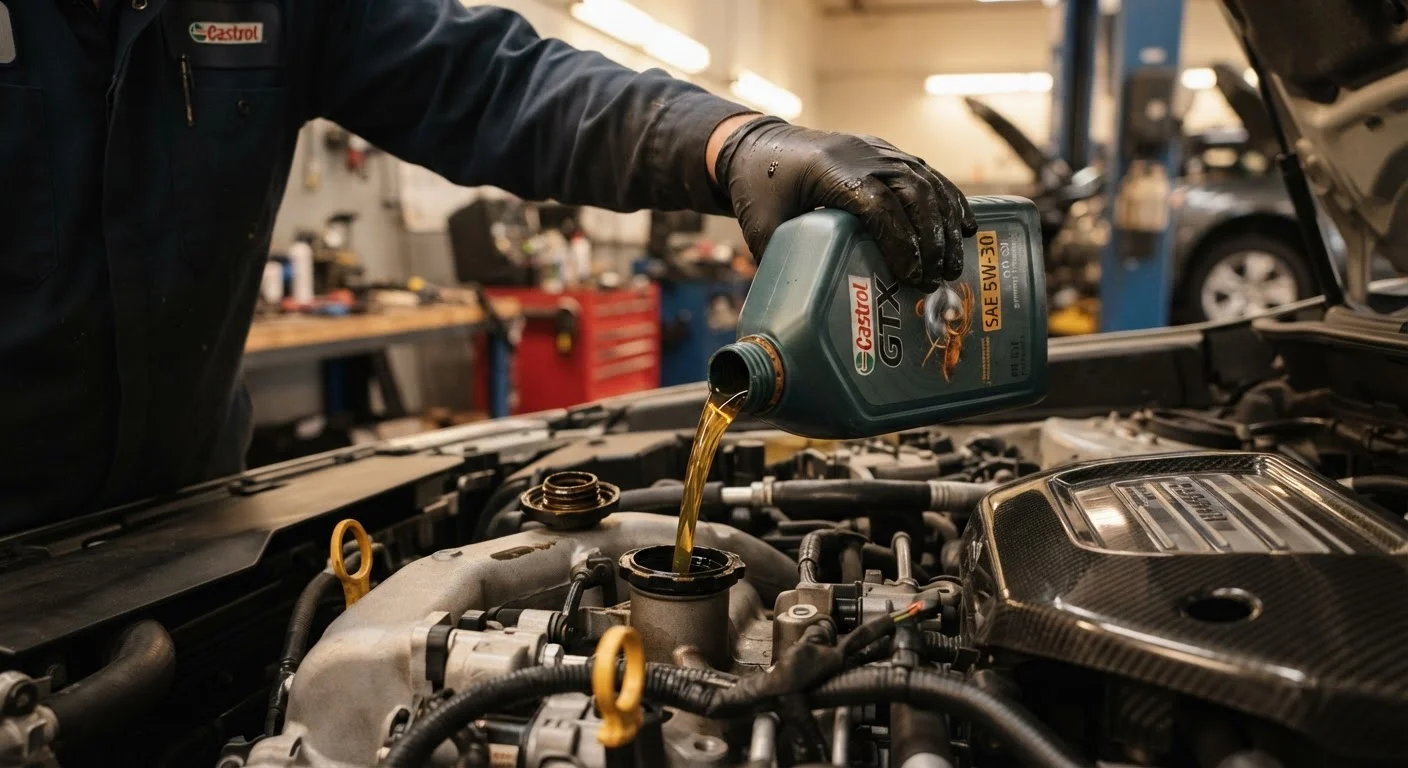
Photo: ReadersChronicle.com | Your Comprehensive Learning Destination editorial
—— In This Article
Key Takeaways
- Synthetic oil is engineered to last longer and perform better under temperature extremes than conventional oil.
- Conventional oil is less expensive per quart but typically requires more frequent changes.
- Your owner's manual - not marketing - should determine which oil type your engine actually needs.
- Switching from conventional to synthetic is generally safe, but the reverse is not always advisable.
- High-mileage vehicles may benefit from specially formulated oils regardless of synthetic or conventional base.
What Actually Makes Them Different
Both synthetic and conventional motor oil do the same fundamental job: lubricate engine parts, reduce friction, carry away heat, and keep metal surfaces from grinding each other down. The difference lies in how they're made.
Conventional oil is refined directly from crude oil pulled out of the ground. Refineries process it to remove most impurities, but some inconsistencies in molecular size and structure remain. That variability means the oil performs less predictably at temperature extremes.
Synthetic oil starts with a base stock - often also derived from crude oil or natural gas - but is then chemically engineered at the molecular level. The result is a more uniform structure that holds up better under heat, cold, and sustained stress.
Think of it this way: conventional oil is like lumber cut from a tree, while synthetic is more like engineered hardwood - built to tighter tolerances for a specific purpose.
| Criterion | Synthetic Motor Oil | Conventional Motor Oil |
|---|---|---|
| Cost per quart | Higher ($6-$13+) | Lower ($3-$7) |
| Typical change interval | 7,500-15,000 miles | 3,000-5,000 miles |
| Cold-weather performance | Flows better at low temps | Can thicken in extreme cold |
| Heat resistance | Resists breakdown longer | Breaks down faster under heat |
| Best engine match | Modern, turbocharged, high-performance | Older, simpler engine designs |
| Molecular consistency | Engineered, uniform | Refined, some variability |
The Real Cost Comparison
Synthetic oil typically costs two to four times more per quart than conventional. A conventional oil change might run $35-$55 at a shop; a full synthetic service commonly runs $70-$100 or more, depending on vehicle and location.
However, the per-change cost doesn't tell the whole story. Conventional oil is generally changed every 3,000 to 5,000 miles. Full synthetic is often rated for 7,500 to 10,000 miles - and some manufacturers specify up to 15,000 miles. Over a year of average driving, that can mean two to three fewer oil changes annually with synthetic, narrowing the gap considerably.
~2-3×
Cost difference per quart, synthetic vs. conventional
Typical retail pricing in the US, though premiums vary by brand, viscosity grade, and retailer.
75,000 miles
Common threshold for 'high-mileage' oil formulations
Many oil manufacturers define high-mileage products for engines at or above this odometer reading.
That said, always follow your owner's manual interval - not the sticker on your windshield from a quick-lube shop, which may default to the most conservative (and most profitable for them) schedule regardless of what your engine actually needs.
For a broader take on how small maintenance decisions compound into real costs, see our guide on DIY car maintenance vs. shop visits.
When Your Owner's Manual Should Make the Call
The single most reliable guide to which oil your engine needs is the owner's manual. If your manufacturer specifies a synthetic, using conventional could put you in violation of warranty terms and leave the engine underprotected. This is common in turbocharged engines, many European vehicles, and most cars built in the last decade or so.
If your manual says conventional is acceptable, synthetic will still work - it meets or exceeds conventional oil specs. But you won't necessarily get dramatically better protection if your engine wasn't designed to take advantage of it.
Can You Switch Mid-Life?
Switching from conventional to synthetic at any oil change is generally safe for modern engines. The idea that synthetic oil causes seals to leak in older engines is largely a myth - modern synthetic formulas are compatible with standard seals. Switching back from synthetic to conventional is less advisable, as you'd be stepping down in protection without a clear benefit. When in doubt, ask a qualified mechanic who knows your specific vehicle.
One area worth special attention: high-mileage engines (generally over 75,000 miles) often benefit from oils formulated specifically for older engines. These products - sometimes labeled "high-mileage" - contain seal conditioners and additives designed to address wear patterns common in aging engines. Whether the base is synthetic or conventional varies by product.
Bottom line: the oil aisle at the auto parts store can feel overwhelming, but the answer you need is usually already printed in your glove box.

Cars Editorial Team
Cars Editorial Team is the collective byline for our editorial team and contributor network. Articles published under this byline or an editorial pen name are researched, written, and reviewed according to our editorial standards for clarity, consistency, and independence before publication.
View author profile