
Common Car Maintenance Terms, Defined
From torque specs to coolant flush, a plain-language reference for the maintenance terminology you'll encounter at the shop or in your manual.
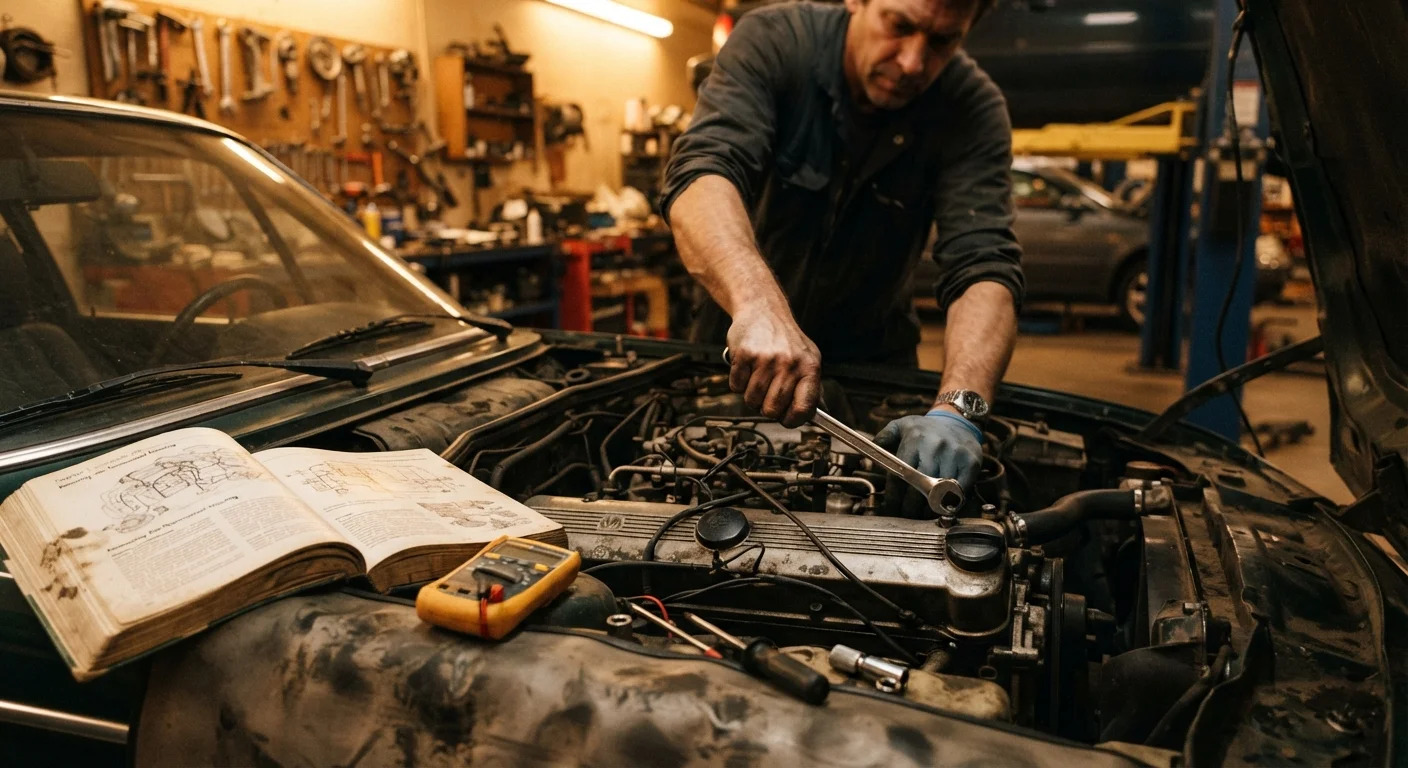
Photo: ReadersChronicle.com | Your Comprehensive Learning Destination editorial
—— In This Article
Why These Terms Matter
Walking into a repair shop without knowing the language can cost you money. When a service advisor rattles off phrases like "serpentine belt replacement" or "differential fluid flush," it's easy to nod along and agree to work you don't fully understand. That's exactly when unnecessary upsells happen.
This reference covers the maintenance terms you're most likely to encounter in your owner's manual or at a service counter - defined plainly, without assuming you've spent time under a hood. If you're just starting out with car ownership, our guide for new drivers pairs well with this glossary as a practical starting point.
Torque
A rotational force, measured in foot-pounds (ft-lb) or Newton-meters (Nm). Torque specs tell a mechanic how tightly to fasten bolts - too loose and parts shift; too tight and threads strip.
Oil viscosity
A measure of how thick or thin an oil is and how it flows at different temperatures. Shown as a number like 5W-30 - the first number is cold-weather flow, the second is operating-temperature thickness.
OBD-II
On-Board Diagnostics, second generation. A standardized port on vehicles made after 1996 that allows mechanics (and DIYers with a scanner) to read fault codes from the car's computer systems.
TSB (Technical Service Bulletin)
An official notice from a manufacturer to dealerships about a known issue and the recommended fix. TSBs are not recalls - they don't require free repair - but they're useful to know about when diagnosing persistent problems.
Differential
A gear assembly that allows wheels on the same axle to rotate at different speeds, which matters when turning corners. Front-wheel-drive, rear-wheel-drive, and all-wheel-drive vehicles each handle this differently.
Detonation / Knock
Uncontrolled ignition of the fuel-air mixture inside an engine cylinder. Modern engines have knock sensors that adjust timing to prevent it, but chronic knocking can indicate using the wrong fuel grade or other engine issues.
Alignment
Adjustment of the angles at which your tires contact the road. Poor alignment causes uneven tire wear and can make the car pull to one side. It's checked as a measurement, not just a visual inspection.
Cabin Air Filter
A replaceable filter that cleans the air flowing into the passenger cabin through the HVAC system. Separate from the engine air filter, it affects air quality and HVAC airflow inside the car.
Key Numbers and Specs You'll See
Service records and owner's manuals are full of numbers. Here's what the most common ones actually mean for your day-to-day maintenance decisions.
| Typical oil viscosity for modern engines | 0W-20 or 5W-30 (vehicle-specific) (Owner's manual specification) |
| Recommended tire pressure range (most passenger cars) | 32-35 PSI (Check door jamb sticker for your vehicle's exact spec) |
| Brake pad replacement threshold | Below 3mm of pad material (General industry guideline; varies by vehicle) |
| Timing belt replacement interval (typical) | 60,000-105,000 miles (Varies significantly by make and model) |
| Engine coolant replacement interval (typical) | Every 30,000-50,000 miles or 5 years (Manufacturer-dependent; check owner's manual) |
One thing worth noting: specs like oil viscosity and tire pressure are vehicle-specific. Always cross-check with your owner's manual rather than relying on general guidelines or what was used on a previous vehicle you owned.
Your Owner's Manual Overrides General Advice
General maintenance intervals - like "change your oil every 5,000 miles" - are useful starting points, but your vehicle's manual has the final word. Manufacturers engineer specific fluids, pressures, and service schedules for each model. When in doubt, follow the manual or ask your mechanic to reference the manufacturer's specifications directly.
Fluid Services Explained
A large portion of routine maintenance involves replacing or inspecting fluids. These services are often bundled together at shops, so understanding what each one does helps you decide what's actually due versus what's being pitched ahead of schedule.
- Oil change: Draining old engine oil and replacing it with fresh oil and a new filter. Frequency depends on your vehicle and oil type - check your manual rather than assuming the old "every 3,000 miles" rule, which is outdated for most modern vehicles.
- Coolant flush: Removes old antifreeze from the cooling system and refills it. Coolant degrades over time and can become acidic, corroding components. Most manufacturers recommend this every few years, but intervals vary.
- Transmission fluid service: Either a drain-and-fill (partial replacement) or a full flush. Dirty transmission fluid can cause rough shifting and long-term damage. Some modern transmissions are labeled "lifetime fill," though many mechanics dispute whether that means truly no service.
- Brake fluid flush: Brake fluid absorbs moisture over time, which lowers its boiling point and can reduce braking performance. A flush replaces all of it with fresh fluid.
- Power steering fluid: Found in vehicles with hydraulic power steering. Low or dirty fluid can make steering feel stiff or cause noise when turning.
Parts and Systems Worth Knowing
These are the components most commonly referenced in maintenance conversations. You don't need to know how to replace them - just what they do and roughly when they wear out.
~$1,200
Average cost of a blown timing belt repair
Repair costs vary widely, but engine damage from a snapped belt can push totals significantly higher depending on engine type.
1 in 4
Vehicles on the road with under-inflated tires
The U.S. Department of Transportation has cited under-inflation as a common and preventable safety and fuel-economy issue.
Up to 40%
Fuel economy loss from a faulty oxygen sensor
The U.S. Department of Energy notes a bad O2 sensor can significantly reduce fuel efficiency if left unaddressed.
- Serpentine belt: A single continuous belt that drives accessories like the alternator, power steering pump, and air conditioning compressor. When it snaps, multiple systems fail at once. Most need replacement somewhere between 60,000 and 100,000 miles, but inspect it regularly for cracking or fraying.
- Timing belt/chain: Synchronizes the engine's internal components. A timing belt is rubber and needs periodic replacement; a timing chain is metal and typically lasts longer but isn't maintenance-free. Skipping a timing belt replacement is a high-risk decision - failure can cause serious engine damage.
- Brake pads and rotors: Pads press against rotors to slow the vehicle. Pads wear down gradually; rotors can warp or thin. Squealing is often the first sign pads are low, but a mechanic should inspect both together.
- CV axle/CV joint: Transfers power from the transmission to the wheels. A worn CV joint often makes a clicking sound during turns. Catching it early typically means a cheaper repair.
- Oxygen sensor: Monitors exhaust gases to help the engine run efficiently. A faulty sensor can trigger a check engine light and reduce fuel economy.
Understanding these systems in context with your home's mechanical upkeep isn't as far-fetched as it sounds - many of the same principles of preventive maintenance apply. The Home Maintenance hub covers similar proactive thinking for household systems.

Cars Editorial Team
Cars Editorial Team is the collective byline for our editorial team and contributor network. Articles published under this byline or an editorial pen name are researched, written, and reviewed according to our editorial standards for clarity, consistency, and independence before publication.
View author profile