
Carry-On Only Travel: The Real Trade-Offs Beyond Baggage Fees
Packing light saves on fees, but it comes with genuine limits. An honest look at what carry-on-only travel costs you in comfort and convenience.
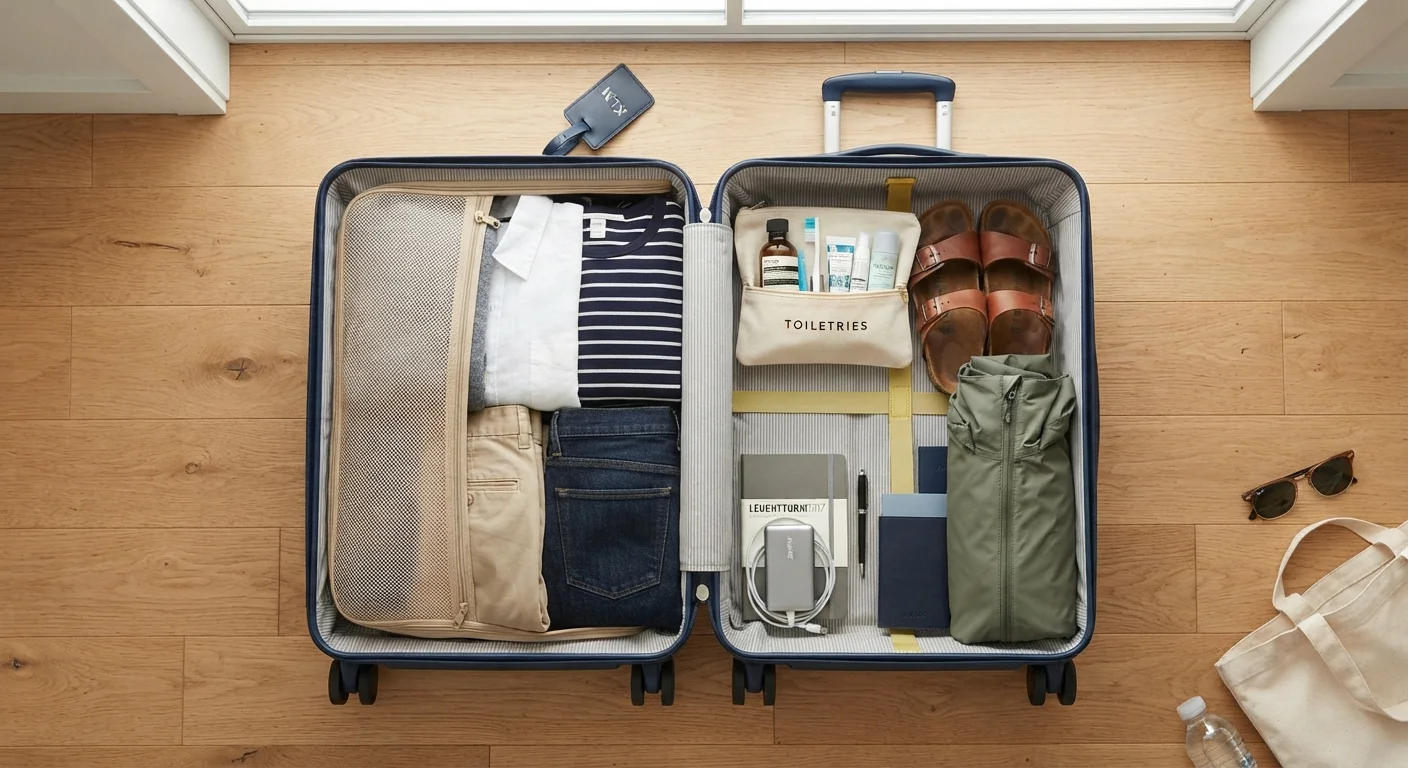
Photo: ReadersChronicle.com | Your Comprehensive Learning Destination editorial
—— In This Article
Key Takeaways
- Checked bag fees on major US carriers commonly range from $30 to $40 per bag, per direction.
- Carry-on-only travel works best for short trips in mild climates - it struggles with longer stays or varied weather.
- Overhead bin space is never guaranteed, especially on full flights or regional aircraft.
- Packing light reduces airport time but can shift costs elsewhere, such as laundry services or buying forgotten items.
- Your clothing choices and destination type matter more than packing skill when deciding between carry-on and checked bag.
Avoids checked bag fees on most airlines
Round-trip checked bag fees typically run $60-$80 per person on major US carriers, so carry-on-only travel produces real savings for travelers who don't hold airline credit cards with bag benefits.
Faster airport experience from gate to exit
Skipping baggage check-in and claim can cut 30-60 minutes from your airport time on a typical domestic round trip, which is meaningful on short or multi-leg itineraries.
No risk of delayed or lost checked luggage
While bag mishandling rates have improved, checked bags still occasionally go missing or arrive late. Carry-on-only eliminates this source of trip disruption entirely.
Greater flexibility for last-minute or multi-city trips
Traveling with only a carry-on makes it easier to change plans, book connecting flights on different carriers, and move between cities without coordinating bag transfers.
Encourages intentional packing habits
The constraint of limited space tends to reduce overpacking, which many frequent travelers report makes the overall trip feel less cluttered and easier to manage.
Overhead bin space is never guaranteed
On full flights - especially regional jets - airlines frequently ask passengers to gate-check carry-ons, meaning your bag ends up in cargo without the protective packaging of a properly checked bag.
Strict limits on liquids create real inconvenience
The TSA 3-1-1 rule limits liquids to 3.4 oz containers in a single quart-sized bag. This rules out full-size toiletries and requires either buying products at your destination or pre-planning toiletry logistics.
Cold-weather and gear-heavy trips don't fit
Winter coats, hiking boots, ski equipment, or sports gear make carry-on-only travel impractical for many destination types, particularly any trip requiring specialized clothing.
Longer trips require laundry access and planning
Most travelers can pack four to six days of clothing in a carry-on. Trips beyond that require washing clothes mid-trip, which takes time and may cost money depending on accommodation type.
Some budget carriers charge for overhead bin bags
Several low-cost airlines charge fees for bags placed in overhead bins, making carry-on-only travel potentially more expensive than advertised on those carriers compared to a personal item only.
The Fee Savings Are Real - but Not Always as Big as They Seem
Avoiding checked baggage fees is the most commonly cited reason to pack carry-on only, and the savings are legitimate. On most major US carriers, a single checked bag costs $30-$40 each way, meaning a round trip can run $60-$80 per bag. For a couple traveling together, that adds up quickly.
But the math deserves a closer look. Many airline credit cards include free checked bags as a core perk, which changes the calculation entirely. Budget carriers may also charge separately for carry-on bags stored in overhead bins - meaning the pricing difference between carry-on and checked isn't always what the headline fare suggests. For a grounded look at how these charges pile up, see hidden travel costs that quietly inflate your budget.
$30-$40
Typical one-way checked bag fee, major US carriers
Most large US airlines charge per bag, per direction, making a round-trip checked bag $60-$80 before any airline loyalty or credit card waivers apply.
20-45 min
Estimated time saved skipping baggage claim
Travel logistics studies and frequent-traveler accounts consistently estimate that bypassing baggage claim saves between 20 and 45 minutes on a typical domestic flight.
What You Actually Give Up
The trade-offs of carry-on-only travel are concrete, not hypothetical.
Overhead bin space is never guaranteed
On full flights - especially regional jets - airlines frequently ask passengers to gate-check carry-ons, meaning your bag ends up in cargo without the protective packaging of a properly checked bag.
Strict limits on liquids create real inconvenience
The TSA 3-1-1 rule limits liquids to 3.4 oz containers in a single quart-sized bag. This rules out full-size toiletries and requires either buying products at your destination or pre-planning toiletry logistics.
Cold-weather and gear-heavy trips don't fit
Winter coats, hiking boots, ski equipment, or sports gear make carry-on-only travel impractical for many destination types, particularly any trip requiring specialized clothing.
Longer trips require laundry access and planning
Most travelers can pack four to six days of clothing in a carry-on. Trips beyond that require washing clothes mid-trip, which takes time and may cost money depending on accommodation type.
Some budget carriers charge for overhead bin bags
Several low-cost airlines charge fees for bags placed in overhead bins, making carry-on-only travel potentially more expensive than advertised on those carriers compared to a personal item only.
The overhead bin problem deserves specific attention. Airlines frequently ask passengers on full flights to gate-check their carry-ons - which means your bag ends up in the cargo hold anyway, sometimes without the protective packaging a checked bag would have. You also lose access to it during the flight.
Trip length is another quiet constraint. Most travelers can fit four to six days of clothing into a standard carry-on with careful packing. Beyond that, you're relying on laundry facilities - which exist at many hotels and vacation rentals, but add time and sometimes cost to your itinerary.
Where Carry-On Travel Genuinely Delivers
When the conditions are right, carry-on-only travel has clear, practical advantages.
Avoids checked bag fees on most airlines
Round-trip checked bag fees typically run $60-$80 per person on major US carriers, so carry-on-only travel produces real savings for travelers who don't hold airline credit cards with bag benefits.
Faster airport experience from gate to exit
Skipping baggage check-in and claim can cut 30-60 minutes from your airport time on a typical domestic round trip, which is meaningful on short or multi-leg itineraries.
No risk of delayed or lost checked luggage
While bag mishandling rates have improved, checked bags still occasionally go missing or arrive late. Carry-on-only eliminates this source of trip disruption entirely.
Greater flexibility for last-minute or multi-city trips
Traveling with only a carry-on makes it easier to change plans, book connecting flights on different carriers, and move between cities without coordinating bag transfers.
Encourages intentional packing habits
The constraint of limited space tends to reduce overpacking, which many frequent travelers report makes the overall trip feel less cluttered and easier to manage.
Speed through airports is the most consistent benefit. Skipping baggage claim alone can save 20-45 minutes on a domestic flight - time that compounds on multi-city trips. You also eliminate the risk of checked bags being delayed or lost, which, while not common, does happen and can disrupt the first day or two of a trip.
For budget-focused travel, the flexibility matters too. Carry-on-only travelers can more easily take last-minute flights, including low-cost options that charge steeply for checked bags. This pairs well with strategies covered in our guide to stretching your travel budget without sacrificing the experience.
When a Checked Bag Is Simply the Smarter Call
Carry-on-only isn't the right answer for every trip. Certain situations make a checked bag the more practical - and sometimes cheaper - choice.
When Checked Bags Are Worth the Cost
For trips lasting more than a week, cold-climate destinations, or any travel involving bulky gear, the fee for a checked bag may be lower than the combined cost of laundry services, destination toiletry purchases, and the time spent managing constraints. The goal is an honest comparison, not defaulting to carry-on as automatically frugal.
Cold-weather destinations are a prime example. A winter coat, boots, and layers simply don't fit in a standard carry-on without crowding out everything else. Families traveling with young children often face similar constraints, as children's gear adds volume quickly. Travelers with medical equipment, sports gear (skis, golf clubs, bikes), or instruments may have no realistic carry-on option at all.
Longer trips also shift the calculus. If your trip is two or three weeks and you don't want to spend vacation time doing laundry, a checked bag isn't a splurge - it's a practical tool. For those comparing overall trip costs, our road trip vs. flying cost breakdown shows how baggage decisions fit into the broader picture.
Practical Packing Decisions That Change the Math
The carry-on vs. checked-bag decision ultimately depends on a few honest questions: How long is the trip? What's the climate? Do you have gear needs? How much is your time worth?
Experienced carry-on travelers tend to agree on a few reliable tactics: wear your bulkiest shoes and jacket on the plane, choose wrinkle-resistant fabrics that can be re-worn, and identify laundry access before you arrive rather than hoping for it. Packing cubes help with organization but don't actually compress clothing - that's a common misconception.
If you're also looking at when you travel as a cost lever, {{link:/travel/budget-destinations/off-season-travel-what-changes-and-what-doesnt|off-season travel trade-offs|off-season travel} pairs directly with this topic - seasonal timing affects both airfare and the type of clothing you'll need to bring. More trip-planning frameworks are available through the trip planning tips hub.

Travel Editorial Team
Travel Editorial Team is the collective byline for our editorial team and contributor network. Articles published under this byline or an editorial pen name are researched, written, and reviewed according to our editorial standards for clarity, consistency, and independence before publication.
View author profile