
Booking Direct vs. Third-Party Travel Sites
Should you book flights and hotels directly or through an OTA? Here's an honest breakdown of the trade-offs for budget-minded travelers.
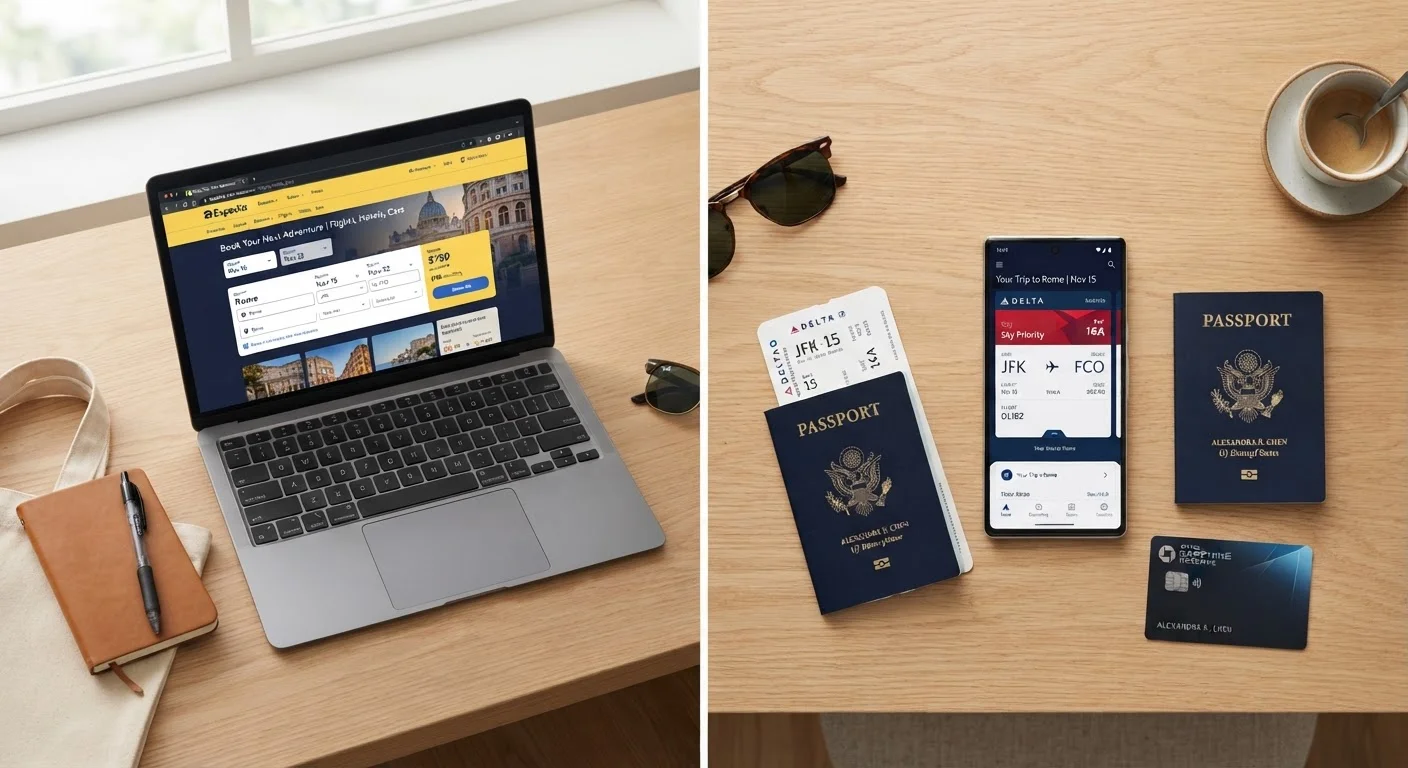
Photo: ReadersChronicle.com | Your Comprehensive Learning Destination editorial
—— In This Article
Key Takeaways
- Booking direct often unlocks loyalty points, member rates, and better cancellation flexibility.
- OTAs let you compare prices across many providers at once, which can surface lower fares.
- Customer service disputes are generally easier to resolve when you booked directly with the provider.
- Some hotels and airlines publicly offer rate-match guarantees for direct bookings.
- OTA prices may include hidden fees that only appear at checkout - always compare total cost.
- A hybrid approach - using OTAs to research, then booking direct - suits many budget travelers.
What the Debate Actually Comes Down To
The choice between booking direct and using an online travel agency (OTA) - sites that aggregate hotel, flight, and car rental inventory - isn't simply about who has the lowest price. It's about what you give up or gain on either side of that price. For budget-conscious travelers, focusing only on the sticker price can lead to unexpected costs or headaches later.
OTAs like large travel aggregators typically earn a commission from hotels or airlines, which means the provider ultimately bakes some of that cost into the rates they offer third parties. That doesn't always mean OTAs are more expensive - but it does mean the economics are more complicated than a simple price comparison suggests.
For a broader look at how your booking decisions affect overall trip spending, see how accommodation type shapes your total trip budget.
| Criterion | Booking Direct | Third-Party Sites (OTAs) |
|---|---|---|
| Loyalty points | Fully earned in most programs | Often excluded or reduced |
| Price comparison | One provider at a time | Many providers at once |
| Cancellation flexibility | Generally more straightforward | Can involve OTA as intermediary |
| Customer service | Direct access to provider | OTA layer adds complexity |
| Hidden fees | Usually disclosed upfront | May appear late in checkout |
| Member/exclusive rates | Available with free accounts | OTA-specific deals vary |
| Rate-match guarantees | Many providers offer these | Not applicable |
Where OTAs Genuinely Help
Third-party sites do one thing exceptionally well: they let you scan a wide range of prices across many providers without opening 15 browser tabs. If you're flexible on airline, hotel brand, or neighborhood, that comparison power is real value. OTAs also consolidate itineraries in one place, which some travelers find easier to manage.
Some OTAs offer their own loyalty or rewards programs that accumulate credits across all bookings - useful if you don't concentrate travel with one brand. App-only deals on some platforms can also undercut direct rates, particularly for hotel stays within a few days of check-in.
~80%
Hotel loyalty programs excluding OTA stays
Most major hotel loyalty programs - including large chains operating in the US - explicitly exclude stays booked through third-party sites from earning points or status credits.
2-3 layers
Customer service steps in an OTA dispute
Travel consumer advocates note that OTA-booked trips often involve the OTA, the supplier, and sometimes a payment processor when resolving cancellations or errors.
That said, savvy travelers often use OTAs as a research tool rather than a booking destination. Check the OTA for pricing context, then visit the provider's own site to see if the rate is close - and whether direct perks tip the balance. Our guide on common flight booking myths covers more on how pricing actually works.
The Real Costs of Booking Through a Third Party
The practical downsides of OTA bookings show up most clearly when something goes wrong. If a flight is canceled or a hotel overbooks, the airline or hotel will typically prioritize guests who booked direct. When you booked via an OTA, you may need to work through the OTA's customer service first - which adds time and complexity during an already stressful situation.
Loyalty programs are another concrete cost. Most airline frequent-flyer programs and hotel loyalty schemes either don't award points for OTA-booked stays and flights, or award them at a reduced rate. For travelers who fly or stay at the same chains frequently, that's a meaningful long-term trade-off.
Rate-Match Guarantees Are Worth Checking
Many airlines and hotel chains offer a best-rate guarantee for direct bookings - if you find a lower price on an OTA, they'll match it and sometimes add a credit or discount on top. These programs vary by provider and typically have eligibility conditions, so read the terms before submitting a claim. It's one of the clearest ways to get the best of both channels: use OTAs to find the lower rate, then capture it directly.
Hidden fees are also more common in OTA checkouts. The displayed rate may exclude resort fees, cleaning charges, or taxes that only appear at the final confirmation screen. Always compare the total cost - not the headline rate - before deciding where to book. For more context on trip cost variables, see stretching your travel budget without sacrificing the experience.
Timing also plays a role in this equation - for guidance on when to book versus when to wait, check out how far in advance you should actually book.

Travel Editorial Team
Travel Editorial Team is the collective byline for our editorial team and contributor network. Articles published under this byline or an editorial pen name are researched, written, and reviewed according to our editorial standards for clarity, consistency, and independence before publication.
View author profile